
Cookie preferences
This website uses cookies, which are necessary for the technical operation of the website and are always set. Other cookies, which increase the comfort when using this website, are used for direct advertising or to facilitate interaction with other websites and social networks, are only set with your consent.
Configuration
Technically required
These cookies are necessary for the basic functions of the shop.
"Allow all cookies" cookie
"Decline all cookies" cookie
CSRF token
Cookie preferences
Currency change
Customer-specific caching
FACT-Finder tracking
Individual prices
Selected shop
Session
Comfort functions
These cookies are used to make the shopping experience even more appealing, for example for the recognition of the visitor.
Note
Show the facebook fanpage in the right blod sidebar
Statistics & Tracking
Affiliate program
Conversion and usertracking via Google Tag Manager
Track device being used

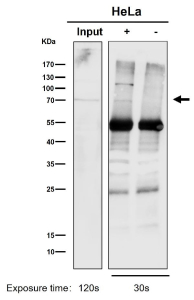
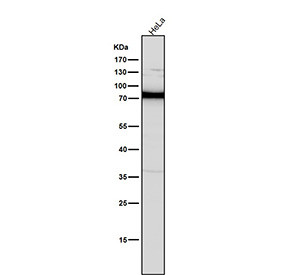


| Item number | Size | Datasheet | Manual | SDS | Delivery time | Quantity | Price |
|---|---|---|---|---|---|---|---|
| NSJ-FY12157 | 100 µl | - | - |
3 - 10 business days* |
790.00€
|
If you have any questions, please use our Contact Form.
You can also order by e-mail: info@biomol.com
Larger quantity required? Request bulk
You can also order by e-mail: info@biomol.com
Larger quantity required? Request bulk
Rabbit IgG in phosphate buffered saline, pH 7.4, 150mM NaCl, 0.02% sodium azide and 50% glycerol,... more
Product information "Anti-PKC / Protein kinase C, clone 31P91"
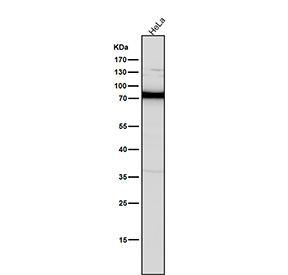
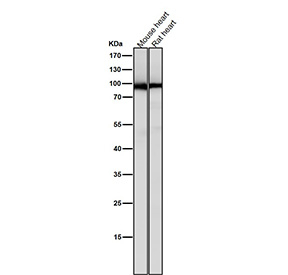
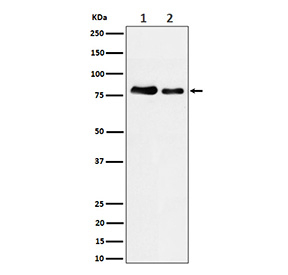
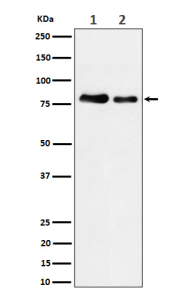
Rabbit IgG in phosphate buffered saline, pH 7.4, 150mM NaCl, 0.02% sodium azide and 50% glycerol, 0.4-0.5mg/ml BSA. PKC antibody detects Protein kinase C (PKC), a family of serine/threonine kinases that play critical roles in cellular signal transduction, gene expression, and membrane receptor regulation. The UniProt recommended name is Protein kinase C. This enzyme family mediates diverse biological responses by phosphorylating target proteins involved in proliferation, apoptosis, differentiation, and cytoskeletal organization. PKC enzymes are key downstream effectors of diacylglycerol (DAG) and calcium signaling pathways, serving as central hubs that integrate extracellular signals into intracellular responses.Protein kinase C includes multiple isoforms that can be broadly divided into three classes: conventional (alpha, beta, gamma), novel (delta, epsilon, eta, theta), and atypical (zeta, iota/lambda). Each isoform differs in its activation requirements and tissue distribution. Conventional isoforms require both calcium and DAG for activation, whereas novel isoforms are calcium-independent but DAG-dependent. Atypical isoforms do not require either calcium or DAG, responding instead to other lipid mediators. These differences allow PKC family members to finely tune signaling cascades in a context-dependent manner.Functionally, PKC regulates numerous processes such as receptor desensitization, ion channel modulation, transcription factor activation, and cytoskeletal remodeling. It is activated by various stimuli including growth factors, hormones, and neurotransmitters through phospholipase C-mediated generation of DAG. Once activated, PKC translocates to cellular membranes where it phosphorylates specific substrates, leading to altered protein activity and gene expression. In neurons, PKC modulates synaptic plasticity, while in cardiac and smooth muscle it influences contraction and metabolism.The PKC gene family is expressed across nearly all tissues, with particular enrichment in brain, heart, and skeletal muscle. Dysregulation of PKC activity has been linked to pathological conditions such as cancer, diabetes, neurodegeneration, and cardiovascular disease. In oncology, PKC can act as either a tumor promoter or suppressor depending on the isoform and cellular context. Therefore, antibodies targeting PKC are valuable tools for investigating its expression patterns, activation states, and downstream signaling pathways.PKC antibody is useful in immunohistochemistry, immunofluorescence, and related assays to assess protein localization, phosphorylation-dependent signaling, and isoform-specific expression. By detecting total PKC or specific subtypes, researchers can study its role in signal transduction and disease progression. NSJ Bioreagents provides PKC antibody reagents optimized for research in kinase signaling, cellular communication, and phosphoregulation studies.
| Keywords: | Anti-PRKCG, Anti-Protein kinase C gamma type, PKC Antibody / Protein kinase C |
| Supplier: | NSJ Bioreagents |
| Supplier-Nr: | FY12157 |
Properties
| Application: | WB, ICC, IF, IP, FC |
| Antibody Type: | Monoclonal |
| Clone: | 31P91 |
| Conjugate: | No |
| Host: | Rabbit |
| Species reactivity: | human, mouse, rat |
| Immunogen: | A synthesized peptide derived from human PKC |
| Format: | Purified |
Database Information
| KEGG ID : | K19663 | Matching products |
| UniProt ID : | P05129 | Matching products |
| Gene ID : | GeneID 5582 | Matching products |
Handling & Safety
| Storage: | -20°C |
| Shipping: | -20°C (International: -20°C) |
Caution
Our products are for laboratory research use only: Not for administration to humans!
Our products are for laboratory research use only: Not for administration to humans!
Information about the product reference will follow.
more
You will get a certificate here
Viewed