
Cookie preferences
This website uses cookies, which are necessary for the technical operation of the website and are always set. Other cookies, which increase the comfort when using this website, are used for direct advertising or to facilitate interaction with other websites and social networks, are only set with your consent.
Configuration
Technically required
These cookies are necessary for the basic functions of the shop.
"Allow all cookies" cookie
"Decline all cookies" cookie
CSRF token
Cookie preferences
Currency change
Customer-specific caching
FACT-Finder tracking
Individual prices
Selected shop
Session
Comfort functions
These cookies are used to make the shopping experience even more appealing, for example for the recognition of the visitor.
Note
Show the facebook fanpage in the right blod sidebar
Statistics & Tracking
Affiliate program
Conversion and usertracking via Google Tag Manager
Track device being used

| Item number | Size | Datasheet | Manual | SDS | Delivery time | Quantity | Price |
|---|---|---|---|---|---|---|---|
| NSJ-R31866 | 100 µg | - | - |
3 - 10 business days* |
790.00€
|
If you have any questions, please use our Contact Form.
You can also order by e-mail: info@biomol.com
Larger quantity required? Request bulk
You can also order by e-mail: info@biomol.com
Larger quantity required? Request bulk
0.5mg/ml if reconstituted with 0.2ml sterile DI water. PIGR antibody targets Polymeric... more
Product information "Anti-PIGR / Polymeric immunoglobulin receptor"
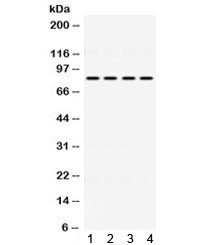
0.5mg/ml if reconstituted with 0.2ml sterile DI water. PIGR antibody targets Polymeric immunoglobulin receptor, encoded by the PIGR gene. Polymeric immunoglobulin receptor is a transmembrane glycoprotein that plays a central role in mucosal immunity by mediating the transcytosis of polymeric immunoglobulins across epithelial cells. PIGR binds dimeric IgA and pentameric IgM at the basolateral surface of epithelial cells and transports these antibodies to the apical surface, where they are released into mucosal secretions. This process is essential for immune defense at mucosal barriers such as the gastrointestinal, respiratory, and genitourinary tracts.Functionally, Polymeric immunoglobulin receptor enables the delivery of secretory antibodies that neutralize pathogens and toxins at mucosal surfaces. During transcytosis, PIGR is proteolytically cleaved to release the extracellular secretory component, which remains associated with IgA to form secretory IgA. The secretory component enhances antibody stability and protects immunoglobulins from proteolytic degradation in harsh mucosal environments. A PIGR antibody supports studies focused on epithelial transport mechanisms and mucosal immune defense.PIGR expression is predominantly observed in epithelial cells lining mucosal tissues, including intestinal epithelium, airway epithelium, salivary glands, mammary glands, and hepatobiliary epithelium. Expression is regulated by inflammatory cytokines and microbial stimuli, allowing epithelial cells to adjust immunoglobulin transport capacity in response to immune challenge. This inducible expression pattern highlights the role of PIGR as a dynamic interface between epithelial barriers and the immune system.From a disease-relevance perspective, altered PIGR expression has been associated with inflammatory and infectious diseases of mucosal tissues. Reduced PIGR expression has been linked to impaired mucosal immunity and increased susceptibility to infection, while dysregulated expression has been reported in chronic inflammatory conditions such as inflammatory bowel disease. PIGR has also been studied in cancer biology, particularly in gastrointestinal and hepatocellular carcinomas, where changes in epithelial differentiation and immune interactions can influence receptor expression. These associations make PIGR an important target in studies of barrier function and immune-epithelial crosstalk.At the molecular level, Polymeric immunoglobulin receptor contains multiple extracellular immunoglobulin-like domains, a single transmembrane region, and a short cytoplasmic tail that directs intracellular trafficking. Post-translational modifications, proteolytic cleavage, and glycosylation contribute to isoform diversity and variable electrophoretic behavior on SDS-PAGE. A PIGR antibody supports research applications focused on mucosal immunology, epithelial biology, and disease-associated changes in antibody transport, with NSJ Bioreagents providing reagents intended for research use.
| Keywords: | Anti-PIGR, Anti-Polymeric immunoglobulin receptor, Anti-Hepatocellular carcinoma-associated protein TB6, PIGR Antibody / Polymeric immunoglobulin receptor |
| Supplier: | NSJ Bioreagents |
| Supplier-Nr: | R31866 |
Properties
| Application: | WB, FC |
| Antibody Type: | Polyclonal |
| Conjugate: | No |
| Host: | Rabbit |
| Species reactivity: | human |
| Immunogen: | Amino acids DAAPDEKVLDSGFREIENKAIQDPRLFAEEKAVAD of human PIGR |
| Format: | Purified |
Database Information
| KEGG ID : | K13073 | Matching products |
| UniProt ID : | P01833 | Matching products |
| Gene ID : | GeneID 5284 | Matching products |
Handling & Safety
| Storage: | +4°C |
| Shipping: | +4°C (International: +4°C) |
Caution
Our products are for laboratory research use only: Not for administration to humans!
Our products are for laboratory research use only: Not for administration to humans!
Information about the product reference will follow.
more
You will get a certificate here

Viewed