
Cookie preferences
This website uses cookies, which are necessary for the technical operation of the website and are always set. Other cookies, which increase the comfort when using this website, are used for direct advertising or to facilitate interaction with other websites and social networks, are only set with your consent.
Configuration
Technically required
These cookies are necessary for the basic functions of the shop.
"Allow all cookies" cookie
"Decline all cookies" cookie
CSRF token
Cookie preferences
Currency change
Customer-specific caching
FACT-Finder tracking
Individual prices
Selected shop
Session
Comfort functions
These cookies are used to make the shopping experience even more appealing, for example for the recognition of the visitor.
Note
Show the facebook fanpage in the right blod sidebar
Statistics & Tracking
Affiliate program
Conversion and usertracking via Google Tag Manager
Track device being used


| Item number | Size | Datasheet | Manual | SDS | Delivery time | Quantity | Price |
|---|---|---|---|---|---|---|---|
| NSJ-R20320-0.1ML | 100 µl | - | - |
3 - 10 business days* |
772.00€
|
If you have any questions, please use our Contact Form.
You can also order by e-mail: info@biomol.com
Larger quantity required? Request bulk
You can also order by e-mail: info@biomol.com
Larger quantity required? Request bulk
Antibody in PBS with 50% glycerol, 1% BSA and 0.09% sodium azide. Eukaryotic initiation factor 2... more
Product information "Anti-phospho-EIF2 alpha (Ser51) (recombinant antibody), clone RM298"
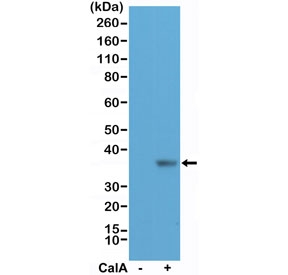
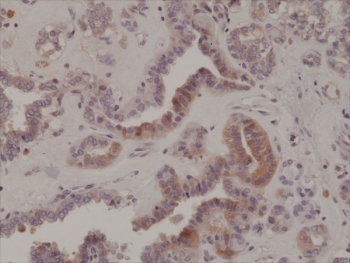
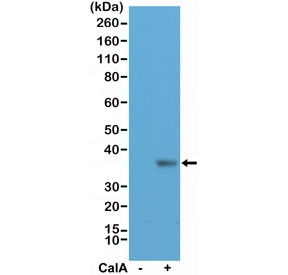
Antibody in PBS with 50% glycerol, 1% BSA and 0.09% sodium azide. Eukaryotic initiation factor 2 alpha (EIF2 alpha), encoded by the EIF2S1 gene, is a central regulator of translation initiation and a key mediator of cellular stress responses. Phospho-EIF2 alpha Antibody, clone RM298, is designed to detect EIF2 alpha phosphorylated at serine 51 (pS51), a critical regulatory site that controls global protein synthesis and activation of stress response pathways.Phosphorylation of EIF2 alpha at Ser51 represents a pivotal switch in translational control. Under normal conditions, EIF2 alpha functions as part of the heterotrimeric eIF2 complex, delivering initiator methionyl-tRNA to the ribosome during early stages of protein synthesis. However, when Ser51 is phosphorylated, this process is inhibited, leading to a rapid reduction in global protein translation. This allows cells to conserve energy and resources while selectively translating stress-response genes that promote survival and adaptation.The phosphorylation of EIF2 alpha is mediated by a family of stress-responsive kinases, including PERK, PKR, GCN2, and HRI. Each kinase is activated by distinct stimuli such as endoplasmic reticulum stress, viral infection, oxidative stress, or amino acid deprivation. Through these pathways, EIF2 alpha serves as a convergence point for multiple signaling networks, coordinating the integrated stress response and enabling cells to adapt to adverse conditions.Unlike total EIF2 alpha detection, which reflects overall protein levels, phospho-specific detection at Ser51 provides direct insight into pathway activation and translational repression. Increased phosphorylation at this site is commonly observed following treatment with stress-inducing agents or phosphatase inhibitors such as Calyculin A, which enhance accumulation of the phosphorylated form. As a result, phospho-EIF2 alpha is widely used as a sensitive marker of cellular stress signaling and translational shutdown.Subcellularly, phosphorylated EIF2 alpha is predominantly localized in the cytoplasm, where it associates with ribosomes and translation initiation complexes. Under stress conditions, it is also linked to the formation of stress granules and other ribonucleoprotein assemblies involved in mRNA storage and regulation. These structures reflect a shift from active translation to selective mRNA handling and are a hallmark of stress-induced translational control.Dysregulation of EIF2 alpha phosphorylation has been implicated in a range of diseases, including cancer, neurodegenerative disorders, and metabolic conditions. Sustained activation of this pathway can promote tumor cell survival under hypoxic or nutrient-limited conditions, while aberrant signaling contributes to impaired protein homeostasis in neurodegeneration. Monitoring phosphorylation at Ser51 therefore provides important insight into disease mechanisms and cellular adaptation.Phospho-EIF2 alpha Antibody, clone RM298, enables selective detection of the activated, phosphorylated form of EIF2 alpha, supporting studies of stress signaling, translational regulation, and cellular response to environmental or pharmacological stimuli. Its ability to distinguish between inactive and active states of EIF2 alpha makes it a valuable tool for investigating pathway activation and dynamic changes in protein synthesis.
| Keywords: | Anti-EIF2S1, Anti-Eukaryotic translation initiation factor 2 subunit 1, Anti-Eukaryotic translation initiation factor 2 subunit alpha, Recombinant phospho-EIF2 alpha Antibody (Ser51) |
| Supplier: | NSJ Bioreagents |
| Supplier-Nr: | R20320 |
Properties
| Application: | WB, IHC |
| Antibody Type: | Monoclonal |
| Clone: | RM298 |
| Conjugate: | No |
| Host: | Rabbit |
| Species reactivity: | human |
| Immunogen: | A peptide corresponding the the amino acids surrounding phosphorylated serine 51 |
| Format: | Purified |
Database Information
| KEGG ID : | K03237 | Matching products |
| UniProt ID : | P05198 | Matching products |
| Gene ID : | GeneID 1965 | Matching products |
Handling & Safety
| Storage: | -20°C |
| Shipping: | -20°C (International: -20°C) |
Caution
Our products are for laboratory research use only: Not for administration to humans!
Our products are for laboratory research use only: Not for administration to humans!
Information about the product reference will follow.
more
You will get a certificate here



Viewed