
Cookie preferences
This website uses cookies, which are necessary for the technical operation of the website and are always set. Other cookies, which increase the comfort when using this website, are used for direct advertising or to facilitate interaction with other websites and social networks, are only set with your consent.
Configuration
Technically required
These cookies are necessary for the basic functions of the shop.
"Allow all cookies" cookie
"Decline all cookies" cookie
CSRF token
Cookie preferences
Currency change
Customer-specific caching
FACT-Finder tracking
Individual prices
Selected shop
Session
Comfort functions
These cookies are used to make the shopping experience even more appealing, for example for the recognition of the visitor.
Note
Show the facebook fanpage in the right blod sidebar
Statistics & Tracking
Affiliate program
Conversion and usertracking via Google Tag Manager
Track device being used



| Item number | Size | Datasheet | Manual | SDS | Delivery time | Quantity | Price |
|---|---|---|---|---|---|---|---|
| NSJ-FY13449 | 100 µg | - | - |
3 - 10 business days* |
790.00€
|
If you have any questions, please use our Contact Form.
You can also order by e-mail: info@biomol.com
Larger quantity required? Request bulk
You can also order by e-mail: info@biomol.com
Larger quantity required? Request bulk
Adding 0.2 ml of distilled water will yield a concentration of 500 ug/ml. PDGF-D antibody targets... more
Product information "Anti-PDGFD / Platelet-derived growth factor D"
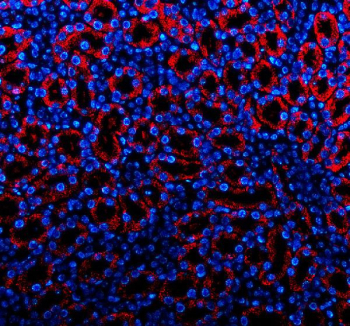
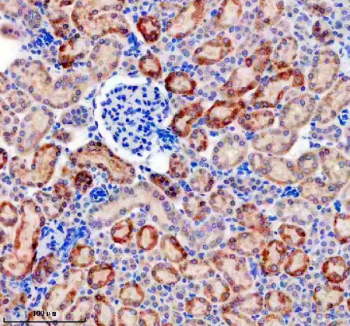
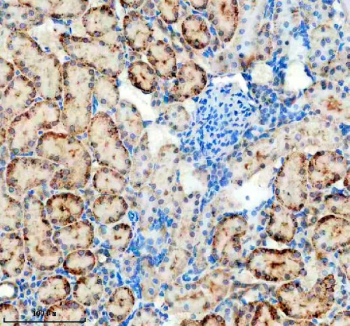
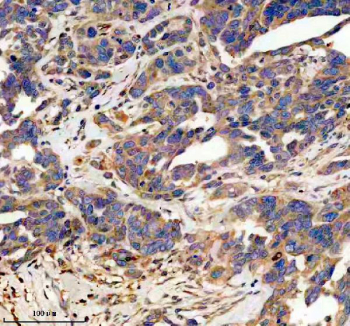
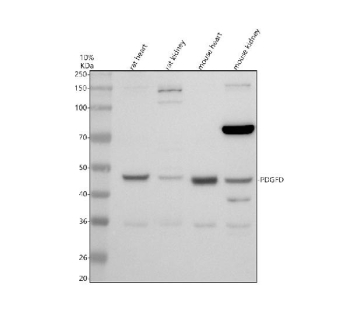
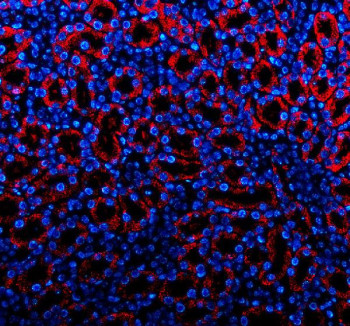
Adding 0.2 ml of distilled water will yield a concentration of 500 ug/ml. PDGF-D antibody targets Platelet-derived growth factor D, encoded by the PDGFD gene. Platelet-derived growth factor D is an extracellular, secreted growth factor that belongs to the PDGF family of ligands and is best understood as a paracrine regulator of mesenchymal and vascular cell behavior. Unlike many intracellular signaling nodes, PDGF-D exerts its effects from outside the cell, where ligand availability and local activation can determine when and where receptor signaling occurs.Functionally, Platelet-derived growth factor D contributes to PDGF receptor driven pathways that shape cell motility, proliferation, and survival, particularly in stromal and vascular associated contexts. Because PDGF signaling is a major regulator of pericyte and fibroblast like responses, PDGF-D is frequently studied in models of tissue repair and remodeling where receptor activation promotes matrix associated programs. A PDGF-D antibody supports studies examining growth factor ligand dynamics, receptor activation states, and pathway crosstalk that links extracellular cues to transcriptional and phenotypic changes.PDGF-D can be expressed in a context dependent manner, including in tissues undergoing remodeling and in disease associated microenvironments where growth factor signals become amplified. Its extracellular localization means PDGF-D may be evaluated in secretome studies, pericellular fractions, or tissue sections where stromal compartments contribute to ligand production. In vitro, apparent distribution can shift with culture density and the presence of extracellular proteases that influence ligand processing and activation.From a disease relevance standpoint, Platelet-derived growth factor D has been linked to processes such as angiogenesis, fibroblast activation, and fibrotic progression, and it is commonly evaluated in oncology research where stromal growth factor signaling supports invasion permissive niches. In these settings, PDGF-D is often considered alongside other PDGF ligands as part of a coordinated axis that impacts vascular maturation, extracellular matrix organization, and tumor-stroma communication. These roles make PDGF-D a useful marker and mechanistic target in studies connecting growth factor signaling to tissue architecture changes.At the molecular level, Platelet-derived growth factor D is produced as a precursor that can be modified by extracellular processing events, which can influence functional signaling output and experimental detectability across sample types. This biology emphasizes the importance of considering context when interpreting PDGF-D measurements across lysates, conditioned media, and tissue derived preparations. PDGF-D antibody reagents support research into growth factor signaling and remodeling pathways, with NSJ Bioreagents providing reagents intended for research use.
| Keywords: | Anti-PDGFD, Anti-Iris-expressed growth factor, Anti-Platelet-derived growth factor D, Anti-Spinal cord-derived growth factor B, PDGFD Antibody / Platelet-derived growth factor D |
| Supplier: | NSJ Bioreagents |
| Supplier-Nr: | FY13449 |
Properties
| Application: | WB, IHC, IP, ELISA |
| Antibody Type: | Polyclonal |
| Conjugate: | No |
| Host: | Rabbit |
| Species reactivity: | human, mouse, rat |
| Immunogen: | Synthetic peptide corresponding to a sequence in the middle region of human Platelet-derived growth factor D |
| Format: | Purified |
Database Information
| KEGG ID : | K05450 | Matching products |
| UniProt ID : | Q9GZP0 | Matching products |
| Gene ID : | GeneID 80310 | Matching products |
Handling & Safety
| Storage: | +4°C |
| Shipping: | +4°C (International: +4°C) |
Caution
Our products are for laboratory research use only: Not for administration to humans!
Our products are for laboratory research use only: Not for administration to humans!
Information about the product reference will follow.
more
You will get a certificate here
Viewed