
Cookie preferences
This website uses cookies, which are necessary for the technical operation of the website and are always set. Other cookies, which increase the comfort when using this website, are used for direct advertising or to facilitate interaction with other websites and social networks, are only set with your consent.
Configuration
Technically required
These cookies are necessary for the basic functions of the shop.
"Allow all cookies" cookie
"Decline all cookies" cookie
CSRF token
Cookie preferences
Currency change
Customer-specific caching
FACT-Finder tracking
Individual prices
Selected shop
Session
Comfort functions
These cookies are used to make the shopping experience even more appealing, for example for the recognition of the visitor.
Note
Show the facebook fanpage in the right blod sidebar
Statistics & Tracking
Affiliate program
Conversion and usertracking via Google Tag Manager
Track device being used



| Item number | Size | Datasheet | Manual | SDS | Delivery time | Quantity | Price |
|---|---|---|---|---|---|---|---|
| NSJ-FY12493 | 100 µg | - | - |
7 - 12 business days* |
790.00€
|
If you have any questions, please use our Contact Form.
You can also order by e-mail: info@biomol.com
Larger quantity required? Request bulk
You can also order by e-mail: info@biomol.com
Larger quantity required? Request bulk
Adding 0.2 ml of distilled water will yield a concentration of 500 ug/ml. PARP16 antibody detects... more
Product information "Anti-PARP16 / Poly ADP-ribose polymerase 16"
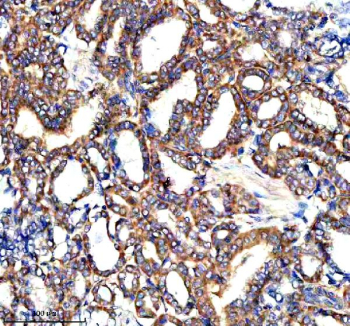
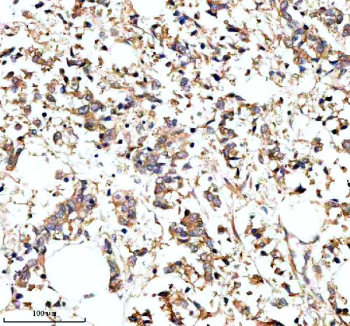
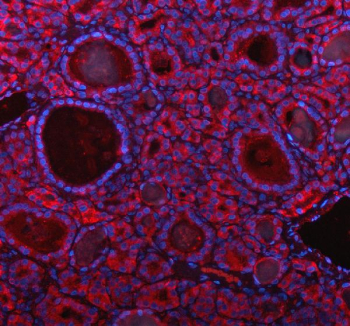
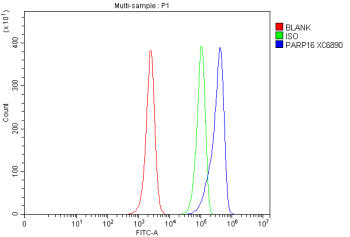
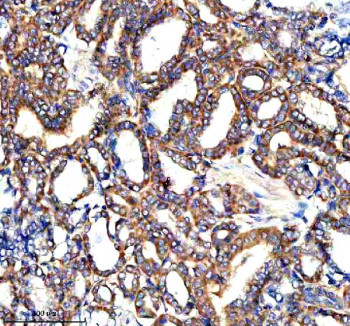
Adding 0.2 ml of distilled water will yield a concentration of 500 ug/ml. PARP16 antibody detects Poly(ADP-ribose) polymerase 16, a membrane-associated mono-ADP-ribosyltransferase that regulates the unfolded protein response (UPR) and endoplasmic reticulum (ER) stress signaling. PARP16 belongs to the PARP family of enzymes involved in ADP-ribosylation, a post-translational modification that controls protein stability and signaling. The PARP16 antibody is commonly used in studies of ER stress, apoptosis, and ADP-ribosylation-dependent signaling pathways.PARP16 is encoded by the PARP16 gene located on human chromosome 15q21.2. The protein is approximately 38 kilodaltons and uniquely localized to the ER membrane, where it functions as a tail-anchored enzyme with its catalytic domain facing the cytoplasm. Unlike canonical PARPs that catalyze poly(ADP-ribosylation), PARP16 primarily transfers single ADP-ribose moieties to substrate proteins (mono-ADP-ribosylation). This modification modulates the activity of key ER stress sensors, including PERK and IRE1-alpha, enhancing their signaling output during the UPR.The PARP16 antibody typically detects a 38 kilodalton protein by western blot, and immunofluorescence confirms its ER localization. Functional studies demonstrate that PARP16 activity is induced upon ER stress caused by misfolded protein accumulation or chemical perturbation. Activated PARP16 promotes phosphorylation and activation of PERK and IRE1-alpha, leading to downstream transcriptional responses that restore proteostasis. Inhibition or depletion of PARP16 compromises the UPR, resulting in increased sensitivity to ER stress and enhanced apoptosis.Beyond its role in ER stress regulation, PARP16 contributes to cancer cell survival and resistance to chemotherapeutic agents that induce proteotoxic stress. Overexpression has been reported in hepatocellular carcinoma, breast cancer, and melanoma, where it supports adaptive stress signaling. Conversely, loss of PARP16 sensitizes cells to stress-induced death, making it a potential therapeutic target. NSJ Bioreagents provides a validated PARP16 antibody optimized for immunofluorescence, immunohistochemistry and flow cytometry assays, enabling precise study of ADP-ribosylation mechanisms and ER homeostasis.
| Keywords: | Anti-PARP16, Anti-Poly [ADP-ribose] polymerase 16, Anti-Protein mono-ADP-ribosyltransferase PARP16, Anti-ADP-ribosyltransferase diphtheria toxin-like 15, PARP16 Antibody / Poly ADP-ribose polymerase 16 |
| Supplier: | NSJ Bioreagents |
| Supplier-Nr: | FY12493 |
Properties
| Application: | IHC, FC, ELISA |
| Antibody Type: | Polyclonal |
| Conjugate: | No |
| Host: | Rabbit |
| Species reactivity: | human |
| Immunogen: | E.coli-derived human PARP16 recombinant protein (Position: A9-Y254) |
| Format: | Purified |
Database Information
| KEGG ID : | K00774 | Matching products |
| UniProt ID : | Q8N5Y8 | Matching products |
| Gene ID : | GeneID 54956 | Matching products |
Handling & Safety
| Storage: | +4°C |
| Shipping: | +4°C (International: +4°C) |
Caution
Our products are for laboratory research use only: Not for administration to humans!
Our products are for laboratory research use only: Not for administration to humans!
Information about the product reference will follow.
more
You will get a certificate here
Viewed