
Cookie preferences
This website uses cookies, which are necessary for the technical operation of the website and are always set. Other cookies, which increase the comfort when using this website, are used for direct advertising or to facilitate interaction with other websites and social networks, are only set with your consent.
Configuration
Technically required
These cookies are necessary for the basic functions of the shop.
"Allow all cookies" cookie
"Decline all cookies" cookie
CSRF token
Cookie preferences
Currency change
Customer-specific caching
FACT-Finder tracking
Individual prices
Selected shop
Session
Comfort functions
These cookies are used to make the shopping experience even more appealing, for example for the recognition of the visitor.
Note
Show the facebook fanpage in the right blod sidebar
Statistics & Tracking
Affiliate program
Conversion and usertracking via Google Tag Manager
Track device being used



| Item number | Size | Datasheet | Manual | SDS | Delivery time | Quantity | Price |
|---|---|---|---|---|---|---|---|
| NSJ-FY13012 | 100 µg | - | - |
3 - 10 business days* |
790.00€
|
If you have any questions, please use our Contact Form.
You can also order by e-mail: info@biomol.com
Larger quantity required? Request bulk
You can also order by e-mail: info@biomol.com
Larger quantity required? Request bulk
Adding 0.2 ml of distilled water will yield a concentration of 500 ug/ml. PARP1 antibody detects... more
Product information "Anti-PARP1 / Poly ADP-ribose polymerase 1"
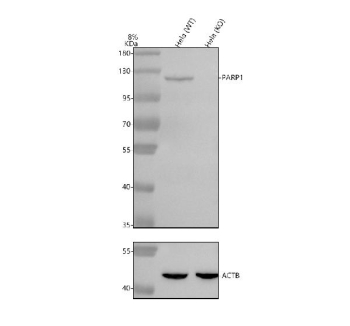
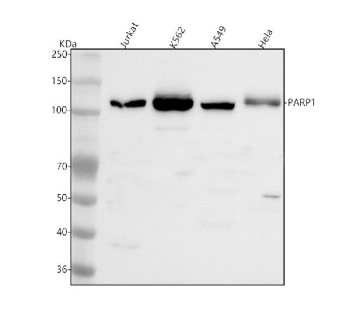
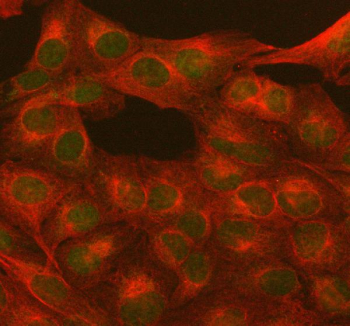
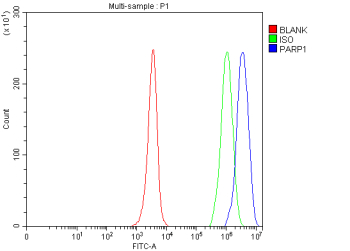
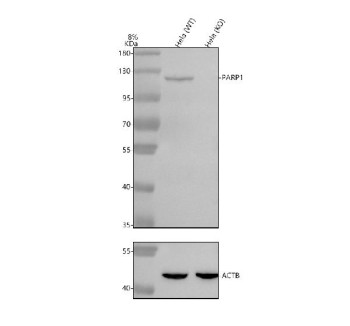
Adding 0.2 ml of distilled water will yield a concentration of 500 ug/ml. PARP1 antibody detects Poly [ADP-ribose] polymerase 1, a nuclear enzyme essential for DNA repair, chromatin remodeling, and transcriptional regulation. The UniProt recommended name is Poly [ADP-ribose] polymerase 1 (PARP1). This enzyme catalyzes the poly-ADP-ribosylation of nuclear proteins in response to DNA strand breaks, recruiting DNA repair machinery and maintaining genomic integrity. PARP1 plays a dual role as both a DNA damage sensor and a regulator of chromatin structure.Functionally, PARP1 antibody identifies a 1014-amino-acid nuclear protein containing three zinc-finger DNA-binding domains, a BRCT motif, and a catalytic PARP domain. Upon binding to damaged DNA, PARP1 catalyzes the transfer of ADP-ribose units from NAD+ to target proteins, forming long poly-ADP-ribose (PAR) chains. These modifications facilitate the recruitment of DNA repair factors such as XRCC1, DNA ligase III, and DNA polymerase beta. PARP1 activity is a key step in the base excision repair (BER) pathway, ensuring timely resolution of single-strand breaks.The PARP1 gene is located on chromosome 1q42.12 and is ubiquitously expressed in proliferative and differentiated tissues. It modulates chromatin relaxation by poly-ADP-ribosylating histones, thereby granting access to repair and transcriptional complexes. Beyond DNA repair, PARP1 regulates transcription by interacting with nuclear receptors and chromatin modifiers, influencing inflammation, cell cycle, and apoptosis. PARP1 activity is tightly regulated by DNA damage signals and cellular NAD+ levels.In apoptosis, excessive PARP1 activation during oxidative or genotoxic stress leads to NAD+ and ATP depletion, contributing to programmed necrosis (parthanatos). PARP inhibitors, such as olaparib and niraparib, target PARP1 enzymatic activity to enhance the cytotoxicity of DNA-damaging agents, forming the basis for synthetic lethality in BRCA-deficient cancers. Overactivation or dysregulation of PARP1 has been linked to neurodegeneration, ischemic injury, and cancer progression.PARP1 antibody is widely used in molecular biology, oncology, and DNA repair research. It is suitable for western blotting, immunohistochemistry, and chromatin immunoprecipitation to detect endogenous or modified PARP1. This antibody supports studies of DNA repair, PARP inhibitor mechanisms, and nuclear signaling pathways. In cancer models, PARP1 detection is crucial for assessing DNA damage response and drug sensitivity.Structurally, PARP1 contains DNA-binding zinc fingers, a WGR domain involved in DNA interaction, and a catalytic domain responsible for NAD+ hydrolysis and ADP-ribose polymerization. Its activity is regulated through automodification, phosphorylation, and proteolytic cleavage during apoptosis. NSJ Bioreagents provides PARP1 antibody reagents validated for use in DNA repair, apoptosis, and chromatin research.
| Keywords: | Anti-PARP1, Anti-Poly[ADP-ribose] synthase 1, Anti-Poly [ADP-ribose] polymerase 1, Anti-NAD(+) ADP-ribosyltransferase 1, Anti-DNA ADP-ribosyltransferase PARP1, Anti-Protein poly-ADP-ribosyltransferase PARP1, Anti-ADP-ribosyltransferase diphtheria toxin-li |
| Supplier: | NSJ Bioreagents |
| Supplier-Nr: | FY13012 |
Properties
| Application: | WB, ICC, IF, FC, ELISA |
| Antibody Type: | Polyclonal |
| Conjugate: | No |
| Host: | Rabbit |
| Species reactivity: | human |
| Immunogen: | E.coli-derived human PARP1 recombinant protein (Position: D6-R841) |
| Format: | Purified |
Database Information
| KEGG ID : | K24070 | Matching products |
| UniProt ID : | P09874 | Matching products |
| Gene ID : | GeneID 142 | Matching products |
Handling & Safety
| Storage: | +4°C |
| Shipping: | +4°C (International: +4°C) |
Caution
Our products are for laboratory research use only: Not for administration to humans!
Our products are for laboratory research use only: Not for administration to humans!
Information about the product reference will follow.
more
You will get a certificate here
Viewed