
Cookie preferences
This website uses cookies, which are necessary for the technical operation of the website and are always set. Other cookies, which increase the comfort when using this website, are used for direct advertising or to facilitate interaction with other websites and social networks, are only set with your consent.
Configuration
Technically required
These cookies are necessary for the basic functions of the shop.
"Allow all cookies" cookie
"Decline all cookies" cookie
CSRF token
Cookie preferences
Currency change
Customer-specific caching
FACT-Finder tracking
Individual prices
Selected shop
Session
Comfort functions
These cookies are used to make the shopping experience even more appealing, for example for the recognition of the visitor.
Note
Show the facebook fanpage in the right blod sidebar
Statistics & Tracking
Affiliate program
Conversion and usertracking via Google Tag Manager
Track device being used



| Item number | Size | Datasheet | Manual | SDS | Delivery time | Quantity | Price |
|---|---|---|---|---|---|---|---|
| NSJ-FY12128 | 100 µg | - | - |
3 - 10 business days* |
790.00€
|
If you have any questions, please use our Contact Form.
You can also order by e-mail: info@biomol.com
Larger quantity required? Request bulk
You can also order by e-mail: info@biomol.com
Larger quantity required? Request bulk
Adding 0.2 ml of distilled water will yield a concentration of 500 ug/ml. PAM antibody detects... more
Product information "Anti-PAM / Peptidyl-glycine alpha-amidating monooxygenase"
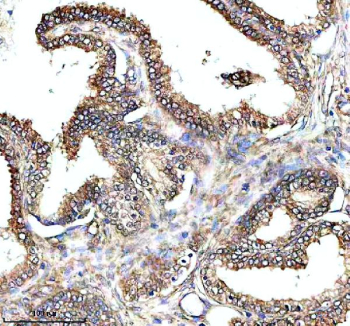
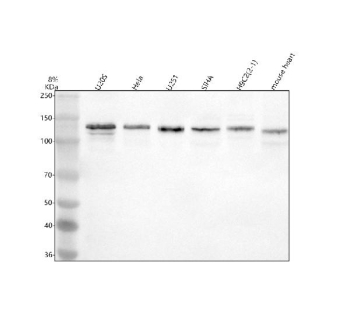
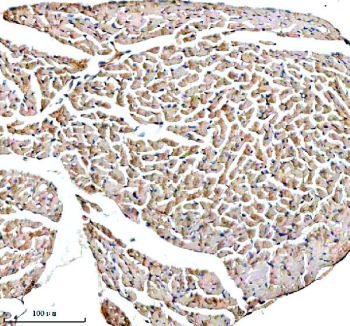
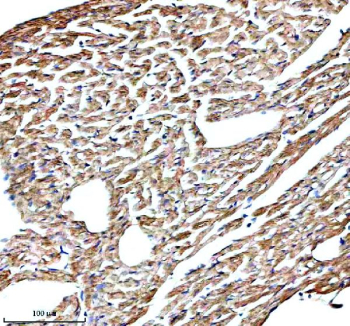
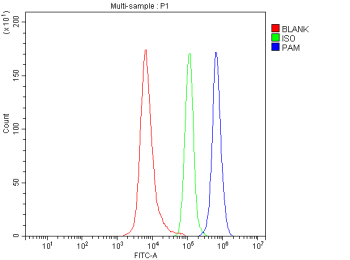
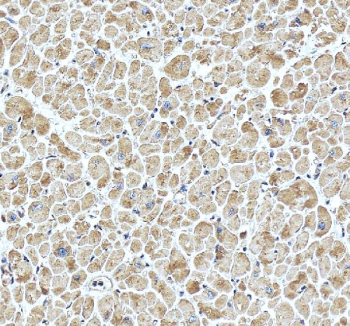
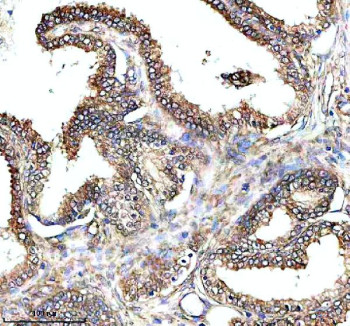
Adding 0.2 ml of distilled water will yield a concentration of 500 ug/ml. PAM antibody detects Peptidyl-glycine alpha-amidating monooxygenase, encoded by the PAM gene on chromosome 5q23.2. PAM antibody is used to study this bifunctional enzyme that catalyzes peptide amidation, a modification essential for the activity of many neuropeptides and hormones. Amidation increases peptide stability, receptor affinity, and biological potency. PAM contains two catalytic domains: peptidylglycine alpha-hydroxylating monooxygenase (PHM) and peptidyl-alpha-hydroxyglycine alpha-amidating lyase (PAL). PHM hydroxylates the terminal glycine of a peptide substrate, and PAL then cleaves the hydroxylated intermediate to generate the amidated, active peptide.PAM expression is highest in neuroendocrine tissues including brain, pituitary, adrenal glands, and pancreas, where it activates signaling molecules like vasopressin, oxytocin, gastrin, and calcitonin. By processing these hormones and neuropeptides, PAM regulates stress response, water homeostasis, appetite, metabolism, and cardiovascular activity. Because the enzyme requires copper, ascorbate, and molecular oxygen, its activity is tied to nutritional status and redox balance. PAM localization to secretory granules ensures amidation occurs during peptide packaging and secretion.Disruption of PAM activity impairs peptide amidation and alters neuroendocrine signaling. Knockout mice exhibit growth retardation, defective stress hormone responses, and metabolic dysregulation. In humans, variants in PAM have been associated with endocrine disorders, altered glucose regulation, and susceptibility to neuroendocrine tumors. Overexpression of PAM in tumors may enhance production of amidated peptides that drive proliferation. PAM antibody is essential for studying how peptide hormones are matured and how dysregulated amidation contributes to disease.Experimentally, PAM antibody is used in western blotting to detect isoforms, in immunohistochemistry to visualize tissue distribution, and in immunofluorescence to highlight localization in secretory granules. Co-immunoprecipitation with PAM antibody identifies interactions with granin proteins and vesicle transport machinery. Functional assays pair PAM antibody with peptide amidation measurements to connect enzyme expression with biological activity. NSJ Bioreagents offers PAM antibody to support research in neuroendocrinology, peptide biology, and tumor biology.
| Keywords: | Anti-PAM, Anti-Peptidyl-glycine alpha-amidating monooxygenase, PAM Antibody / Peptidyl-glycine alpha-amidating monooxygenase |
| Supplier: | NSJ Bioreagents |
| Supplier-Nr: | FY12128 |
Properties
| Application: | WB, IHC, FC, ELISA |
| Antibody Type: | Polyclonal |
| Conjugate: | No |
| Host: | Rabbit |
| Species reactivity: | human, mouse, rat |
| Immunogen: | E.coli-derived human PAM recombinant protein (Position: K69-R914) |
| Format: | Purified |
Database Information
| KEGG ID : | K24006 | Matching products |
| UniProt ID : | P19021 | Matching products |
| Gene ID : | GeneID 5066 | Matching products |
Handling & Safety
| Storage: | +4°C |
| Shipping: | +4°C (International: +4°C) |
Caution
Our products are for laboratory research use only: Not for administration to humans!
Our products are for laboratory research use only: Not for administration to humans!
Information about the product reference will follow.
more
You will get a certificate here
Viewed