
Cookie preferences
This website uses cookies, which are necessary for the technical operation of the website and are always set. Other cookies, which increase the comfort when using this website, are used for direct advertising or to facilitate interaction with other websites and social networks, are only set with your consent.
Configuration
Technically required
These cookies are necessary for the basic functions of the shop.
"Allow all cookies" cookie
"Decline all cookies" cookie
CSRF token
Cookie preferences
Currency change
Customer-specific caching
FACT-Finder tracking
Individual prices
Selected shop
Session
Comfort functions
These cookies are used to make the shopping experience even more appealing, for example for the recognition of the visitor.
Note
Show the facebook fanpage in the right blod sidebar
Statistics & Tracking
Affiliate program
Conversion and usertracking via Google Tag Manager
Track device being used

| Item number | Size | Datasheet | Manual | SDS | Delivery time | Quantity | Price |
|---|---|---|---|---|---|---|---|
| NSJ-R30819 | 100 µg | - | - |
3 - 10 business days* |
790.00€
|
If you have any questions, please use our Contact Form.
You can also order by e-mail: info@biomol.com
Larger quantity required? Request bulk
You can also order by e-mail: info@biomol.com
Larger quantity required? Request bulk
0.5mg/ml if reconstituted with 0.2ml sterile DI water. PAK6 antibody targets p21-activated kinase... more
Product information "Anti-PAK6 / p21-activated kinase 6"
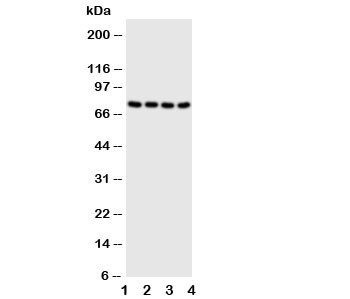
0.5mg/ml if reconstituted with 0.2ml sterile DI water. PAK6 antibody targets p21-activated kinase 6, encoded by the PAK6 gene. p21-activated kinase 6 is a member of the group II PAK family of serine-threonine kinases and functions as an important downstream effector of small Rho family GTPases. PAK6 participates in signal transduction pathways that regulate cytoskeletal organization, cell survival, and transcriptional responses. Unlike group I PAKs, PAK6 shows distinct regulatory features and tissue expression patterns, reflecting specialized biological roles. The protein is predominantly localized in the cytoplasm but can associate with the nucleus and other subcellular compartments depending on cellular context and signaling state.Functionally, p21-activated kinase 6 contributes to the regulation of actin cytoskeleton dynamics, cell morphology, and intracellular signaling cascades. PAK6 can modulate kinase-dependent pathways that influence cell growth and stress responses, and it has also been reported to interact with nuclear receptors and transcriptional regulators. Through these interactions, PAK6 links extracellular signaling cues to changes in gene expression and cellular behavior. A PAK6 antibody supports studies focused on kinase signaling and regulation of cytoskeletal and transcriptional processes.PAK6 expression is most prominent in brain and reproductive tissues, with additional expression reported in other cell types at lower levels. In the nervous system, PAK6 has been associated with neuronal signaling and synaptic regulation, suggesting roles in neural development and plasticity. Its expression pattern and regulatory properties distinguish it from other PAK family members and indicate that PAK6 may function in more specialized signaling contexts rather than broad housekeeping roles.From a disease-relevance perspective, altered PAK6 expression or activity has been investigated in cancer biology and neurological research. Changes in PAK6 signaling have been associated with tumor progression and hormone-responsive cancers, potentially through effects on cell survival pathways and transcriptional regulation. PAK6 has also been studied in relation to neurodevelopmental processes and neurological disorders, reflecting its enriched expression in neural tissues. These findings have positioned PAK6 as a molecule of interest in studies of disease-associated signaling dysregulation.At the molecular level, p21-activated kinase 6 contains a conserved C-terminal kinase domain and regulatory regions that control its activation and subcellular localization. Post-translational modifications and protein-protein interactions influence PAK6 activity and can result in variable electrophoretic behavior on SDS-PAGE. A PAK6 antibody supports research applications focused on kinase signaling, neural biology, and disease-associated changes in intracellular signaling pathways, with NSJ Bioreagents providing reagents intended for research use.
| Keywords: | Anti-PAK6, Anti-PAK-5, Anti-p21-activated kinase 6, Anti-Serine/threonine-protein kinase PAK 6, PAK6 Antibody / p21-activated kinase 6 |
| Supplier: | NSJ Bioreagents |
| Supplier-Nr: | R30819 |
Properties
| Application: | WB, IF, FC |
| Antibody Type: | Polyclonal |
| Conjugate: | No |
| Host: | Rabbit |
| Species reactivity: | human, rat, mouse |
| Immunogen: | An amino acid sequence from the N-terminus of human PAK6 (QNFQHRVHTSFDPKEGK) |
| Format: | Purified |
Database Information
| KEGG ID : | K05735 | Matching products |
| UniProt ID : | Q9NQU5 | Matching products |
| Gene ID : | GeneID 106821730 | Matching products |
Handling & Safety
| Storage: | +4°C |
| Shipping: | +4°C (International: +4°C) |
Caution
Our products are for laboratory research use only: Not for administration to humans!
Our products are for laboratory research use only: Not for administration to humans!
Information about the product reference will follow.
more
You will get a certificate here



Viewed