Cookie preferences
This website uses cookies, which are necessary for the technical operation of the website and are always set. Other cookies, which increase the comfort when using this website, are used for direct advertising or to facilitate interaction with other websites and social networks, are only set with your consent.
Configuration
Technically required
These cookies are necessary for the basic functions of the shop.
"Allow all cookies" cookie
"Decline all cookies" cookie
CSRF token
Cookie preferences
Currency change
Customer-specific caching
FACT-Finder tracking
Individual prices
Selected shop
Session
Comfort functions
These cookies are used to make the shopping experience even more appealing, for example for the recognition of the visitor.
Note
Show the facebook fanpage in the right blod sidebar
Statistics & Tracking
Affiliate program
Conversion and usertracking via Google Tag Manager
Track device being used
| Item number | Size | Datasheet | Manual | SDS | Delivery time | Quantity | Price |
|---|---|---|---|---|---|---|---|
| NSJ-RQ5107 | 100 µl | - | - |
3 - 10 business days* |
790.00€
|
If you have any questions, please use our Contact Form.
You can also order by e-mail: info@biomol.com
Larger quantity required? Request bulk
You can also order by e-mail: info@biomol.com
Larger quantity required? Request bulk
Antibody in PBS with 0.02% sodium azide, 50% glycerol and 0.4-0.5mg/ml BSA. PAI-1 antibody, also... more
Product information "Anti-PAI-1 / Plasminogen activator inhibitor 1 / SERPINE1, clone ABHG-19"
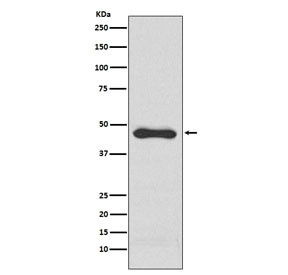
Antibody in PBS with 0.02% sodium azide, 50% glycerol and 0.4-0.5mg/ml BSA. PAI-1 antibody, also known as Plasminogen activator inhibitor 1 antibody, recognizes a secreted serine protease inhibitor encoded by the SERPINE1 gene and commonly referred to as Serpin E1 and endothelial plasminogen activator inhibitor. Plasminogen activator inhibitor 1 is a member of the serpin superfamily and is localized predominantly to the extracellular space and circulating plasma, where it tightly regulates fibrinolysis. It is highly expressed in endothelial cells, adipocytes, hepatocytes, platelets, smooth muscle cells, and various tumor cell types, with expression levels increasing in response to inflammatory cytokines, hypoxia, metabolic stress, and tissue injury.Plasminogen activator inhibitor 1 functions as the primary physiological inhibitor of tissue-type plasminogen activator and urokinase-type plasminogen activator, thereby limiting plasmin generation and stabilizing fibrin clots. Through this antifibrinolytic activity, it plays a critical role in thrombosis, wound healing, and extracellular matrix remodeling. Beyond hemostasis, PAI-1 is actively involved in angiogenesis, cell adhesion, migration, and tumor invasion through interactions with vitronectin and the urokinase receptor complex. PAI-1 antibody is frequently used in studies investigating coagulation biology, vascular pathology, and tumor microenvironment signaling.Structurally, Plasminogen activator inhibitor 1 contains the conserved reactive center loop characteristic of serpin family members, allowing it to form stable inhibitory complexes with target proteases. The protein exists in active, latent, and cleaved conformations, each with distinct functional implications. Binding to vitronectin stabilizes the active conformation and prolongs its half-life in circulation. Within tissues, PAI-1 is detected in the pericellular matrix and extracellular compartment, often co-localizing with integrins and components of the plasminogen activation system during dynamic remodeling processes.Dysregulation of SERPINE1 expression is strongly associated with human disease. Elevated PAI-1 levels are linked to deep vein thrombosis, myocardial infarction, atherosclerosis, and other cardiovascular disorders characterized by impaired fibrinolysis. Increased expression is also observed in obesity and type 2 diabetes, contributing to metabolic and vascular complications. In oncology, high SERPINE1 expression correlates with poor prognosis in several malignancies, including breast, lung, and colorectal cancers, where it supports tumor cell survival, invasion, and resistance to apoptosis.PAI-1 antibody supports research into TGF-beta signaling, hypoxia-inducible factor pathways, and inflammatory cytokine networks that regulate SERPINE1 transcription. Developmentally, PAI-1 expression increases during tissue repair and inflammatory responses, reflecting its role in controlled matrix turnover and immune regulation. Clone ABHG-19 recognizes Plasminogen activator inhibitor 1 and is suitable for detecting PAI-1 expression in relevant research applications.
| Keywords: | Anti-SERPINE1, Anti-Serpin E1, Anti-Plasminogen activator inhibitor 1, Anti-Endothelial plasminogen activator inhibitor, PAI-1 Antibody / Plasminogen activator inhibitor 1 / SERPINE1 |
| Supplier: | NSJ Bioreagents |
| Supplier-Nr: | RQ5107 |
Properties
| Application: | WB |
| Antibody Type: | Monoclonal |
| Clone: | ABHG-19 |
| Conjugate: | No |
| Host: | Rabbit |
| Species reactivity: | human |
| Immunogen: | A synthetic peptide specific to human PAI1 / SERPINE1 |
| Format: | Purified |
Database Information
| KEGG ID : | K03982 | Matching products |
| UniProt ID : | P05121 | Matching products |
| Gene ID : | GeneID 5054 | Matching products |
Handling & Safety
| Storage: | -20°C |
| Shipping: | -20°C (International: -20°C) |
Caution
Our products are for laboratory research use only: Not for administration to humans!
Information about the product reference will follow.
more
You will get a certificate here
Viewed