
Cookie preferences
This website uses cookies, which are necessary for the technical operation of the website and are always set. Other cookies, which increase the comfort when using this website, are used for direct advertising or to facilitate interaction with other websites and social networks, are only set with your consent.
Configuration
Technically required
These cookies are necessary for the basic functions of the shop.
"Allow all cookies" cookie
"Decline all cookies" cookie
CSRF token
Cookie preferences
Currency change
Customer-specific caching
FACT-Finder tracking
Individual prices
Selected shop
Session
Comfort functions
These cookies are used to make the shopping experience even more appealing, for example for the recognition of the visitor.
Note
Show the facebook fanpage in the right blod sidebar
Statistics & Tracking
Affiliate program
Conversion and usertracking via Google Tag Manager
Track device being used



| Item number | Size | Datasheet | Manual | SDS | Delivery time | Quantity | Price |
|---|---|---|---|---|---|---|---|
| NSJ-RQ8944 | 100 µl | - | - |
3 - 10 business days* |
790.00€
|
If you have any questions, please use our Contact Form.
You can also order by e-mail: info@biomol.com
Larger quantity required? Request bulk
You can also order by e-mail: info@biomol.com
Larger quantity required? Request bulk
Antibody in PBS with 0.02% sodium azide, 50% glycerol and 0.4-0.5mg/ml BSA. PABPN1 antibody is a... more
Product information "Anti-PABPN1 / Polyadenylate-binding protein 2, clone AAHI-16"
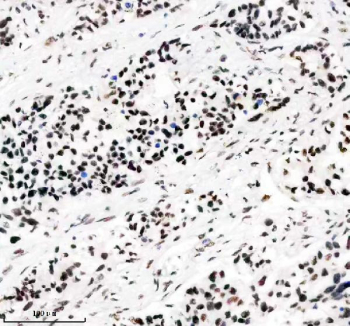
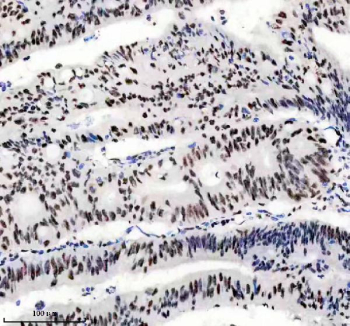
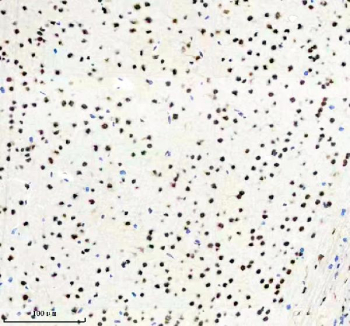
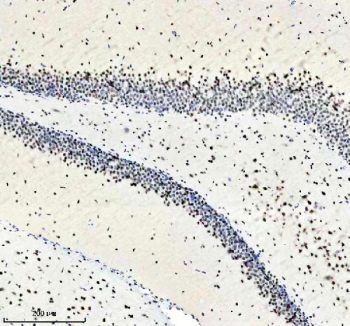
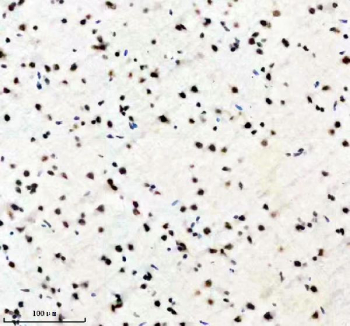
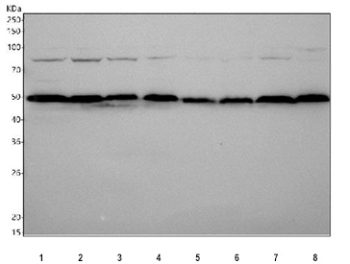
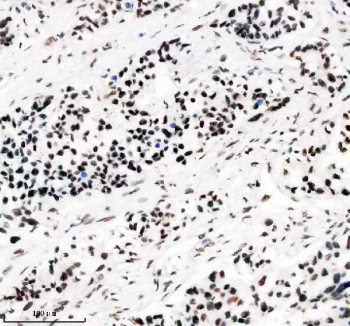
Antibody in PBS with 0.02% sodium azide, 50% glycerol and 0.4-0.5mg/ml BSA. PABPN1 antibody is a key reagent for studying RNA processing, gene expression, and human disease. The encoded protein, polyadenylate-binding protein nuclear 1 (also known historically as polyadenylate-binding protein 2), is a nuclear RNA-binding protein that regulates the length of the poly(A) tail added to pre-mRNA transcripts. By binding to nascent polyadenylated RNA, PABPN1 stimulates poly(A) polymerase activity and ensures proper tail length, which is critical for mRNA stability, export, and translation efficiency.PABPN1 functions primarily in the nucleus, where it coordinates with other RNA-binding proteins and processing factors to promote accurate maturation of mRNA. Beyond its role in polyadenylation, PABPN1 has been implicated in alternative polyadenylation site choice, thereby influencing transcript diversity and gene regulation. Through these activities, PABPN1 contributes to global control of gene expression and adaptation to cellular conditions.Mutations in PABPN1 cause oculopharyngeal muscular dystrophy (OPMD), a late-onset genetic disorder characterized by progressive weakening of the eyelid, pharyngeal, and proximal limb muscles. The disease is associated with expansion mutations in the polyalanine tract of PABPN1, leading to nuclear aggregation of the protein and impaired RNA processing. This connection highlights the essential role of PABPN1 in muscle cell biology and its broader significance in human health.In addition to OPMD, altered PABPN1 function has been linked to cancer and neurodegeneration, where dysregulated RNA processing contributes to disease progression. Studies suggest that changes in PABPN1 activity may affect transcriptome profiles and cellular stress responses, making it a protein of interest in both basic and translational research. Its role in regulating mRNA maturation also positions it as a critical node in pathways that integrate transcription and translation.The PABPN1 antibody is commonly applied in western blotting, immunohistochemistry, immunofluorescence, and flow cytometry to evaluate protein expression, nuclear localization, and disease-related alterations. These applications support research into RNA metabolism, muscular dystrophy, and transcriptome regulation. For scientists investigating RNA processing, muscle pathology, or gene expression control, the PABPN1 antibody provides a reliable detection reagent. NSJ Bioreagents supplies validated antibodies that ensure reproducibility and accuracy in advanced molecular studies. UCHL3 is widely expressed across tissues and has been linked to key biological processes including DNA repair, cell cycle regulation, and stress responses. Dysregulation of UCHL3 has been associated with cancer, neurodegeneration, and impaired protein degradation pathways. Employing a UCHL3 antibody provides insights into its diverse cellular functions and disease associations. NSJ Bioreagents offers a high-quality UCHL3 antibody validated for applications such as western blot, immunohistochemistry, and immunoprecipitation. Using a UCHL3 antibody ensures sensitive and reproducible detection in studies of ubiquitin biology, proteostasis, and disease mechanisms.
| Keywords: | Anti-PABPN1, Anti-Poly(A)-binding protein II, Anti-Polyadenylate-binding protein 2, Anti-Nuclear poly(A)-binding protein 1, Anti-Polyadenylate-binding nuclear protein 1, PABPN1 Antibody / Polyadenylate-binding protein 2 |
| Supplier: | NSJ Bioreagents |
| Supplier-Nr: | RQ8944 |
Properties
| Application: | WB, IHC (paraffin) |
| Antibody Type: | Monoclonal |
| Clone: | AAHI-16 |
| Conjugate: | No |
| Host: | Rabbit |
| Species reactivity: | human, mouse, rat |
| Immunogen: | A synthetic peptide specific to human PABPN1 |
| Format: | Purified |
Database Information
| KEGG ID : | K14396 | Matching products |
| UniProt ID : | Q86U42 | Matching products |
| Gene ID : | GeneID 8106 | Matching products |
Handling & Safety
| Storage: | -20°C |
| Shipping: | -20°C (International: -20°C) |
Caution
Our products are for laboratory research use only: Not for administration to humans!
Our products are for laboratory research use only: Not for administration to humans!
Information about the product reference will follow.
more
You will get a certificate here
Viewed