
Cookie preferences
This website uses cookies, which are necessary for the technical operation of the website and are always set. Other cookies, which increase the comfort when using this website, are used for direct advertising or to facilitate interaction with other websites and social networks, are only set with your consent.
Configuration
Technically required
These cookies are necessary for the basic functions of the shop.
"Allow all cookies" cookie
"Decline all cookies" cookie
CSRF token
Cookie preferences
Currency change
Customer-specific caching
FACT-Finder tracking
Individual prices
Selected shop
Session
Comfort functions
These cookies are used to make the shopping experience even more appealing, for example for the recognition of the visitor.
Note
Show the facebook fanpage in the right blod sidebar
Statistics & Tracking
Affiliate program
Conversion and usertracking via Google Tag Manager
Track device being used


| Item number | Size | Datasheet | Manual | SDS | Delivery time | Quantity | Price |
|---|---|---|---|---|---|---|---|
| NSJ-FY12584 | 100 µg | - | - |
3 - 10 business days* |
790.00€
|
If you have any questions, please use our Contact Form.
You can also order by e-mail: info@biomol.com
Larger quantity required? Request bulk
You can also order by e-mail: info@biomol.com
Larger quantity required? Request bulk
Adding 0.2 ml of distilled water will yield a concentration of 500 ug/ml. OSMR antibody detects... more
Product information "Anti-Osmr / Oncostatin M receptor"
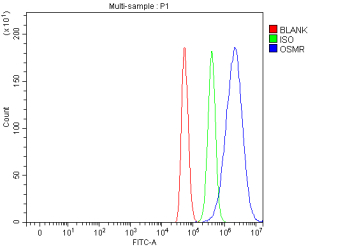
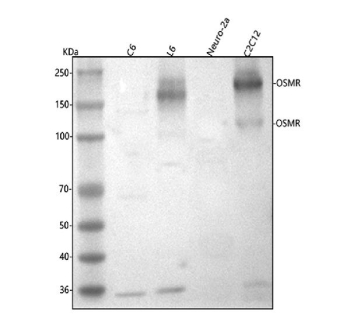
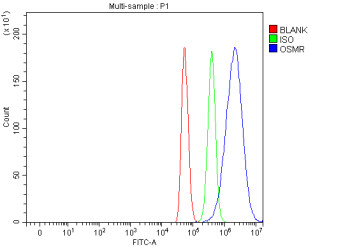
Adding 0.2 ml of distilled water will yield a concentration of 500 ug/ml. OSMR antibody detects Oncostatin M receptor, a cytokine receptor that forms part of the type I cytokine receptor family and mediates signaling by the cytokines oncostatin M and interleukin-31. OSMR dimerizes with either gp130 or IL31RA to initiate downstream JAK-STAT, MAPK, and PI3K signaling cascades. The OSMR antibody is widely used in immunology, inflammation, and cancer research to study cytokine signaling, tissue remodeling, and immune regulation.OSMR is encoded by the OSMR gene on human chromosome 5p13.1. The protein is approximately 100 kilodaltons and contains an extracellular cytokine-binding domain, a single transmembrane helix, and a cytoplasmic tail harboring signaling motifs that recruit JAK kinases and STAT transcription factors. OSMR is expressed in a wide range of cell types, including epithelial cells, fibroblasts, and immune cells, where it mediates diverse biological responses to inflammatory cues.An OSMR antibody detects a 100-200 kilodalton band by western blot and exhibits membrane and perinuclear staining under immunofluorescence. Ligand binding induces heterodimerization of OSMR with gp130 or IL31RA, leading to phosphorylation of JAK1 and JAK2 and subsequent activation of STAT3 and STAT5 transcription factors. These pathways regulate genes involved in cell proliferation, differentiation, and extracellular matrix remodeling.In the immune system, OSMR signaling modulates macrophage activation, Th2 cytokine production, and inflammation resolution. In epithelial tissues, OSMR promotes wound healing and regeneration but, when overactivated, contributes to chronic inflammation and fibrosis. Dysregulation of OSMR expression has been linked to psoriasis, asthma, and several cancers, where it enhances tumor progression through paracrine cytokine signaling.Because of its dual role in inflammation and tissue regeneration, OSMR represents an important biomarker and therapeutic target in immune-mediated and neoplastic diseases. NSJ Bioreagents provides a validated OSMR antibody optimized for its applications, supporting research into cytokine receptor signaling, inflammatory pathways, and cancer biology.
| Keywords: | Anti-Osmr, Anti-Interleukin-31 receptor subunit beta, Anti-Oncostatin-M-specific receptor subunit beta, Osmr Antibody / Oncostatin M receptor |
| Supplier: | NSJ Bioreagents |
| Supplier-Nr: | FY12584 |
Properties
| Application: | ELISA, WB, FC |
| Antibody Type: | Polyclonal |
| Conjugate: | No |
| Host: | Rabbit |
| Species reactivity: | mouse, rat |
| Immunogen: | E.coli-derived mouse Osmr recombinant protein (Position: E673-Q968) |
| Format: | Purified |
Database Information
| KEGG ID : | K05057 | Matching products |
| UniProt ID : | O70458 | Matching products |
| Gene ID : | GeneID 18414 | Matching products |
Handling & Safety
| Storage: | +4°C |
| Shipping: | +4°C (International: +4°C) |
Caution
Our products are for laboratory research use only: Not for administration to humans!
Our products are for laboratory research use only: Not for administration to humans!
Information about the product reference will follow.
more
You will get a certificate here
Viewed