
Cookie preferences
This website uses cookies, which are necessary for the technical operation of the website and are always set. Other cookies, which increase the comfort when using this website, are used for direct advertising or to facilitate interaction with other websites and social networks, are only set with your consent.
Configuration
Technically required
These cookies are necessary for the basic functions of the shop.
"Allow all cookies" cookie
"Decline all cookies" cookie
CSRF token
Cookie preferences
Currency change
Customer-specific caching
FACT-Finder tracking
Individual prices
Selected shop
Session
Comfort functions
These cookies are used to make the shopping experience even more appealing, for example for the recognition of the visitor.
Note
Show the facebook fanpage in the right blod sidebar
Statistics & Tracking
Affiliate program
Conversion and usertracking via Google Tag Manager
Track device being used

| Item number | Size | Datasheet | Manual | SDS | Delivery time | Quantity | Price |
|---|---|---|---|---|---|---|---|
| NSJ-RQ8949 | 100 µl | - | - |
3 - 10 business days* |
790.00€
|
If you have any questions, please use our Contact Form.
You can also order by e-mail: info@biomol.com
Larger quantity required? Request bulk
You can also order by e-mail: info@biomol.com
Larger quantity required? Request bulk
Antibody in PBS with 0.02% sodium azide, 50% glycerol and 0.4-0.5mg/ml BSA. NRCAM antibody is a... more
Product information "Anti-NRCAM / Neuronal cell adhesion molecule, clone ACOH-14"
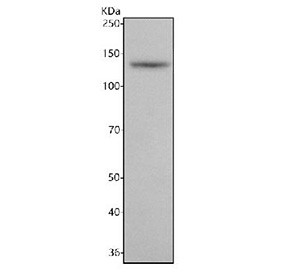
Antibody in PBS with 0.02% sodium azide, 50% glycerol and 0.4-0.5mg/ml BSA. NRCAM antibody is a valuable reagent for studying neural development, cell adhesion, and axonal guidance. The encoded protein, neuronal cell adhesion molecule (NRCAM), is a member of the immunoglobulin superfamily of cell adhesion molecules. NRCAM is primarily expressed in the nervous system, where it mediates interactions between neurons and glial cells. By promoting cell-cell adhesion, axon pathfinding, and synapse formation, NRCAM plays a fundamental role in establishing and maintaining neural circuits.During development, NRCAM contributes to neurite outgrowth and guidance by interacting with other adhesion molecules, extracellular matrix proteins, and cytoskeletal regulators. It facilitates the migration of neurons and the fasciculation of axons, ensuring proper connectivity in the developing brain and spinal cord. In mature neurons, NRCAM continues to support synaptic plasticity and neuronal communication, making it critical for both development and functional maintenance of the nervous system.Research has linked NRCAM to multiple human diseases. Genetic studies suggest associations with autism spectrum disorders, schizophrenia, and attention deficit hyperactivity disorder, where altered cell adhesion and synaptic signaling may contribute to pathogenesis. NRCAM expression has also been implicated in cancer biology, particularly in melanoma and neuroblastoma, where it may promote tumor cell adhesion, migration, and metastasis. These findings highlight NRCAM as a multifunctional protein relevant to both neuroscience and oncology.At the molecular level, neuronal cell adhesion molecule contains six immunoglobulin-like domains and five fibronectin type III repeats, followed by a single transmembrane region and a cytoplasmic tail. This structure enables NRCAM to form homophilic and heterophilic interactions that regulate adhesion and signaling. Through links to the actin cytoskeleton and intracellular kinases, NRCAM modulates cellular morphology, motility, and signaling responses.The NRCAM antibody is widely used in western blotting, immunohistochemistry, immunofluorescence, and flow cytometry to detect protein expression and localization. These applications are essential for mapping NRCAM distribution in developing and mature tissues, as well as examining its role in disease states. For researchers focused on neural connectivity, synapse biology, or tumor cell behavior, the NRCAM antibody provides a reliable detection tool. NSJ Bioreagents offers validated antibodies that deliver reproducibility and precision in advanced molecular studies.
| Keywords: | Anti-NRCAM, Anti-Neuronal surface protein Bravo, Anti-Neuronal cell adhesion molecule, Anti-NgCAM-related cell adhesion molecule, NRCAM Antibody / Neuronal cell adhesion molecule |
| Supplier: | NSJ Bioreagents |
| Supplier-Nr: | RQ8949 |
Properties
| Application: | WB |
| Antibody Type: | Monoclonal |
| Clone: | ACOH-14 |
| Conjugate: | No |
| Host: | Rabbit |
| Species reactivity: | human, rat |
| Immunogen: | A synthetic peptide specific to Neuronal cell adhesion molecule protein |
| Format: | Purified |
Database Information
| KEGG ID : | K06756 | Matching products |
| UniProt ID : | Q92823 | Matching products |
| Gene ID : | GeneID 4897 | Matching products |
Handling & Safety
| Storage: | -20°C |
| Shipping: | -20°C (International: -20°C) |
Caution
Our products are for laboratory research use only: Not for administration to humans!
Our products are for laboratory research use only: Not for administration to humans!
Information about the product reference will follow.
more
You will get a certificate here
Viewed