
Cookie preferences
This website uses cookies, which are necessary for the technical operation of the website and are always set. Other cookies, which increase the comfort when using this website, are used for direct advertising or to facilitate interaction with other websites and social networks, are only set with your consent.
Configuration
Technically required
These cookies are necessary for the basic functions of the shop.
"Allow all cookies" cookie
"Decline all cookies" cookie
CSRF token
Cookie preferences
Currency change
Customer-specific caching
FACT-Finder tracking
Individual prices
Selected shop
Session
Comfort functions
These cookies are used to make the shopping experience even more appealing, for example for the recognition of the visitor.
Note
Show the facebook fanpage in the right blod sidebar
Statistics & Tracking
Affiliate program
Conversion and usertracking via Google Tag Manager
Track device being used

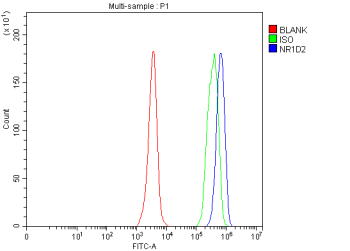
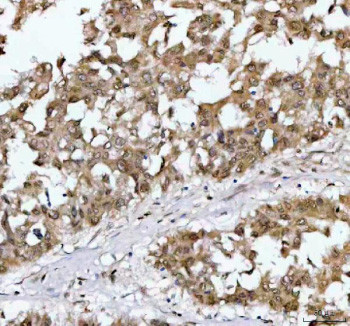


| Item number | Size | Datasheet | Manual | SDS | Delivery time | Quantity | Price |
|---|---|---|---|---|---|---|---|
| NSJ-FY13279 | 100 µg | - | - |
3 - 10 business days* |
790.00€
|
If you have any questions, please use our Contact Form.
You can also order by e-mail: info@biomol.com
Larger quantity required? Request bulk
You can also order by e-mail: info@biomol.com
Larger quantity required? Request bulk
Adding 0.2 ml of distilled water will yield a concentration of 500 ug/ml. NR1D2 antibody detects... more
Product information "Anti-NR1D2 / Rev-erb beta / Nuclear receptor subfamily 1 group D member 2"
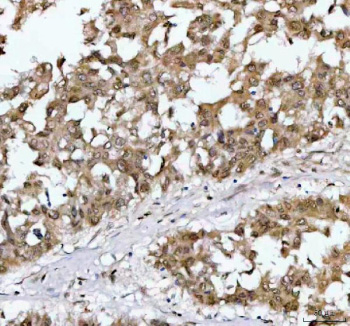
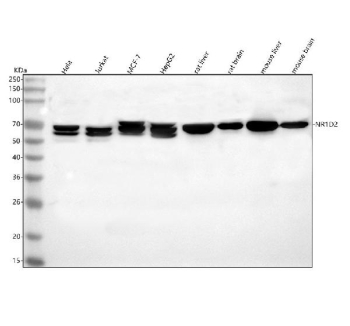
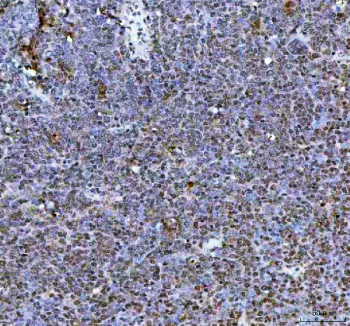
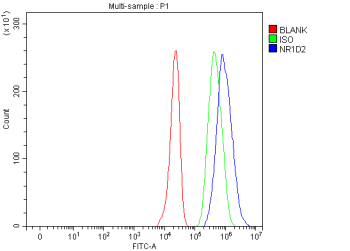
Adding 0.2 ml of distilled water will yield a concentration of 500 ug/ml. NR1D2 antibody detects Nuclear receptor subfamily 1 group D member 2, a transcriptional repressor involved in circadian rhythm regulation, lipid metabolism, and inflammatory control. The UniProt recommended name is Nuclear receptor subfamily 1 group D member 2 (NR1D2). Also known as Rev-erb beta, this orphan nuclear receptor functions as a ligand-sensitive transcription factor that integrates metabolic and circadian signaling in peripheral tissues and the central clock.Functionally, NR1D2 antibody identifies a 579-amino-acid protein that binds to Rev-erb response elements (RREs) in the promoters of target genes to repress transcription. NR1D2 interacts with the nuclear receptor co-repressor complex (NCoR/HDAC3), recruiting histone deacetylases to chromatin and silencing gene expression. It regulates genes involved in lipid synthesis, gluconeogenesis, mitochondrial function, and the circadian machinery, particularly in coordination with its paralog NR1D1 (Rev-erb alpha).The NR1D2 gene is located on chromosome 3p24.2 and is expressed rhythmically in liver, muscle, adipose tissue, and brain. Expression oscillates in antiphase to the transcriptional activators BMAL1 and CLOCK, ensuring temporal control of metabolic and circadian genes. NR1D2 also responds to heme as a natural ligand, linking metabolic redox state to transcriptional regulation.Pathologically, altered NR1D2 function contributes to circadian rhythm disorders, metabolic syndrome, and inflammatory diseases. Reduced activity disrupts daily metabolic cycles and leads to increased lipid accumulation and insulin resistance. Conversely, overactivation suppresses inflammatory gene expression and may offer therapeutic benefits in metabolic inflammation. Research using NR1D2 antibody supports studies in chronobiology, metabolism, and transcriptional regulation.NR1D2 antibody is validated for western blotting, immunofluorescence, and chromatin immunoprecipitation to detect nuclear transcription factors. NSJ Bioreagents provides NR1D2 antibody reagents optimized for research in circadian control, lipid metabolism, and gene repression mechanisms.Structurally, Nuclear receptor subfamily 1 group D member 2 contains a conserved DNA-binding domain with two zinc fingers, a ligand-binding domain for heme interaction, and a repressor interface for co-repressor complex recruitment. Its activity oscillates with diurnal rhythm, influencing both chromatin accessibility and transcriptional output. This antibody enables exploration of NR1D2's role in circadian transcriptional repression and metabolic synchronization.
| Keywords: | Anti-NR1D2, Anti-Rev-erb-beta, Anti-Rev-erb alpha-related receptor, Anti-V-erbA-related protein 1-related, Anti-Orphan nuclear hormone receptor BD73, Anti-Nuclear receptor subfamily 1 group D member 2, NR1D2 Antibody / Rev-erb beta / Nuclear receptor subf |
| Supplier: | NSJ Bioreagents |
| Supplier-Nr: | FY13279 |
Properties
| Application: | WB, IHC, FC, ELISA |
| Antibody Type: | Polyclonal |
| Conjugate: | No |
| Host: | Rabbit |
| Species reactivity: | human, mouse, rat |
| Immunogen: | E.coli-derived human NR1D2 recombinant protein (Position: K56-E501) |
| Format: | Purified |
Database Information
| KEGG ID : | K08531 | Matching products |
| UniProt ID : | Q14995 | Matching products |
| Gene ID : | GeneID 9975 | Matching products |
Handling & Safety
| Storage: | +4°C |
| Shipping: | +4°C (International: +4°C) |
Caution
Our products are for laboratory research use only: Not for administration to humans!
Our products are for laboratory research use only: Not for administration to humans!
Information about the product reference will follow.
more
You will get a certificate here
Viewed