
Anti-Neuropilin-1/NRP1/CD304 Monoclonal Recombinant Antibody


| Item number | Size | Datasheet | Manual | SDS | Delivery time | Quantity | Price |
|---|---|---|---|---|---|---|---|
| E-AN300099P.100 | 100 µl | - |
7 - 16 business days* |
462.00€
|
If you have any questions, please use our Contact Form.
You can also order by e-mail: info@biomol.com
Larger quantity required? Request bulk
You can also order by e-mail: info@biomol.com
Larger quantity required? Request bulk
Neuropilin is a type I transmembrane protein and the molecular mass is 120 kDa. Two homologs,... more
Product information "Anti-Neuropilin-1/NRP1/CD304 Monoclonal Recombinant Antibody"
Neuropilin is a type I transmembrane protein and the molecular mass is 120 kDa. Two homologs, Neuropilin-1 and Neuropilin-2, are identified. The primary structure of Neuropilin-1 and Neuropilin-2 is well conserved and is divided into four domains, CUB (a1/a2) domain, FV/FVIII (b1/b2) domain, MAM (c) domain, and (d) domain that contains a transmembrane and a short cytoplasmic region. Neuropilin-1 (NRP1) acts as a receptor for two different extracellular ligands, class 3 semaphorins, and specific isoforms of vascular endothelial growth factor. The functions of NRP1 and NRP2 have been extensively studied in neurons where they act in axon guidance and in endothelial cells where they promote angiogenesis and cell migration. Neuropilin-1 is likely to mediate contacts between the dendritic cells and the T lymphocytes via homotypic interactions and is essential for the initiation of the primary immune response. NRP1 is a co-receptor for VEGF receptor-2 (VEGFR2) that enhances the binding of VEGF165 to VEGFR2 and VEGF165-mediated chemotaxis. NRP1 expression is regulated in EC by tumor necrosis factor-alpha, the transcription factors dHAND and Ets-1, and vascular injury. NRP1 upregulation is positively correlated with the progression of various tumors. Overexpression of NRPI in rat tumor cells results in enlarged tumors and substantially enhanced tumor angiogenesis. On the other hand, soluble NRP1 (sNRP1) is an antagonist of tumor angiogenesis. Protein function: Cell-surface receptor involved in the development of the cardiovascular system, in angiogenesis, in the formation of certain neuronal circuits and in organogenesis outside the nervous system. Mediates the chemorepulsant activity of semaphorins (PubMed:10688880, PubMed:9288753, PubMed:9529250). Recognizes a C-end rule (CendR) motif R/KXXR/K on its ligands which causes cellular internalization and vascular leakage (PubMed:19805273). It binds to semaphorin 3A, the PLGF-2 isoform of PGF, the VEGF165 isoform of VEGFA and VEGFB (PubMed:10688880, PubMed:19805273, PubMed:9288753, PubMed:9529250). Coexpression with KDR results in increased VEGF165 binding to KDR as well as increased chemotaxis. Regulates VEGF-induced angiogenesis. Binding to VEGFA initiates a signaling pathway needed for motor neuron axon guidance and cell body migration, including for the caudal migration of facial motor neurons from rhombomere 4 to rhombomere 6 during embryonic development. Regulates mitochondrial iron transport via interaction with ABCB8/MITOSUR (PubMed:30623799). [The UniProt Consortium]
| Keywords: | NRP, CD304, Neuropilin-1, Vascular endothelial cell growth factor 165 receptor, Recombinant Neuropilin-1/NRP1/CD304 Monoclonal Antibody |
| Supplier: | Elabscience |
| Supplier-Nr: | E-AN300099P |
Properties
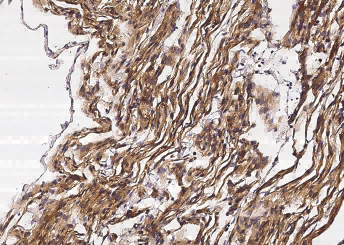
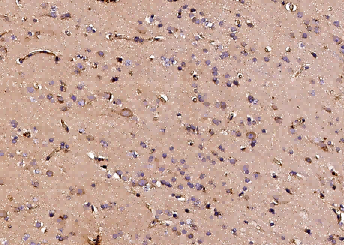
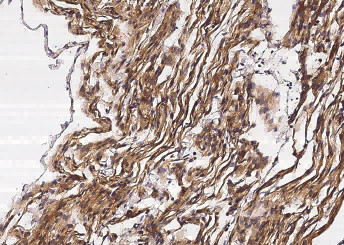
| Application: | IHC (paraffin) |
| Antibody Type: | Monoclonal |
| Clone: | 11G1 |
| Conjugate: | No |
| Host: | Rabbit |
| Species reactivity: | human |
| Immunogen: | Recombinant Human Neuropilin-1 / NRP1 / CD304 protein |
| Format: | Purified |
Database Information
| KEGG ID : | K06724 | Matching products |
| UniProt ID : | O14786 | Matching products |
| Gene ID : | GeneID 8829 | Matching products |
Handling & Safety
| Storage: | +4°C (avoid repeat freezing and thawing cycles) |
| Shipping: | +4°C (International: +4°C) |
| Signal Word: | Warning |
| GHS Hazard Pictograms: |

|
| H Phrases: | H317 |
| P Phrases: | P261, P272, P280, P302+352, P333+313 |
Caution
Our products are for laboratory research use only: Not for administration to humans!
Our products are for laboratory research use only: Not for administration to humans!
Information about the product reference will follow.
more
You will get a certificate here
Viewed