
Cookie preferences
This website uses cookies, which are necessary for the technical operation of the website and are always set. Other cookies, which increase the comfort when using this website, are used for direct advertising or to facilitate interaction with other websites and social networks, are only set with your consent.
Configuration
Technically required
These cookies are necessary for the basic functions of the shop.
"Allow all cookies" cookie
"Decline all cookies" cookie
CSRF token
Cookie preferences
Currency change
Customer-specific caching
FACT-Finder tracking
Individual prices
Selected shop
Session
Comfort functions
These cookies are used to make the shopping experience even more appealing, for example for the recognition of the visitor.
Note
Show the facebook fanpage in the right blod sidebar
Statistics & Tracking
Affiliate program
Conversion and usertracking via Google Tag Manager
Track device being used

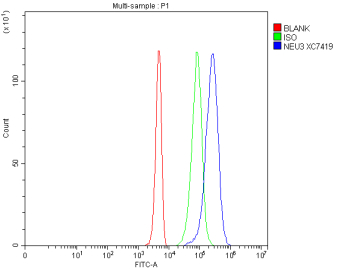
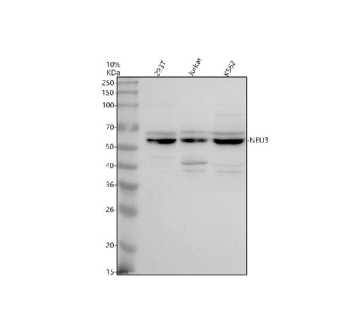
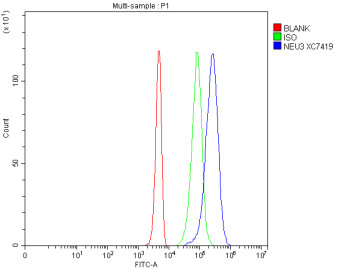

| Item number | Size | Datasheet | Manual | SDS | Delivery time | Quantity | Price |
|---|---|---|---|---|---|---|---|
| NSJ-FY12972 | 100 µg | - | - |
3 - 10 business days* |
790.00€
|
If you have any questions, please use our Contact Form.
You can also order by e-mail: info@biomol.com
Larger quantity required? Request bulk
You can also order by e-mail: info@biomol.com
Larger quantity required? Request bulk
Adding 0.2 ml of distilled water will yield a concentration of 500 ug/ml. NEU3 antibody detects... more
Product information "Anti-NEU3 / Sialidase 3"
Adding 0.2 ml of distilled water will yield a concentration of 500 ug/ml. NEU3 antibody detects Sialidase-3, a plasma membrane-associated enzyme that catalyzes the hydrolysis of sialic acid residues from gangliosides and glycoproteins. The UniProt recommended name is Sialidase-3 (NEU3). This enzyme is primarily localized at the plasma membrane and regulates signaling processes associated with cell growth, differentiation, and apoptosis through the modulation of membrane sialoglycoconjugates.Functionally, NEU3 antibody identifies a 428-amino-acid enzyme that preferentially acts on gangliosides such as GM3, GD1a, and GT1b, catalyzing their desialylation. NEU3 activity alters the composition of lipid rafts, influencing membrane receptor function and downstream signaling. It modulates the activity of growth factor receptors, including EGFR and integrins, by affecting their sialic acid content and clustering at the plasma membrane. Through these mechanisms, NEU3 participates in the regulation of cell proliferation, adhesion, and migration.The NEU3 gene is located on chromosome 11q13.5 and encodes a glycosidase that is anchored to the plasma membrane via hydrophobic domains. NEU3's enzymatic activity contributes to ganglioside catabolism and recycling, which are critical for maintaining lipid membrane homeostasis. Dysregulation of NEU3 expression has been linked to oncogenesis, as elevated levels promote tumor cell survival, motility, and resistance to apoptosis. Conversely, NEU3 deficiency impairs receptor-mediated signaling and disrupts ganglioside balance in neuronal and epithelial cells.In cancer biology, NEU3 overexpression enhances epidermal growth factor receptor (EGFR) signaling by desialylating GM3, a natural EGFR inhibitor. This results in sustained receptor activation and downstream MAPK and PI3K/AKT pathway stimulation. NEU3 also influences integrin-mediated adhesion and migration, contributing to metastasis. Beyond oncology, NEU3 is involved in immune modulation, neuronal signaling, and muscle differentiation. It also regulates autophagy by modulating membrane glycosphingolipid composition.NEU3 antibody is widely used in glycobiology, cancer research, and neurobiology to analyze sialidase function and membrane signaling. It supports applications including immunoblotting, immunocytochemistry, and enzyme localization studies. NEU3 expression profiling provides insight into tumor progression, inflammatory signaling, and metabolic disorders. The enzyme's surface localization makes it a potential therapeutic target for modulating receptor activity and glycosphingolipid metabolism.Structurally, NEU3 contains conserved catalytic motifs typical of sialidases and a hydrophobic transmembrane anchor that facilitates membrane association. It functions as a monomer and is regulated by pH and substrate availability. NSJ Bioreagents provides NEU3 antibody reagents validated for use in membrane biology, oncology, and glycosylation research.
| Keywords: | Anti-NEU3, Anti-Sialidase-3, Anti-Membrane sialidase, Anti-Ganglioside sialidasedis, Anti-N-acetyl-alpha-neuraminidase 3, NEU3 Antibody / Sialidase 3 |
| Supplier: | NSJ Bioreagents |
| Supplier-Nr: | FY12972 |
Properties
| Application: | WB, FC, ELISA |
| Antibody Type: | Polyclonal |
| Conjugate: | No |
| Host: | Rabbit |
| Species reactivity: | human |
| Immunogen: | E.coli-derived human NEU3 recombinant protein (Position: H36-D414) |
| Format: | Purified |
Database Information
| KEGG ID : | K12357 | Matching products |
| UniProt ID : | Q9UQ49 | Matching products |
| Gene ID : | GeneID 10825 | Matching products |
Handling & Safety
| Storage: | +4°C |
| Shipping: | +4°C (International: +4°C) |
Caution
Our products are for laboratory research use only: Not for administration to humans!
Our products are for laboratory research use only: Not for administration to humans!
Information about the product reference will follow.
more
You will get a certificate here
Viewed