
Cookie preferences
This website uses cookies, which are necessary for the technical operation of the website and are always set. Other cookies, which increase the comfort when using this website, are used for direct advertising or to facilitate interaction with other websites and social networks, are only set with your consent.
Configuration
Technically required
These cookies are necessary for the basic functions of the shop.
"Allow all cookies" cookie
"Decline all cookies" cookie
CSRF token
Cookie preferences
Currency change
Customer-specific caching
FACT-Finder tracking
Individual prices
Selected shop
Session
Comfort functions
These cookies are used to make the shopping experience even more appealing, for example for the recognition of the visitor.
Note
Show the facebook fanpage in the right blod sidebar
Statistics & Tracking
Affiliate program
Conversion and usertracking via Google Tag Manager
Track device being used


| Item number | Size | Datasheet | Manual | SDS | Delivery time | Quantity | Price |
|---|---|---|---|---|---|---|---|
| NSJ-F51861-0.08ML | 80 µl | - | - |
3 - 10 business days* |
361.00€
|
||
| NSJ-F51861-0.4ML | 400 µl | - | - |
3 - 10 business days* |
772.00€
|
If you have any questions, please use our Contact Form.
You can also order by e-mail: info@biomol.com
Larger quantity required? Request bulk
You can also order by e-mail: info@biomol.com
Larger quantity required? Request bulk
In 1X PBS, pH 7.4, with 0.09% sodium azide. Neurophysin 1 antibody detects Neurophysin 1, a... more
Product information "Anti-NEU1"
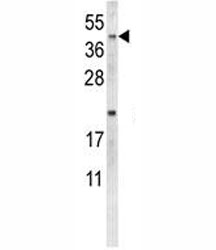
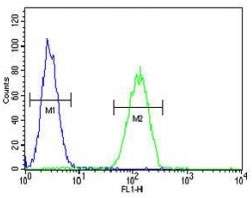
In 1X PBS, pH 7.4, with 0.09% sodium azide. Neurophysin 1 antibody detects Neurophysin 1, a carrier protein derived from the oxytocin-neurophysin I precursor encoded by the OXT gene. This protein name is sometimes abbreviated 'NEU1,' but is not to be confused with the protein Sialidase-1, with the gene name NEU1. Neurophysin 1 is synthesized as part of a larger prepropeptide that undergoes post-translational processing to produce both the oxytocin hormone and its carrier protein. The two remain associated within neurosecretory vesicles, ensuring correct folding, stability, and regulated transport of oxytocin from the hypothalamus to the posterior pituitary.The OXT gene, located on chromosome 20p13, encodes a prepropeptide consisting of a signal sequence, oxytocin, and the Neurophysin 1 domain. Following signal peptide removal in the endoplasmic reticulum, intramolecular disulfide bonds form within Neurophysin 1 to stabilize its structure. The oxytocin and Neurophysin 1 segments are cleaved during vesicle maturation in the hypothalamo-neurohypophyseal system, where the two components remain noncovalently associated until secretion. This relationship is essential for proper hormone storage and release during physiological processes such as lactation, parturition, and stress adaptation.Neurophysin 1 functions as a chaperone-like carrier, binding oxytocin with high affinity and preventing premature aggregation or degradation. Within magnocellular neurons of the paraventricular and supraoptic nuclei, Neurophysin 1 is packaged into dense-core granules that travel down hypothalamo-neurohypophyseal axons to the posterior pituitary, where hormone release occurs in response to neuronal depolarization. Because Neurophysin 1 is co-expressed and co-released with oxytocin, its immunoreactivity serves as a reliable marker of oxytocinergic neuron activity and distribution.Structurally, Neurophysin 1 is a 93-amino-acid protein enriched in cysteine residues, forming multiple disulfide bonds that create a compact, globular fold. This structure enables binding of the oxytocin nonapeptide and supports vesicular transport. It is closely related to Neurophysin 2, the carrier protein associated with vasopressin, though the two are encoded by distinct but adjacent genes on chromosome 20. Immunohistochemical detection of Neurophysin 1 provides high specificity for oxytocin-producing neurons and axons within the hypothalamus and neurohypophysis.In research, Neurophysin 1 antibody is valuable for identifying oxytocin-secreting neurons and for mapping hypothalamo-pituitary neurosecretory pathways. It is used to evaluate neuronal activity under physiological and experimental conditions, including stress, reproductive function, and social behavior studies. Because Neurophysin 1 persists in neurosecretory granules even after oxytocin release, it offers a stable immunohistochemical marker of oxytocinergic systems in the brain and pituitary.Neurophysin 1 antibody is suitable for detecting expression of the oxytocin carrier protein in tissue sections or cell models, providing insight into neuroendocrine regulation and hormone trafficking. NSJ Bioreagents provides Neurophysin 1 antibody validated for use in relevant research applications supporting studies in neuroendocrinology, hormone release, and hypothalamic physiology.
| Keywords: | Anti-OT, Anti-OXT, NEU1 Antibody |
| Supplier: | NSJ Bioreagents |
| Supplier-Nr: | F51861 |
Properties
| Application: | WB, IHC, FC, ELISA |
| Antibody Type: | Polyclonal |
| Conjugate: | No |
| Host: | Rabbit |
| Species reactivity: | human |
| Immunogen: | A portion of amino acids 11-40 from the human protein was used as the immunogen for this NEU1 antibody. |
| Format: | Purified |
Database Information
| KEGG ID : | K05243 | Matching products |
| UniProt ID : | P01178 | Matching products |
| Gene ID : | GeneID 5020 | Matching products |
Handling & Safety
| Storage: | -20°C |
| Shipping: | +4°C (International: +4°C) |
Caution
Our products are for laboratory research use only: Not for administration to humans!
Our products are for laboratory research use only: Not for administration to humans!
Information about the product reference will follow.
more
You will get a certificate here



Viewed