
Cookie preferences
This website uses cookies, which are necessary for the technical operation of the website and are always set. Other cookies, which increase the comfort when using this website, are used for direct advertising or to facilitate interaction with other websites and social networks, are only set with your consent.
Configuration
Technically required
These cookies are necessary for the basic functions of the shop.
"Allow all cookies" cookie
"Decline all cookies" cookie
CSRF token
Cookie preferences
Currency change
Customer-specific caching
FACT-Finder tracking
Individual prices
Selected shop
Session
Comfort functions
These cookies are used to make the shopping experience even more appealing, for example for the recognition of the visitor.
Note
Show the facebook fanpage in the right blod sidebar
Statistics & Tracking
Affiliate program
Conversion and usertracking via Google Tag Manager
Track device being used



| Item number | Size | Datasheet | Manual | SDS | Delivery time | Quantity | Price |
|---|---|---|---|---|---|---|---|
| NSJ-FY13309 | 100 µg | - | - |
3 - 10 business days* |
790.00€
|
If you have any questions, please use our Contact Form.
You can also order by e-mail: info@biomol.com
Larger quantity required? Request bulk
You can also order by e-mail: info@biomol.com
Larger quantity required? Request bulk
Adding 0.2 ml of distilled water will yield a concentration of 500 ug/ml. NAV1 antibody detects... more
Product information "Anti-NAV1 / Neuron navigator 1"
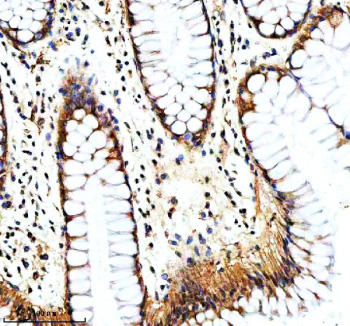
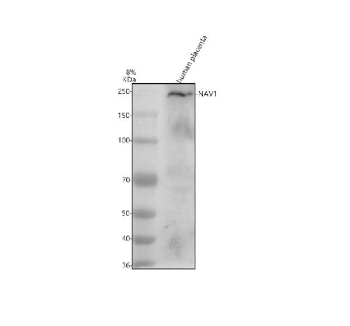
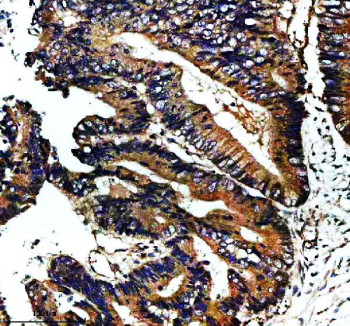
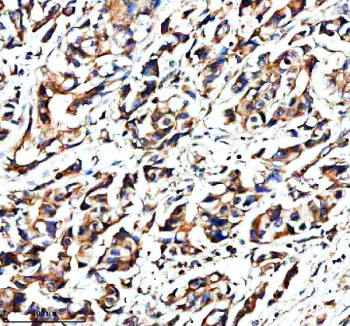
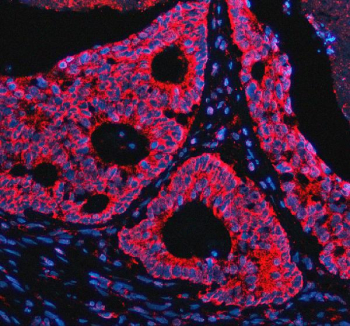
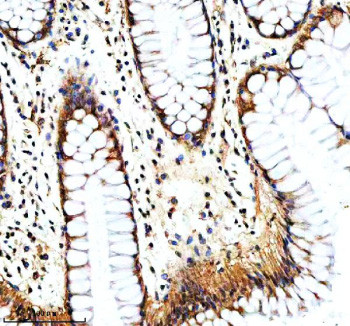
Adding 0.2 ml of distilled water will yield a concentration of 500 ug/ml. NAV1 antibody detects Neuron navigator 1, a cytoplasmic and microtubule-associated protein encoded by the NAV1 gene on chromosome 1q32.1. NAV1 belongs to the neuron navigator family of cytoskeletal regulators that guide neuronal migration, axon pathfinding, and cell motility. Structurally, NAV1 contains a calponin homology (CH) domain, coiled-coil regions, and a C-terminal AAA ATPase domain that enable its interaction with actin filaments and microtubules. These domains provide NAV1 with the ability to influence cytoskeletal organization and intracellular transport dynamics, particularly during nervous system development.NAV1 antibody identifies a protein that localizes primarily in the cytoplasm and along microtubule tracks, where it regulates growth cone navigation and neurite extension. The NAV1 protein interacts with microtubule plus-end tracking proteins (+TIPs) and motor proteins to guide axonal growth toward appropriate targets. It is expressed in neurons, glial cells, and various epithelial tissues, with high expression observed in the developing brain, spinal cord, and retina. Through its coordination of cytoskeletal dynamics, NAV1 contributes to processes such as neuronal polarization, synaptic connectivity, and axon regeneration.The NAV1 gene produces several isoforms via alternative splicing, allowing tissue-specific regulation of its functions. NAV1 also participates in non-neuronal cell migration and wound healing by influencing actin remodeling and focal adhesion turnover. The protein's CH domain mediates actin binding, while its ATPase domain is thought to regulate conformational changes during cytoskeletal rearrangement. NAV1 functions in signaling pathways controlled by small GTPases such as Rac1 and Cdc42, which govern directional cell movement and axonal pathfinding.Clinical research links NAV1 dysregulation to neurodevelopmental disorders and brain tumors. Genetic studies have associated NAV1 variants with autism spectrum disorders and schizophrenia, suggesting roles in neuronal wiring and cortical organization. In gliomas, altered NAV1 expression correlates with tumor cell invasiveness, consistent with its role in motility regulation. Additionally, NAV1 is implicated in axon regeneration following injury, making it a potential therapeutic target for neurorepair strategies.Structurally, the AAA ATPase-like domain of NAV1 shares similarity with microtubule-severing enzymes, though it lacks catalytic residues, indicating a structural or regulatory rather than enzymatic role. Its large size and multi-domain nature allow it to serve as a scaffold linking actin and microtubule cytoskeletons. NAV1 is also thought to influence intracellular transport of signaling endosomes and synaptic vesicles in neurons. The gene's expression is developmentally regulated by transcription factors including CREB and NFAT, reflecting its integration into neuronal growth programs.Immunohistochemical staining using NAV1 antibody shows cytoplasmic and perinuclear localization in neurons and glial cells, with prominent labeling in axons and dendritic projections. NAV1 antibody from NSJ Bioreagents provides a reliable reagent for research in neuronal development, axon guidance, and cytoskeletal organization. Its use extends to studies of neurodegenerative disease and brain tumor biology where cytoskeletal regulation is disrupted.
| Keywords: | Anti-NAV1, Anti-Steerin-1, Anti-Unc-53 homolog 1, Anti-Neuron navigator 1, Anti-Pore membrane and/or filament-interacting-like protein 3, NAV1 Antibody / Neuron navigator 1 |
| Supplier: | NSJ Bioreagents |
| Supplier-Nr: | FY13309 |
Properties
| Application: | WB, IHC, IF, ELISA |
| Antibody Type: | Polyclonal |
| Conjugate: | No |
| Host: | Rabbit |
| Species reactivity: | human |
| Immunogen: | E.coli-derived human NAV1 recombinant protein (Position: Q250-H1813) |
| Format: | Purified |
Database Information
| KEGG ID : | K16776 | Matching products |
| UniProt ID : | Q8NEY1 | Matching products |
| Gene ID : | GeneID 89796 | Matching products |
Handling & Safety
| Storage: | +4°C |
| Shipping: | +4°C (International: +4°C) |
Caution
Our products are for laboratory research use only: Not for administration to humans!
Our products are for laboratory research use only: Not for administration to humans!
Information about the product reference will follow.
more
You will get a certificate here
Viewed