
Cookie preferences
This website uses cookies, which are necessary for the technical operation of the website and are always set. Other cookies, which increase the comfort when using this website, are used for direct advertising or to facilitate interaction with other websites and social networks, are only set with your consent.
Configuration
Technically required
These cookies are necessary for the basic functions of the shop.
"Allow all cookies" cookie
"Decline all cookies" cookie
CSRF token
Cookie preferences
Currency change
Customer-specific caching
FACT-Finder tracking
Individual prices
Selected shop
Session
Comfort functions
These cookies are used to make the shopping experience even more appealing, for example for the recognition of the visitor.
Note
Show the facebook fanpage in the right blod sidebar
Statistics & Tracking
Affiliate program
Conversion and usertracking via Google Tag Manager
Track device being used




| Item number | Size | Datasheet | Manual | SDS | Delivery time | Quantity | Price |
|---|---|---|---|---|---|---|---|
| NSJ-RQ5090 | 100 µg | - | - |
7 - 12 business days* |
790.00€
|
If you have any questions, please use our Contact Form.
You can also order by e-mail: info@biomol.com
Larger quantity required? Request bulk
You can also order by e-mail: info@biomol.com
Larger quantity required? Request bulk
0.5mg/ml if reconstituted with 0.2ml sterile DI water. MUC13 Antibody targets Mucin 13, a... more
Product information "Anti-MUC13 / Mucin 13"
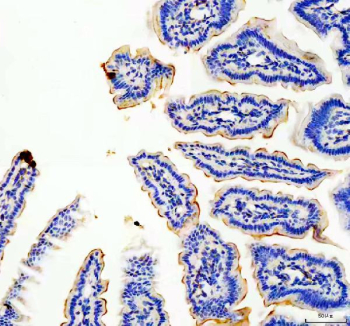
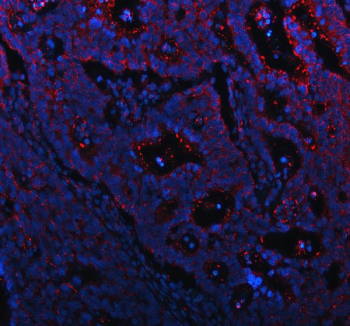
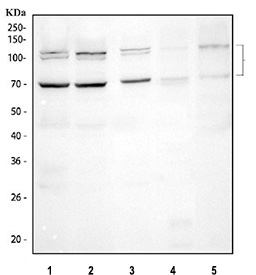
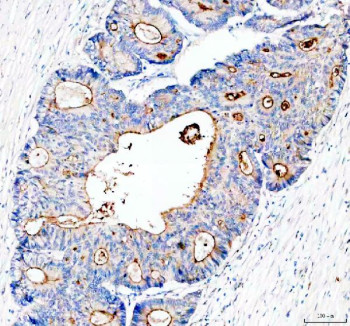
0.5mg/ml if reconstituted with 0.2ml sterile DI water. MUC13 Antibody targets Mucin 13, a transmembrane mucin encoded by the MUC13 gene that functions as a component of the epithelial cell surface glycocalyx. Mucin 13 belongs to the mucin family of heavily glycosylated proteins that contribute to epithelial barrier function, cell signaling, and protection of mucosal surfaces. As a membrane-associated mucin, MUC13 plays a role in mediating interactions between epithelial cells and their extracellular environment.Functionally, Mucin 13 contributes to epithelial defense by forming a protective mucous layer and participating in cell surface signaling processes. The extracellular mucin domain is extensively glycosylated, providing resistance to proteolytic degradation and mechanical stress, while the transmembrane and cytoplasmic regions enable intracellular signaling interactions. A MUC13 Antibody enables investigation of mucin expression patterns, epithelial surface organization, and mucin-associated signaling pathways in research studies.MUC13 expression is primarily observed in epithelial tissues, particularly within the gastrointestinal tract and other mucosal surfaces. At the cellular level, Mucin 13 localizes predominantly to the apical plasma membrane of epithelial cells, where it contributes to barrier integrity and luminal interface functions. Altered localization or expression of MUC13 may reflect changes in epithelial differentiation, inflammatory responses, or disease-associated remodeling of mucosal tissues.At the molecular level, Mucin 13 is characterized by a large extracellular domain containing tandem repeat regions rich in serine and threonine residues that serve as sites for O-linked glycosylation. These structural features are typical of mucins and are critical for forming hydrated, protective mucous layers. The cytoplasmic tail of MUC13 contains motifs that can interact with intracellular signaling proteins, linking mucin expression to regulation of epithelial cell behavior.From a biological and disease relevance perspective, MUC13 has been extensively studied in cancer research, particularly in epithelial-derived malignancies. Aberrant overexpression of MUC13 has been associated with altered cell signaling, increased proliferative capacity, and changes in cell adhesion properties. These alterations can contribute to tumor-associated epithelial remodeling and disrupted barrier function, highlighting the importance of MUC13 as a marker of epithelial transformation and disease progression.MUC13 Antibody reagents are valuable tools for studying mucin biology, epithelial barrier regulation, and disease-associated changes in cell surface glycoproteins. These antibodies support research into gastrointestinal biology, epithelial signaling pathways, and cancer-associated alterations in mucosal protein expression. NSJ Bioreagents provides MUC13 Antibody products intended for research use.
| Keywords: | Anti-MUC13, Anti-Mucin-13, Anti-Down-regulated in colon cancer 1, MUC13 Antibody / Mucin 13 |
| Supplier: | NSJ Bioreagents |
| Supplier-Nr: | RQ5090 |
Properties
| Application: | WB, IHC (paraffin), IF, Direct ELISA |
| Antibody Type: | Polyclonal |
| Conjugate: | No |
| Host: | Rabbit |
| Species reactivity: | human, mouse, rat |
| Immunogen: | Amino acids E226-S312 from the human protein |
| Format: | Purified |
Database Information
| KEGG ID : | K17298 | Matching products |
| UniProt ID : | Q9H3R2 | Matching products |
| Gene ID : | GeneID 56667 | Matching products |
Handling & Safety
| Storage: | -20°C |
| Shipping: | -20°C (International: -20°C) |
Caution
Our products are for laboratory research use only: Not for administration to humans!
Our products are for laboratory research use only: Not for administration to humans!
Information about the product reference will follow.
more
You will get a certificate here
Viewed