
Cookie preferences
This website uses cookies, which are necessary for the technical operation of the website and are always set. Other cookies, which increase the comfort when using this website, are used for direct advertising or to facilitate interaction with other websites and social networks, are only set with your consent.
Configuration
Technically required
These cookies are necessary for the basic functions of the shop.
"Allow all cookies" cookie
"Decline all cookies" cookie
CSRF token
Cookie preferences
Currency change
Customer-specific caching
FACT-Finder tracking
Individual prices
Selected shop
Session
Comfort functions
These cookies are used to make the shopping experience even more appealing, for example for the recognition of the visitor.
Note
Show the facebook fanpage in the right blod sidebar
Statistics & Tracking
Affiliate program
Conversion and usertracking via Google Tag Manager
Track device being used

| Item number | Size | Datasheet | Manual | SDS | Delivery time | Quantity | Price |
|---|---|---|---|---|---|---|---|
| NSJ-FY12751 | 100 µl | - | - |
3 - 10 business days* |
790.00€
|
If you have any questions, please use our Contact Form.
You can also order by e-mail: info@biomol.com
Larger quantity required? Request bulk
You can also order by e-mail: info@biomol.com
Larger quantity required? Request bulk
Rabbit IgG in phosphate buffered saline, pH 7.4, 150mM NaCl, 0.02% sodium azide and 50% glycerol,... more
Product information "Anti-mTOR / Mammalian target of rapamycin, clone 32M82"
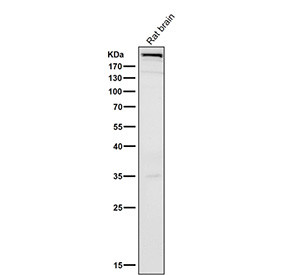
Rabbit IgG in phosphate buffered saline, pH 7.4, 150mM NaCl, 0.02% sodium azide and 50% glycerol, 0.4-0.5mg/ml BSA. mTOR antibody detects mechanistic target of rapamycin, encoded by the MTOR gene. Common alternate names include FRAP1, RAFT1, and RAPT1. mTOR is a serine threonine kinase that integrates nutrient, energy, and growth factor signals to regulate cell growth, metabolism, and survival. As the catalytic core of the mTORC1 and mTORC2 complexes, it influences protein synthesis, lipid metabolism, and cytoskeletal organization. mTOR is highly conserved and functions as a central regulator of cellular homeostasis.mTOR antibody is widely applied in cancer research, immunology, and metabolism. In cancer, hyperactivation of mTOR pathways drives uncontrolled proliferation and metabolic reprogramming. In immunology, mTOR regulates T cell differentiation and macrophage function. In metabolic biology, mTOR senses nutrient status and controls autophagy. By detecting mTOR protein, researchers can study how this kinase integrates diverse signals to maintain balance or promote disease.Validated applications for mTOR antibody include western blotting, immunohistochemistry, and immunofluorescence. Western blotting reveals mTOR expression and size, immunohistochemistry maps distribution in tumors and tissues, and immunofluorescence highlights subcellular localization at lysosomes and other compartments. These methods provide strong experimental tools to characterize mTOR biology.Dysregulation of mTOR signaling contributes to cancer, diabetes, cardiovascular disease, and neurodegeneration. Mutations and upstream activation of PI3K and Akt lead to aberrant mTOR activity. Therapeutically, mTOR inhibitors such as rapamycin and its analogs are used to treat cancer and transplantation related immune suppression. Antibody based detection of mTOR supports both mechanistic studies and translational applications.mTOR antibody from NSJ Bioreagents provides dependable specificity for mechanistic target of rapamycin. Its robust performance supports research across molecular biology, oncology, and clinical translational fields.
| Keywords: | Anti-MTOR, Anti-Rapamycin target protein 1, Anti-Tyrosine-protein kinase mTOR, Anti-Rapamycin and FKBP12 target 1, Anti-Mammalian target of rapamycin, Anti-Mechanistic target of rapamycin, Anti-Serine/threonine-protein kinase mTOR, Anti-FKBP12-rapamycin c |
| Supplier: | NSJ Bioreagents |
| Supplier-Nr: | FY12751 |
Properties
| Application: | WB |
| Antibody Type: | Monoclonal |
| Clone: | 32M82 |
| Conjugate: | No |
| Host: | Rabbit |
| Species reactivity: | human, mouse, rat |
| Immunogen: | A synthesized peptide derived from human mTOR |
| Format: | Purified |
Database Information
| KEGG ID : | K07203 | Matching products |
| UniProt ID : | P42345 | Matching products |
| Gene ID : | GeneID 2475 | Matching products |
Handling & Safety
| Storage: | -20°C |
| Shipping: | -20°C (International: -20°C) |
Caution
Our products are for laboratory research use only: Not for administration to humans!
Our products are for laboratory research use only: Not for administration to humans!
Information about the product reference will follow.
more
You will get a certificate here
Viewed