
Cookie preferences
This website uses cookies, which are necessary for the technical operation of the website and are always set. Other cookies, which increase the comfort when using this website, are used for direct advertising or to facilitate interaction with other websites and social networks, are only set with your consent.
Configuration
Technically required
These cookies are necessary for the basic functions of the shop.
"Allow all cookies" cookie
"Decline all cookies" cookie
CSRF token
Cookie preferences
Currency change
Customer-specific caching
FACT-Finder tracking
Individual prices
Selected shop
Session
Comfort functions
These cookies are used to make the shopping experience even more appealing, for example for the recognition of the visitor.
Note
Show the facebook fanpage in the right blod sidebar
Statistics & Tracking
Affiliate program
Conversion and usertracking via Google Tag Manager
Track device being used



| Item number | Size | Datasheet | Manual | SDS | Delivery time | Quantity | Price |
|---|---|---|---|---|---|---|---|
| NSJ-FY13000 | 100 µg | - | - |
3 - 10 business days* |
790.00€
|
If you have any questions, please use our Contact Form.
You can also order by e-mail: info@biomol.com
Larger quantity required? Request bulk
You can also order by e-mail: info@biomol.com
Larger quantity required? Request bulk
Adding 0.2 ml of distilled water will yield a concentration of 500 ug/ml. MTMR3 antibody detects... more
Product information "Anti-MTMR3 / Myotubularin-related protein 3"
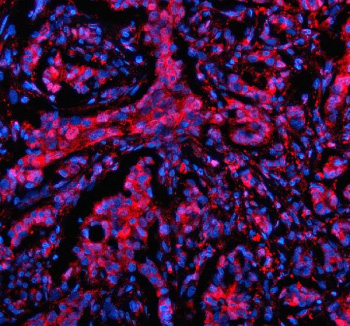
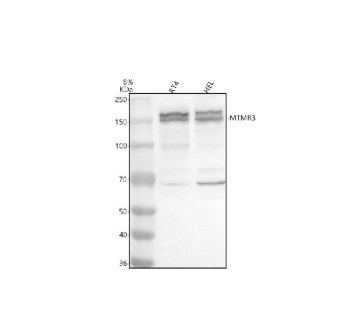
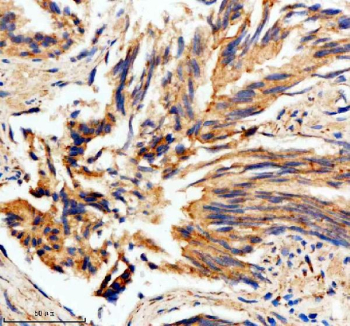
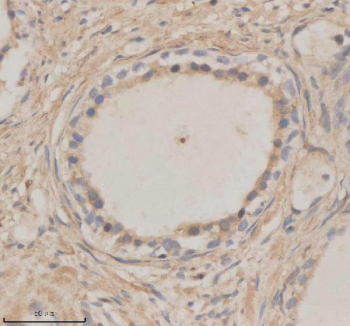
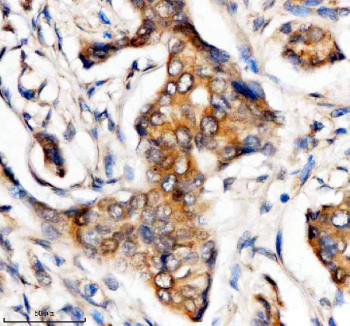
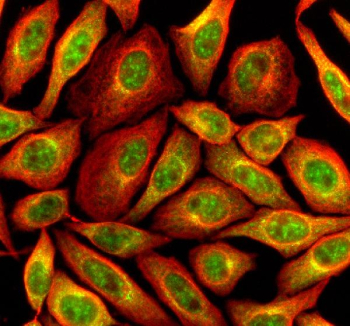
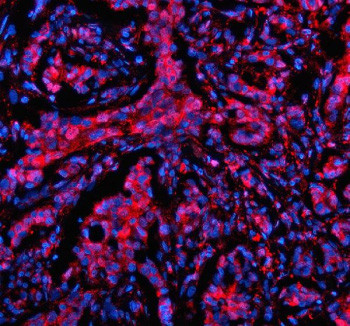
Adding 0.2 ml of distilled water will yield a concentration of 500 ug/ml. MTMR3 antibody detects Myotubularin-related protein 3, a phosphatidylinositol phosphatase involved in autophagy, endosomal trafficking, and phosphoinositide metabolism. The UniProt recommended name is Myotubularin-related protein 3 (MTMR3). This enzyme belongs to the myotubularin family of dual-specificity phosphatases that dephosphorylate phosphatidylinositol 3-phosphate (PI3P) and phosphatidylinositol 3,5-bisphosphate [PI(3,5)P2], key regulators of endosomal dynamics and membrane trafficking.Functionally, MTMR3 antibody identifies a 911-amino-acid cytoplasmic protein containing a PH-GRAM lipid-binding domain, a catalytic phosphatase domain, and a coiled-coil region responsible for dimerization. MTMR3 acts as a negative regulator of autophagy by dephosphorylating PI3P, thereby modulating membrane dynamics at autophagosome formation sites. It also regulates endosomal sorting and vesicle trafficking between endosomes and the trans-Golgi network.The MTMR3 gene is located on chromosome 22q12.2 and is expressed in a broad range of tissues, including muscle, brain, and kidney. Its activity ensures proper membrane identity and turnover of signaling lipids within endocytic and autophagic pathways. Dysregulation of MTMR3 expression leads to aberrant phosphoinositide signaling, contributing to impaired autophagy, vesicle accumulation, and neurodegeneration.In cellular signaling, MTMR3 integrates nutrient and stress signals to balance autophagy and cell survival. It interacts with mTORC1 and ULK1 complexes, coordinating lipid metabolism with autophagic flux. Loss or inhibition of MTMR3 enhances autophagy initiation, while overexpression suppresses it. In cancer, MTMR3 acts context-dependently, functioning as either a tumor suppressor or survival factor depending on cell type and metabolic state.MTMR3 antibody is widely used in autophagy, membrane trafficking, and phosphoinositide signaling research. It is suitable for western blotting, immunofluorescence, and lipid signaling assays to detect MTMR3 expression and localization to endosomal membranes. In neurobiology, this antibody aids in studying lysosomal and endocytic dysfunction associated with neurodegenerative diseases. In cancer studies, MTMR3 detection contributes to understanding metabolic regulation and cell stress adaptation.Structurally, MTMR3 contains a catalytic Cys-X5-Arg motif typical of the protein tyrosine phosphatase superfamily, with substrate specificity directed toward phosphatidylinositol derivatives. The PH-GRAM domain mediates lipid recognition, while the coiled-coil region enables dimer formation with other myotubularin family members. NSJ Bioreagents provides MTMR3 antibody reagents validated for use in autophagy, lipid metabolism, and membrane trafficking studies.
| Keywords: | Anti-MTMR3, Anti-Myotubularin-related protein 3, Anti-Phosphatidylinositol-3-phosphate phosphatase, Anti-Zinc finger FYVE domain-containing protein 10, Anti-Phosphatidylinositol-3,5-bisphosphate 3-phosphatase, Anti-Phosphatidylinositol-3,5-bisphosphate 3- |
| Supplier: | NSJ Bioreagents |
| Supplier-Nr: | FY13000 |
Properties
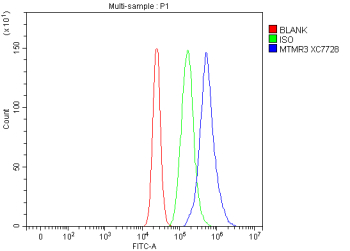
| Application: | WB, IHC, IF, ICC/IF, FC, ELISA |
| Antibody Type: | Polyclonal |
| Conjugate: | No |
| Host: | Rabbit |
| Species reactivity: | human |
| Immunogen: | E.coli-derived human MTMR3 recombinant protein (Position: M1-E1074) |
| Format: | Purified |
Database Information
| KEGG ID : | K18082 | Matching products |
| UniProt ID : | Q13615 | Matching products |
| Gene ID : | GeneID 8897 | Matching products |
Handling & Safety
| Storage: | +4°C |
| Shipping: | +4°C (International: +4°C) |
Caution
Our products are for laboratory research use only: Not for administration to humans!
Our products are for laboratory research use only: Not for administration to humans!
Information about the product reference will follow.
more
You will get a certificate here
Viewed