
Cookie preferences
This website uses cookies, which are necessary for the technical operation of the website and are always set. Other cookies, which increase the comfort when using this website, are used for direct advertising or to facilitate interaction with other websites and social networks, are only set with your consent.
Configuration
Technically required
These cookies are necessary for the basic functions of the shop.
"Allow all cookies" cookie
"Decline all cookies" cookie
CSRF token
Cookie preferences
Currency change
Customer-specific caching
FACT-Finder tracking
Individual prices
Selected shop
Session
Comfort functions
These cookies are used to make the shopping experience even more appealing, for example for the recognition of the visitor.
Note
Show the facebook fanpage in the right blod sidebar
Statistics & Tracking
Affiliate program
Conversion and usertracking via Google Tag Manager
Track device being used



| Item number | Size | Datasheet | Manual | SDS | Delivery time | Quantity | Price |
|---|---|---|---|---|---|---|---|
| NSJ-RQ6718 | 100 µg | - | - |
3 - 10 business days* |
790.00€
|
If you have any questions, please use our Contact Form.
You can also order by e-mail: info@biomol.com
Larger quantity required? Request bulk
You can also order by e-mail: info@biomol.com
Larger quantity required? Request bulk
0.5mg/ml if reconstituted with 0.2ml sterile DI water. MEFV (Mediterranean fever) is a human gene... more
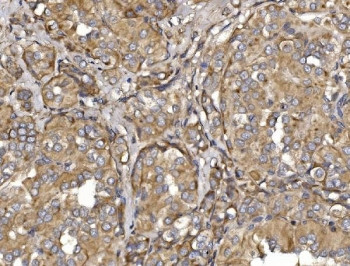
Product information "Anti-MEFV / Marenostrin / Pyrin"
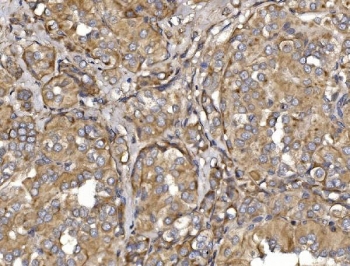
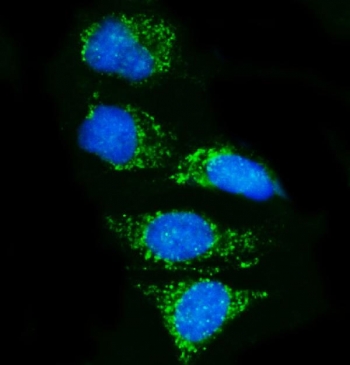
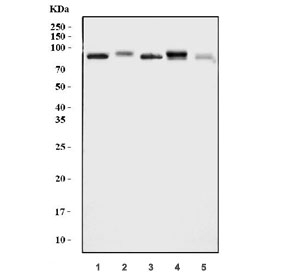
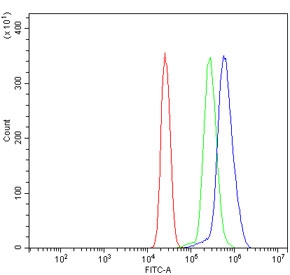
0.5mg/ml if reconstituted with 0.2ml sterile DI water. MEFV (Mediterranean fever) is a human gene that provides instructions for making a protein called pyrin (also known as marenostrin). Pyrin is produced in certain white blood cells (neutrophils, eosinophils and monocytes) that play a role in inflammation and in fighting infection. Inside these white blood cells, pyrin is found with thecytoskeleton, the structural framework that helps to define the shape, size, and movement of a cell. Pyrin's protein structure also allows it to interact with other molecules involved in fighting infection and in the inflammatory response. Although pyrin's function is not fully understood, it likely assists in keeping the inflammation process under control. Research indicates that pyrin helps regulate inflammation by interacting with the cytoskeleton. And Pyrin may direct the migration of white blood cells to sites of inflammation and stop or slow the inflammatory response when it is no longer needed. Protein function: Involved in the regulation of innate immunity and the inflammatory response in response to IFNG/IFN-gamma (PubMed:10807793, PubMed:11468188, PubMed:17964261, PubMed:18577712, PubMed:19109554, PubMed:19584923, PubMed:16037825, PubMed:27030597, PubMed:28835462, PubMed:16785446, PubMed:17431422, PubMed:26347139). Organizes autophagic machinery by serving as a platform for the assembly of ULK1, Beclin 1/BECN1, ATG16L1, and ATG8 family members and recognizes specific autophagy targets, thus coordinating target recognition with assembly of the autophagic apparatus and initiation of autophagy (PubMed:16785446, PubMed:17431422, PubMed:26347139). Acts as an autophagy receptor for the degradation of several inflammasome components, including CASP1, NLRP1 and NLRP3, hence preventing excessive IL1B- and IL18-mediated inflammation (PubMed:16785446, PubMed:17431422, PubMed:26347139). However, it can also have a positive effect in the inflammatory pathway, acting as an innate immune sensor that triggers PYCARD/ASC specks formation, caspase-1 activation, and IL1B and IL18 production (PubMed:16037825, PubMed:27030597, PubMed:28835462). Together with AIM2, also acts as a mediator of pyroptosis, necroptosis and apoptosis (PANoptosis), an integral part of host defense against pathogens, in response to bacterial infection. It is required for PSTPIP1-induced PYCARD/ASC oligomerization and inflammasome formation (PubMed:10807793, PubMed:11468188, PubMed:17964261, PubMed:18577712, PubMed:19109554, PubMed:19584923). Recruits PSTPIP1 to inflammasomes, and is required for PSTPIP1 oligomerization (PubMed:10807793, PubMed:11468188, PubMed:17964261, PubMed:18577712, PubMed:19109554, PubMed:19584923). [The UniProt Consortium]
| Keywords: | Anti-MEF, Anti-Pyrin, Anti-Marenostrin, MEFV Antibody / Marenostrin / Pyrin |
| Supplier: | NSJ Bioreagents |
| Supplier-Nr: | RQ6718 |
Properties
| Application: | WB, IHC (paraffin), IF, FC, Direct ELISA |
| Antibody Type: | Polyclonal |
| Conjugate: | No |
| Host: | Rabbit |
| Species reactivity: | human, mouse |
| Immunogen: | Recombinant human protein (amino acids Q463-D781) |
| Format: | Immune Reaction |
Database Information
| KEGG ID : | K12803 | Matching products |
| UniProt ID : | O15553 | Matching products |
| Gene ID : | GeneID 4210 | Matching products |
Handling & Safety
| Storage: | +4°C |
| Shipping: | +4°C (International: +4°C) |
Caution
Our products are for laboratory research use only: Not for administration to humans!
Our products are for laboratory research use only: Not for administration to humans!
Information about the product reference will follow.
more
You will get a certificate here
Viewed