
This website uses cookies, which are necessary for the technical operation of the website and are always set. Other cookies, which increase the comfort when using this website, are used for direct advertising or to facilitate interaction with other websites and social networks, are only set with your consent.
Configuration
Technically required
These cookies are necessary for the basic functions of the shop.
"Allow all cookies" cookie
"Decline all cookies" cookie
CSRF token
Cookie preferences
Currency change
Customer-specific caching
FACT-Finder tracking
Individual prices
Selected shop
Session
Comfort functions
These cookies are used to make the shopping experience even more appealing, for example for the recognition of the visitor.
Note
Show the facebook fanpage in the right blod sidebar
Statistics & Tracking
Affiliate program
Conversion and usertracking via Google Tag Manager
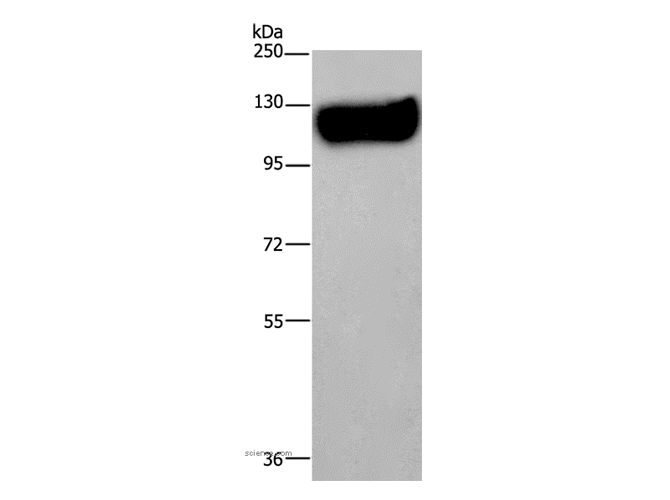
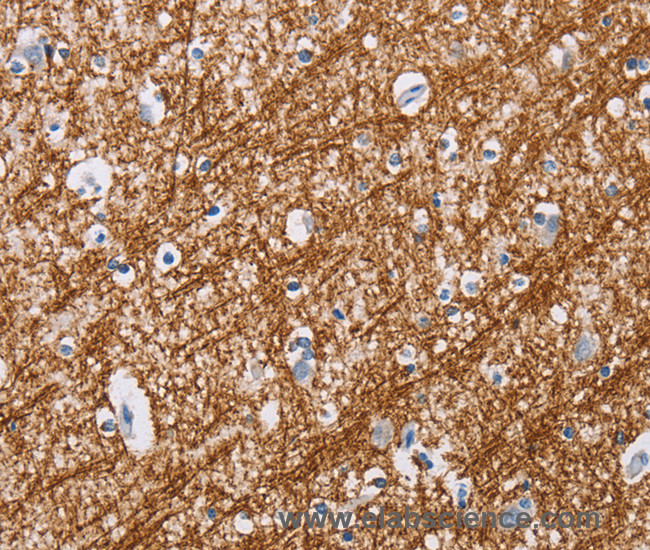
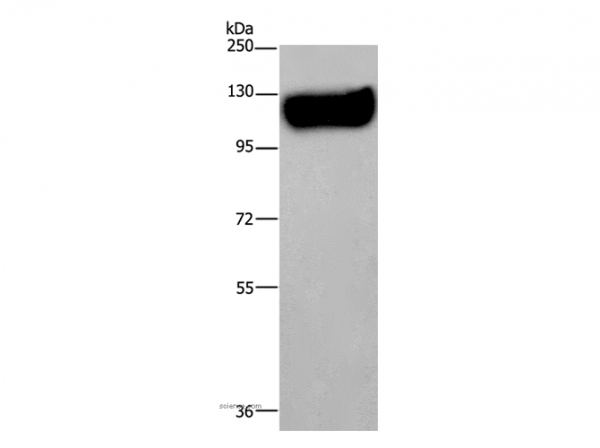
The protein encoded by this gene is a type I membrane protein and member of the immunoglobulin superfamily. It is thought to be involved in the process of myelination. It is a lectin that binds to sialylated glycoconjugates and mediates certain myelin-neuron cell-cell interactions. Three alternatively spliced transcripts encoding different isoforms have been described for this gene. Protein function: Adhesion molecule that mediates interactions between myelinating cells and neurons by binding to neuronal sialic acid- containing gangliosides and to the glycoproteins RTN4R and RTN4RL2. Not required for initial myelination, but seems to play a role in the maintenance of normal axon myelination. Protects motoneurons against apoptosis, also after injury, protection against apoptosis is probably mediated via interaction with neuronal RTN4R and RTN4RL2. Required to prevent degeneration of myelinated axons in adults, this probably depends on binding to gangliosides on the axon cell membrane. Negative regulator of neurite outgrowth, in dorsal root ganglion neurons the inhibition is mediated primarily via binding to neuronal RTN4R or RTN4RL2 and to a lesser degree via binding to neuronal gangliosides. In cerebellar granule cells the inhibition is mediated primarily via binding to neuronal gangliosides. In sensory neurons, inhibition of neurite extension depends only partially on RTN4R, RTN4RL2 and gangliosides. Inhibits axon longitudinal growth. Inhibits axon outgrowth by binding to RTN4R. Preferentially binds to alpha- 2,3-linked sialic acid. Binds ganglioside Gt1b. [The UniProt Consortium]
This website uses cookies, which are necessary for the technical operation of the website and are always set. Other cookies, which increase the usability of this website, serve for direct advertising or simplify interaction with other websites and social networks, will only be used with your consent.
More information
