
This website uses cookies, which are necessary for the technical operation of the website and are always set. Other cookies, which increase the comfort when using this website, are used for direct advertising or to facilitate interaction with other websites and social networks, are only set with your consent.
Configuration
Technically required
These cookies are necessary for the basic functions of the shop.
"Allow all cookies" cookie
"Decline all cookies" cookie
CSRF token
Cookie preferences
Currency change
Customer-specific caching
FACT-Finder tracking
Individual prices
Selected shop
Session
Comfort functions
These cookies are used to make the shopping experience even more appealing, for example for the recognition of the visitor.
Note
Show the facebook fanpage in the right blod sidebar
Statistics & Tracking
Affiliate program
Conversion and usertracking via Google Tag Manager
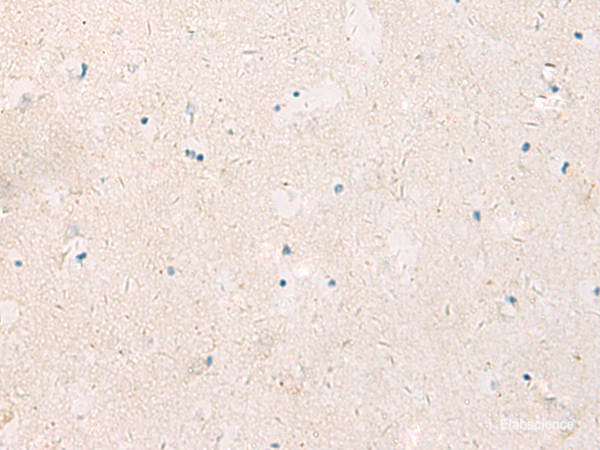
This gene encodes a member of the family of voltage-gated potassium (Kv) channel-interacting proteins, which belong to the recoverin branch of the EF-hand superfamily. Members of this family are small calcium binding proteins containing EF-hand-like domains. They are integral subunit components of native Kv4 channel complexes that may regulate A-type currents, and hence neuronal excitability, in response to changes in intracellular calcium. The encoded protein also functions as a calcium-regulated transcriptional repressor, and interacts with presenilins. Alternatively spliced transcript variants encoding different isoforms have been described. KCNIP3 (Potassium Voltage-Gated Channel Interacting Protein 3) is a Protein Coding gene. Diseases associated with KCNIP3 include Alzheimer Disease. Among its related pathways are Cardiac conduction and Development Ligand-independent activation of ESR1 and ESR2. GO annotations related to this gene include calcium ion binding and transcription corepressor activity. An important paralog of this gene is KCNIP4. Protein function: Calcium-dependent transcriptional repressor that binds to the DRE element of genes including PDYN and FOS. Affinity for DNA is reduced upon binding to calcium and enhanced by binding to magnesium. Seems to be involved in nociception. [The UniProt Consortium]
Keywords:
Anti-CSEN, Anti-DREAM, Anti-KCNIP3, Anti-KChIP3, Anti-Calsenilin, Anti-DRE-antagonist modulator, Anti-Kv channel-interacting protein 3, Anti-A-type potassium channel modulatory protein 3, KCNIP3 Polyclonal Antibody
This website uses cookies, which are necessary for the technical operation of the website and are always set. Other cookies, which increase the usability of this website, serve for direct advertising or simplify interaction with other websites and social networks, will only be used with your consent.
More information
