
Cookie preferences
This website uses cookies, which are necessary for the technical operation of the website and are always set. Other cookies, which increase the comfort when using this website, are used for direct advertising or to facilitate interaction with other websites and social networks, are only set with your consent.
Configuration
Technically required
These cookies are necessary for the basic functions of the shop.
"Allow all cookies" cookie
"Decline all cookies" cookie
CSRF token
Cookie preferences
Currency change
Customer-specific caching
FACT-Finder tracking
Individual prices
Selected shop
Session
Comfort functions
These cookies are used to make the shopping experience even more appealing, for example for the recognition of the visitor.
Note
Show the facebook fanpage in the right blod sidebar
Statistics & Tracking
Affiliate program
Conversion and usertracking via Google Tag Manager
Track device being used

| Item number | Size | Datasheet | Manual | SDS | Delivery time | Quantity | Price |
|---|---|---|---|---|---|---|---|
| NSJ-FY12387 | 100 µl | - | - |
7 - 12 business days* |
790.00€
|
If you have any questions, please use our Contact Form.
You can also order by e-mail: info@biomol.com
Larger quantity required? Request bulk
You can also order by e-mail: info@biomol.com
Larger quantity required? Request bulk
Rabbit IgG in phosphate buffered saline, pH 7.4, 150mM NaCl, 0.02% sodium azide and 50% glycerol,... more
Product information "Anti-INMT / Indolethylamine N-methyltransferase, clone 29I76"
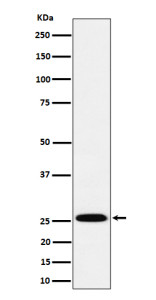
Rabbit IgG in phosphate buffered saline, pH 7.4, 150mM NaCl, 0.02% sodium azide and 50% glycerol, 0.4-0.5mg/ml BSA. INMT antibody recognizes indolethylamine N methyltransferase, an enzyme encoded by the INMT gene that belongs to the methyltransferase superfamily. INMT catalyzes the N methylation of tryptamine and structurally related compounds, producing N methyltryptamines. These metabolites include compounds that have been proposed to play signaling roles in the central nervous system. The enzyme is expressed in multiple tissues, with notable activity in lung, liver, thyroid, and brain.INMT antibody is widely used in neurochemistry and metabolism research. Interest in INMT centers on its potential involvement in biosynthetic pathways that generate methylated tryptamines. Some of these metabolites have been suggested to influence neural function, sleep regulation, and perception. By detecting INMT expression, researchers can explore how the enzyme contributes to neurotransmitter metabolism and brain physiology.The antibody is suitable for western blotting, immunohistochemistry, and immunofluorescence. In western blot assays, INMT antibody detects protein bands corresponding to the enzyme, enabling comparisons across tissue extracts and experimental models. Immunohistochemistry reveals tissue localization, often highlighting epithelial and glandular expression. Immunofluorescence provides subcellular localization patterns that support studies of enzyme function in metabolism and signaling.Beyond neurobiology, INMT has been implicated in xenobiotic metabolism. Its ability to methylate a wide range of substrates suggests that it participates in detoxification pathways. Altered INMT activity could therefore influence susceptibility to toxins and xenobiotics. Detecting INMT with specific antibodies allows researchers to monitor enzyme expression in models of toxicology and pharmacology.INMT is also of interest in cancer research. Expression changes have been noted in certain tumor types, suggesting that metabolic reprogramming includes altered methyltransferase activity. By using INMT antibody, scientists can study how dysregulation of indolethylamine N methyltransferase contributes to malignancy and whether it may serve as a biomarker.INMT antibody offered by NSJ Bioreagents is a reliable reagent for investigating tryptamine metabolism, neurotransmitter regulation, and xenobiotic detoxification. Its specificity supports broad application across molecular, cellular, and translational studies.
| Keywords: | Anti-INMT, Anti-Thioether S-methyltransferase, Anti-Indolethylamine N-methyltransferase, Anti-Aromatic alkylamine N-methyltransferase, INMT Antibody / Indolethylamine N-methyltransferase |
| Supplier: | NSJ Bioreagents |
| Supplier-Nr: | FY12387 |
Properties
| Application: | WB |
| Antibody Type: | Monoclonal |
| Clone: | 29I76 |
| Conjugate: | No |
| Host: | Rabbit |
| Species reactivity: | human, mouse, rat |
| Immunogen: | A synthesized peptide derived from human TEMT |
| Format: | Purified |
Database Information
| KEGG ID : | K00562 | Matching products |
| UniProt ID : | O95050 | Matching products |
| Gene ID : | GeneID 11185 | Matching products |
Handling & Safety
| Storage: | -20°C |
| Shipping: | -20°C (International: -20°C) |
Caution
Our products are for laboratory research use only: Not for administration to humans!
Our products are for laboratory research use only: Not for administration to humans!
Information about the product reference will follow.
more
You will get a certificate here
Viewed