
This website uses cookies, which are necessary for the technical operation of the website and are always set. Other cookies, which increase the comfort when using this website, are used for direct advertising or to facilitate interaction with other websites and social networks, are only set with your consent.
Configuration
Technically required
These cookies are necessary for the basic functions of the shop.
"Allow all cookies" cookie
"Decline all cookies" cookie
CSRF token
Cookie preferences
Currency change
Customer-specific caching
FACT-Finder tracking
Individual prices
Selected shop
Session
Comfort functions
These cookies are used to make the shopping experience even more appealing, for example for the recognition of the visitor.
Note
Show the facebook fanpage in the right blod sidebar
Statistics & Tracking
Affiliate program
Conversion and usertracking via Google Tag Manager
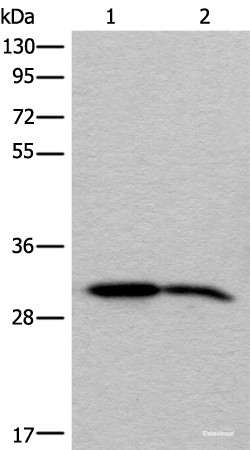
This gene encodes an enzyme that dephosphorylates myo-inositol monophosphate to generate free myo-inositol, a precursor of phosphatidylinositol, and is therefore an important modulator of intracellular signal transduction via the production of the second messengers myoinositol 1,4,5-trisphosphate and diacylglycerol. This enzyme can also use myo-inositol-1,3-diphosphate, myo-inositol-1,4-diphosphate, scyllo-inositol-phosphate, glucose-1-phosphate, glucose-6-phosphate, fructose-1-phosphate, beta-glycerophosphate, and 2'-AMP as substrates. This enzyme shows magnesium-dependent phosphatase activity and is inhibited by therapeutic concentrations of lithium. Inhibition of inositol monophosphate hydroylosis and subsequent depletion of inositol for phosphatidylinositol synthesis may explain the anti-manic and anti-depressive effects of lithium administered to treat bipolar disorder. Alternative splicing results in multiple transcript variants encoding distinct isoforms. A pseudogene of this gene is also present on chromosome 8q21.13. Protein function: Responsible for the provision of inositol required for synthesis of phosphatidylinositol and polyphosphoinositides and has been implicated as the pharmacological target for lithium action in brain. Has broad substrate specificity and can use myo-inositol monophosphates, myo-inositol 1,3-diphosphate, myo-inositol 1,4- diphosphate, scyllo-inositol-phosphate, D-galactose 1-phosphate, glucose-1-phosphate, glucose-6-phosphate, fructose-1-phosphate, beta- glycerophosphate, and 2'-AMP as substrates. [The UniProt Consortium]
This website uses cookies, which are necessary for the technical operation of the website and are always set. Other cookies, which increase the usability of this website, serve for direct advertising or simplify interaction with other websites and social networks, will only be used with your consent.
More information