
Cookie preferences
This website uses cookies, which are necessary for the technical operation of the website and are always set. Other cookies, which increase the comfort when using this website, are used for direct advertising or to facilitate interaction with other websites and social networks, are only set with your consent.
Configuration
Technically required
These cookies are necessary for the basic functions of the shop.
"Allow all cookies" cookie
"Decline all cookies" cookie
CSRF token
Cookie preferences
Currency change
Customer-specific caching
FACT-Finder tracking
Individual prices
Selected shop
Session
Comfort functions
These cookies are used to make the shopping experience even more appealing, for example for the recognition of the visitor.
Note
Show the facebook fanpage in the right blod sidebar
Statistics & Tracking
Affiliate program
Conversion and usertracking via Google Tag Manager
Track device being used

| Item number | Size | Datasheet | Manual | SDS | Delivery time | Quantity | Price |
|---|---|---|---|---|---|---|---|
| NSJ-FY12242 | 100 µl | - | - |
3 - 10 business days* |
790.00€
|
If you have any questions, please use our Contact Form.
You can also order by e-mail: info@biomol.com
Larger quantity required? Request bulk
You can also order by e-mail: info@biomol.com
Larger quantity required? Request bulk
Rabbit IgG in phosphate buffered saline, pH 7.4, 150mM NaCl, 0.02% sodium azide and 50% glycerol,... more
Product information "Anti-ICOSLG / CD275, clone 31I03"
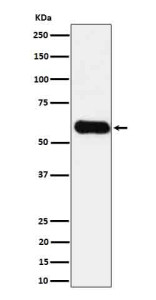
Rabbit IgG in phosphate buffered saline, pH 7.4, 150mM NaCl, 0.02% sodium azide and 50% glycerol, 0.4-0.5mg/ml BSA. ICOSLG antibody / CD275 detects inducible T-cell co-stimulator ligand, a member of the B7 family of immune regulatory proteins. ICOSLG interacts with its receptor, ICOS, which is expressed on activated T cells. This interaction delivers essential costimulatory signals that regulate T-cell activation, proliferation, differentiation, and cytokine production. The ICOS-ICOSLG pathway is especially critical for the development and function of follicular helper T cells, which support germinal center reactions and promote high-affinity antibody responses.Research using ICOSLG antibody / CD275 has revealed its central role in adaptive immunity. Antigen-presenting cells such as dendritic cells, B cells, and macrophages express ICOSLG, providing the signals needed for robust T-cell dependent immune responses. Engagement of ICOS by ICOSLG promotes B-cell class switching, enhances antibody secretion, and ensures the generation of long-lived plasma cells and memory B cells. These functions make ICOSLG indispensable for establishing effective humoral immunity.Dysregulation of ICOSLG expression or signaling is linked to immune-related diseases. Overactivation of the ICOS-ICOSLG axis can drive autoimmunity by supporting excessive T-cell responses and autoantibody production. Conversely, mutations or deficiencies impair T-cell function and result in immunodeficiency syndromes marked by recurrent infections and poor antibody responses. Genetic studies have associated ICOSLG polymorphisms with systemic lupus erythematosus, type 1 diabetes, and inflammatory bowel disease, highlighting its importance in immune tolerance and regulation.In transplantation, ICOSLG contributes to graft rejection by enhancing alloreactive T-cell activity. Targeting this pathway has been explored as a strategy to prolong graft survival and reduce immune-mediated damage. Conversely, therapeutic stimulation of the ICOS-ICOSLG axis has potential in vaccine design, where stronger antibody responses are desired.Oncology research has shown that ICOSLG expression within the tumor microenvironment can significantly affect anti-tumor immunity. In some cases, ICOSLG enhances T-cell activity against cancer cells, while in others it may contribute to immune evasion depending on the balance of regulatory and effector T-cell populations. Therapies modulating the ICOS-ICOSLG pathway are being investigated as potential adjuncts to checkpoint blockade and other immunotherapies, making it a promising focus for translational research.Antibodies against ICOSLG are validated for flow cytometry, western blot, and immunohistochemistry. These reagents allow researchers to measure expression levels across immune subsets, evaluate tissue localization, and monitor functional changes in experimental models. By enabling precise detection of ICOSLG, they support studies into immune regulation, autoimmunity, cancer, and transplant biology.NSJ Bioreagents supplies this ICOSLG antibody / CD275 for research in immunology, oncology, and translational medicine.
| Keywords: | Anti-ICOSLG, Anti-ICOS ligand, Anti-B7 homolog 2, Anti-B7-related protein 1, Anti-B7-like protein Gl50, ICOSLG Antibody / CD275 |
| Supplier: | NSJ Bioreagents |
| Supplier-Nr: | FY12242 |
Properties
| Application: | WB |
| Antibody Type: | Monoclonal |
| Clone: | 31I03 |
| Conjugate: | No |
| Host: | Rabbit |
| Species reactivity: | human |
| Immunogen: | A synthesized peptide derived from human CD275 |
| Format: | Purified |
Database Information
| KEGG ID : | K06710 | Matching products |
| UniProt ID : | O75144 | Matching products |
| Gene ID : | GeneID 23308 | Matching products |
Handling & Safety
| Storage: | -20°C |
| Shipping: | -20°C (International: -20°C) |
Caution
Our products are for laboratory research use only: Not for administration to humans!
Our products are for laboratory research use only: Not for administration to humans!
Information about the product reference will follow.
more
You will get a certificate here
Viewed