
Cookie preferences
This website uses cookies, which are necessary for the technical operation of the website and are always set. Other cookies, which increase the comfort when using this website, are used for direct advertising or to facilitate interaction with other websites and social networks, are only set with your consent.
Configuration
Technically required
These cookies are necessary for the basic functions of the shop.
"Allow all cookies" cookie
"Decline all cookies" cookie
CSRF token
Cookie preferences
Currency change
Customer-specific caching
FACT-Finder tracking
Individual prices
Selected shop
Session
Comfort functions
These cookies are used to make the shopping experience even more appealing, for example for the recognition of the visitor.
Note
Show the facebook fanpage in the right blod sidebar
Statistics & Tracking
Affiliate program
Conversion and usertracking via Google Tag Manager
Track device being used

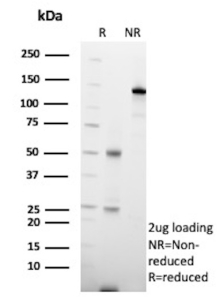
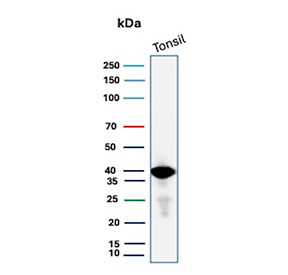
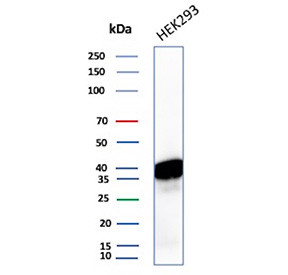


| Item number | Size | Datasheet | Manual | SDS | Delivery time | Quantity | Price |
|---|---|---|---|---|---|---|---|
| NSJ-V5911-20UG | 20 µg | - | - |
7 - 12 business days* |
375.00€
|
||
| NSJ-V5911-100UG | 100 µg | - | - |
7 - 12 business days* |
810.00€
|
If you have any questions, please use our Contact Form.
You can also order by e-mail: info@biomol.com
Larger quantity required? Request bulk
You can also order by e-mail: info@biomol.com
Larger quantity required? Request bulk
0.2 mg/ml in 1X PBS with 0.05% BSA, 0.05% sodium azide. Non-classical MHC class I antibody... more
Product information "Anti-HLA-E / Nonclassical MHC class I molecule HLA-E, clone HLAE/13126"
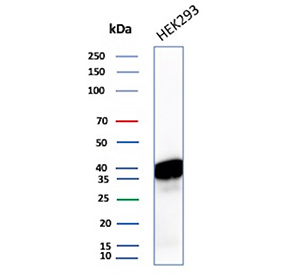
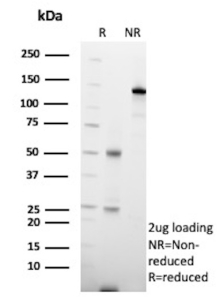
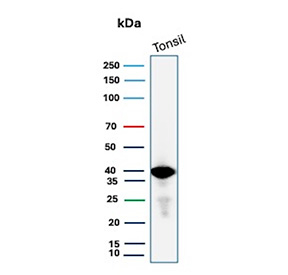
0.2 mg/ml in 1X PBS with 0.05% BSA, 0.05% sodium azide. Non-classical MHC class I antibody targets HLA class I histocompatibility antigen E, a specialized major histocompatibility complex class I molecule encoded by the HLA-E gene. Unlike classical MHC class I proteins such as HLA-A, HLA-B, and HLA-C, HLA-E exhibits limited polymorphism and serves predominantly immune regulatory functions rather than broad peptide antigen presentation. Non-classical MHC class I molecules are characterized by restricted peptide repertoires and distinct roles in immune surveillance, making a non-classical MHC class I antibody an important tool for immunology research.HLA class I histocompatibility antigen E is primarily expressed at the cell surface in association with beta-2 microglobulin and short peptides derived from the leader sequences of other HLA class I molecules. This peptide presentation enables HLA-E to interact with CD94 NKG2 receptor complexes on natural killer (NK) cells. Engagement of inhibitory receptors such as CD94 NKG2A transmits tolerance signals that prevent NK cell-mediated killing of healthy cells. Because of this mechanism, HLA-E is widely recognized as a key immune checkpoint molecule within the innate immune system. Use of a non-classical MHC class I antibody allows detailed study of NK cell inhibition and immune self-recognition pathways.Beyond its role in NK cell regulation, HLA class I histocompatibility antigen E can present select pathogen-derived peptides to subsets of CD8-positive T cells, linking innate and adaptive immune responses. Expression of HLA-E is modulated by inflammatory cytokines, cellular stress, and infection, allowing dynamic adjustment of immune tolerance mechanisms. Viral pathogens, including cytomegalovirus, are known to exploit HLA-E upregulation as a strategy to evade immune clearance. A non-classical MHC class I antibody is therefore valuable for studies of host-pathogen interactions and immune evasion biology.HLA-E expression has significant relevance in cancer immunology. Many tumors increase expression of non-classical MHC class I molecules, including HLA-E, to suppress NK cell activity and escape immune surveillance. Elevated HLA-E levels have been reported across a range of solid tumors and hematologic malignancies, where they may contribute to immune suppressive tumor microenvironments. Use of a non-classical MHC class I antibody supports research into tumor immune escape mechanisms and the development of novel immunotherapeutic strategies targeting NK cell checkpoints.Structurally, HLA class I histocompatibility antigen E shares the conserved alpha chain architecture of MHC class I proteins but differs in its peptide-binding groove, which accommodates a limited and conserved peptide set. This structural specialization underlies its unique immune regulatory function. Because non-classical MHC class I expression reflects immune modulation rather than antigen diversity, antibody-based detection of HLA-E is frequently used to assess immune regulatory status in tissues rather than classical antigen presentation capacity.Clone HLAE/13126 is designed to recognize HLA class I histocompatibility antigen E and supports detection of non-classical MHC class I expression in research applications. NSJ Bioreagents offers this non-classical MHC class I antibody to support studies of NK cell biology, immune tolerance, tumor immunology, and non-classical HLA function.
| Keywords: | Anti-HLA-E, Anti-MHC class I antigen E, Anti-HLA class I histocompatibility antigen, alpha chain E, HLA-E Antibody / Nonclassical MHC class I molecule HLA-E |
| Supplier: | NSJ Bioreagents |
| Supplier-Nr: | V5911 |
Properties
| Application: | WB |
| Antibody Type: | Monoclonal |
| Clone: | HLAE/13126 |
| Conjugate: | No |
| Host: | Mouse |
| Species reactivity: | human |
| Immunogen: | Recombinant fragment (around amino acids 1-150) of human HLAE protein (exact sequence is proprietary) |
| Format: | Purified |
Database Information
| KEGG ID : | K06751 | Matching products |
| UniProt ID : | P13747 | Matching products |
| Gene ID : | GeneID 3133 | Matching products |
Handling & Safety
| Storage: | -20°C |
| Shipping: | -20°C (International: -20°C) |
Caution
Our products are for laboratory research use only: Not for administration to humans!
Our products are for laboratory research use only: Not for administration to humans!
Information about the product reference will follow.
more
You will get a certificate here
Viewed