
Cookie preferences
This website uses cookies, which are necessary for the technical operation of the website and are always set. Other cookies, which increase the comfort when using this website, are used for direct advertising or to facilitate interaction with other websites and social networks, are only set with your consent.
Configuration
Technically required
These cookies are necessary for the basic functions of the shop.
"Allow all cookies" cookie
"Decline all cookies" cookie
CSRF token
Cookie preferences
Currency change
Customer-specific caching
FACT-Finder tracking
Individual prices
Selected shop
Session
Comfort functions
These cookies are used to make the shopping experience even more appealing, for example for the recognition of the visitor.
Note
Show the facebook fanpage in the right blod sidebar
Statistics & Tracking
Affiliate program
Conversion and usertracking via Google Tag Manager
Track device being used



| Item number | Size | Datasheet | Manual | SDS | Delivery time | Quantity | Price |
|---|---|---|---|---|---|---|---|
| NSJ-FY12922 | 100 µl | - | - |
3 - 10 business days* |
790.00€
|
If you have any questions, please use our Contact Form.
You can also order by e-mail: info@biomol.com
Larger quantity required? Request bulk
You can also order by e-mail: info@biomol.com
Larger quantity required? Request bulk
Rabbit IgG in phosphate buffered saline, pH 7.4, 150mM NaCl, 0.02% sodium azide and 50% glycerol,... more
Product information "Anti-Histone H3 (di methyl K4) / HIST1H3A, clone 31H99"
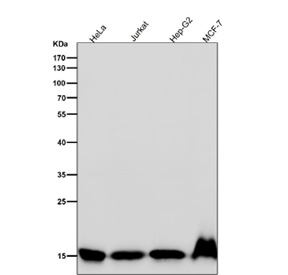
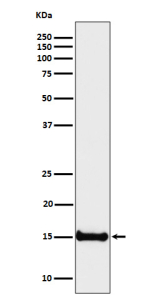
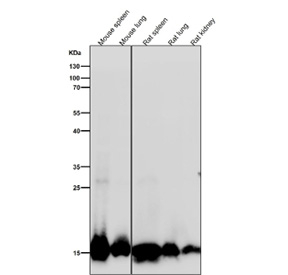
Rabbit IgG in phosphate buffered saline, pH 7.4, 150mM NaCl, 0.02% sodium azide and 50% glycerol, 0.4-0.5mg/ml BSA. Histone H3 (di methyl K4) antibody detects histone H3 when lysine 4 is di methylated, a key epigenetic modification that influences chromatin structure and gene expression. Histones are core proteins that package DNA into nucleosomes, and post translational modifications of histones regulate access of transcriptional machinery to genomic DNA. The HIST1H3A gene encodes one of the histone H3 variants, and its lysine 4 residue undergoes multiple methylation states, including mono, di, and tri methylation, each with distinct biological roles. Histone H3 (di methyl K4) antibody enables precise detection of this modification, providing insights into chromatin dynamics and transcriptional regulation across development and disease.Di methylation of histone H3 at lysine 4 is often enriched at promoter regions of actively transcribed genes. While tri methylation of lysine 4 strongly marks active promoters, di methylation provides a broader distribution pattern, sometimes marking both active and poised regulatory regions. Studies using Histone H3 (di methyl K4) antibody have revealed its involvement in the recruitment of chromatin remodeling complexes and transcription factors, linking it to fine tuning of gene activation. This modification is placed by SET domain containing methyltransferases, including the MLL/SET1 family, and removed by specific demethylases. The dynamic balance of methylation and demethylation at lysine 4 ensures flexibility in gene expression responses.Dysregulation of histone H3 lysine 4 methylation is implicated in cancer, developmental syndromes, and neurological disorders. Aberrant patterns of di methylation at promoters can alter transcriptional programs, driving oncogenesis or impairing differentiation. For example, mutations in methyltransferases such as MLL2 disrupt normal H3K4 methylation patterns, resulting in abnormal gene expression signatures in leukemia and solid tumors. Research with Histone H3 (di methyl K4) antibody has been critical for characterizing these altered epigenetic landscapes and understanding their impact on disease progression.Histone H3 (di methyl K4) antibody is widely used in chromatin immunoprecipitation, western blotting, and immunofluorescence. Chromatin immunoprecipitation coupled with sequencing (ChIP seq) allows genome wide mapping of histone modification patterns, revealing regulatory regions associated with transcriptional control. Western blotting confirms global levels of modification, while immunofluorescence highlights distribution within nuclear chromatin. These applications enable researchers to integrate molecular, genomic, and cellular approaches to study histone modification biology.Beyond oncology, Histone H3 (di methyl K4) antibody has applications in developmental biology and stem cell research. This modification marks regulatory elements required for lineage commitment and differentiation, making it an important indicator of epigenetic states during cell fate transitions. It is also studied in neurobiology, where changes in histone methylation accompany activity dependent gene expression and synaptic plasticity. By providing high quality reagents such as Histone H3 (di methyl K4) antibody, NSJ Bioreagents supports efforts to decode the epigenetic language of chromatin and its role in physiology and pathology.
| Keywords: | Anti-H3C8, Anti-H3C3, Anti-H3C7, Anti-H3C6, Anti-H3C1, Anti-H3C4, Anti-H3C2, Anti-H3C12, Anti-H3C10, Anti-H3C11, Anti-Histone H3/c, Anti-Histone H3/h, Anti-Histone H3.1, Anti-Histone H3/a, Anti-Histone H3/j, Anti-Histone H3/l, Anti-Histone H3/i, Anti-Hist |
| Supplier: | NSJ Bioreagents |
| Supplier-Nr: | FY12922 |
Properties
| Application: | WB, IHC, ICC, IF |
| Antibody Type: | Monoclonal |
| Clone: | 31H99 |
| Conjugate: | No |
| Host: | Rabbit |
| Species reactivity: | human, mouse, rat |
| Immunogen: | A synthesized peptide derived from human Histone H3 (di methyl K4) |
| Format: | Affinity Purified |
Database Information
| KEGG ID : | K11253 | Matching products |
| UniProt ID : | P68431 | Matching products |
| Gene ID : | GeneID 8350 | Matching products |
Handling & Safety
| Storage: | -20°C |
| Shipping: | -20°C (International: -20°C) |
Caution
Our products are for laboratory research use only: Not for administration to humans!
Our products are for laboratory research use only: Not for administration to humans!
Information about the product reference will follow.
more
You will get a certificate here
Viewed