
Cookie preferences
This website uses cookies, which are necessary for the technical operation of the website and are always set. Other cookies, which increase the comfort when using this website, are used for direct advertising or to facilitate interaction with other websites and social networks, are only set with your consent.
Configuration
Technically required
These cookies are necessary for the basic functions of the shop.
"Allow all cookies" cookie
"Decline all cookies" cookie
CSRF token
Cookie preferences
Currency change
Customer-specific caching
FACT-Finder tracking
Individual prices
Selected shop
Session
Comfort functions
These cookies are used to make the shopping experience even more appealing, for example for the recognition of the visitor.
Note
Show the facebook fanpage in the right blod sidebar
Statistics & Tracking
Affiliate program
Conversion and usertracking via Google Tag Manager
Track device being used


| Item number | Size | Datasheet | Manual | SDS | Delivery time | Quantity | Price |
|---|---|---|---|---|---|---|---|
| NSJ-V5855SAF-100UG | 100 µg | - | - |
7 - 12 business days* |
810.00€
|
If you have any questions, please use our Contact Form.
You can also order by e-mail: info@biomol.com
Larger quantity required? Request bulk
You can also order by e-mail: info@biomol.com
Larger quantity required? Request bulk
1 mg/ml in 1X PBS, BSA free, sodium azide free. CGB3 Antibody targets Choriogonadotropin subunit... more
Product information "Anti-HCG-beta / Choriogonadotropin subunit beta, clone HCGb/7512R"
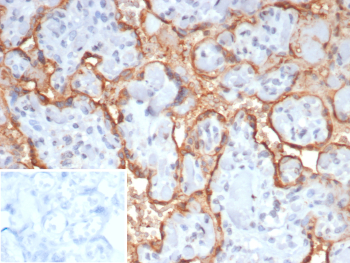
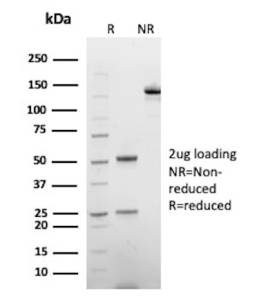
1 mg/ml in 1X PBS, BSA free, sodium azide free. CGB3 Antibody targets Choriogonadotropin subunit beta 3, a glycoprotein hormone subunit that forms part of human chorionic gonadotropin (hCG), a key regulator of early pregnancy and trophoblast biology. Choriogonadotropin subunit beta 3 is encoded by the CGB3 gene, one of several closely related beta subunit genes clustered on chromosome 19 that contribute to hCG production. The beta subunit confers biological specificity to the hormone and distinguishes hCG from other glycoprotein hormones such as luteinizing hormone, follicle-stimulating hormone, and thyroid-stimulating hormone, which share a common alpha subunit.Choriogonadotropin subunit beta 3 is primarily synthesized and secreted by placental syncytiotrophoblasts, where it plays an essential role in maintaining the corpus luteum, supporting progesterone production, and promoting uterine receptivity during early gestation. In addition to its endocrine role, hCG beta subunits have been implicated in trophoblast differentiation, angiogenesis, and immune modulation at the maternal-fetal interface. Expression of CGB3 is tightly regulated during normal pregnancy, with highest levels observed during the first trimester, followed by a gradual decline as placental endocrine function matures.Beyond normal placental physiology, aberrant expression of Choriogonadotropin subunit beta 3 has been documented in a variety of pathological contexts. Elevated or ectopic expression of hCG beta subunits, including CGB3, has been reported in gestational trophoblastic disease and several non-trophoblastic malignancies, where expression may reflect dedifferentiation or hormone-driven signaling pathways. In these settings, CGB3 antibody reagents are widely used to examine hormone production, tumor-associated antigen expression, and diagnostic marker distribution in tissue sections and cell-based models.At the cellular level, Choriogonadotropin subunit beta 3 is synthesized in the endoplasmic reticulum, undergoes glycosylation within the Golgi apparatus, and is secreted into the extracellular space as part of the intact hCG heterodimer. The protein belongs to the glycoprotein hormone beta subunit family and contains conserved cysteine residues that form disulfide bonds critical for proper folding and receptor interaction. Due to extensive glycosylation, hCG beta subunits often display higher apparent molecular weights than predicted by primary amino acid sequence alone when analyzed by SDS-PAGE.CGB3 Antibody is a valuable tool for studying placental development, reproductive endocrinology, and hormone-associated tumor biology. Detection of Choriogonadotropin subunit beta 3 expression supports investigations into trophoblast function, endocrine signaling, and disease-associated dysregulation of hCG-related pathways.Choriogonadotropin subunit beta 3 is a glycoprotein hormone subunit encoded by the CGB3 gene and belongs to the chorionic gonadotropin beta family, which plays an essential role in placental development and endocrine signaling during pregnancy. Expression of CGB3 contributes to the biological activity of human chorionic gonadotropin and is tightly regulated in trophoblastic tissues and other hormone-associated biological systems. Clone HCGb/7512R is designed to recognize Choriogonadotropin subunit beta 3 for research use in molecular and cellular studies.CGB3 Antibody is intended for research applications involving analysis of Choriogonadotropin subunit beta 3 expression in placental biology and hormone-associated systems. In addition to physiological expression, dysregulated expression of beta subunits of chorionic gonadotropin, including CGB3, has been reported in a range of hormone-related pathological contexts, supporting continued investigation of this protein in both normal and disease-associated settings. Clone HCGb/7512R provides a tool for researchers examining CGB3 expression and distribution in relevant experimental models.
| Keywords: | HCG-beta Antibody / Choriogonadotropin subunit beta |
| Supplier: | NSJ Bioreagents |
| Supplier-Nr: | V5855SAF |
Properties
| Application: | IHC |
| Antibody Type: | Monoclonal |
| Clone: | HCGb/7512R |
| Conjugate: | No |
| Host: | Rabbit |
| Species reactivity: | human |
| Immunogen: | Recombinant full-length human CGB protein |
| Format: | Purified |
Database Information
| UniProt ID : | P01233 | Matching products |
Handling & Safety
| Storage: | -20°C |
| Shipping: | -20°C (International: -20°C) |
Caution
Our products are for laboratory research use only: Not for administration to humans!
Our products are for laboratory research use only: Not for administration to humans!
Information about the product reference will follow.
more
You will get a certificate here
Viewed