
Cookie preferences
This website uses cookies, which are necessary for the technical operation of the website and are always set. Other cookies, which increase the comfort when using this website, are used for direct advertising or to facilitate interaction with other websites and social networks, are only set with your consent.
Configuration
Technically required
These cookies are necessary for the basic functions of the shop.
"Allow all cookies" cookie
"Decline all cookies" cookie
CSRF token
Cookie preferences
Currency change
Customer-specific caching
FACT-Finder tracking
Individual prices
Selected shop
Session
Comfort functions
These cookies are used to make the shopping experience even more appealing, for example for the recognition of the visitor.
Note
Show the facebook fanpage in the right blod sidebar
Statistics & Tracking
Affiliate program
Conversion and usertracking via Google Tag Manager
Track device being used



| Item number | Size | Datasheet | Manual | SDS | Delivery time | Quantity | Price |
|---|---|---|---|---|---|---|---|
| NSJ-FY13425 | 100 µl | - | - |
7 - 12 business days* |
790.00€
|
If you have any questions, please use our Contact Form.
You can also order by e-mail: info@biomol.com
Larger quantity required? Request bulk
You can also order by e-mail: info@biomol.com
Larger quantity required? Request bulk
Rabbit IgG in phosphate buffered saline, pH 7.4, 150mM NaCl, 0.02% sodium azide and 50% glycerol,... more
Product information "Anti-GRM1 / Metabotropic glutamate receptor 1 / mGluR1, clone IGI-7"
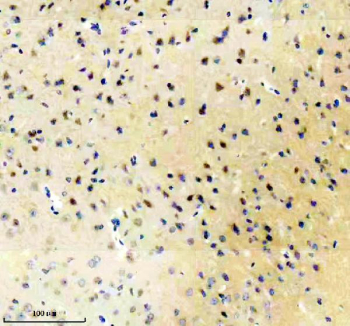
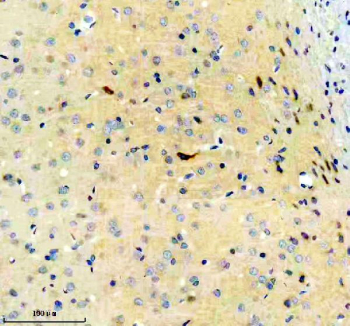
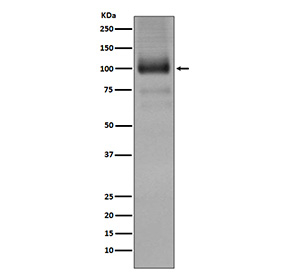
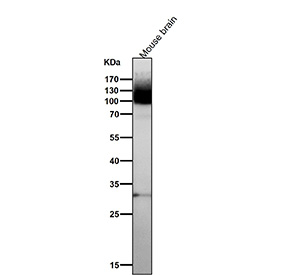
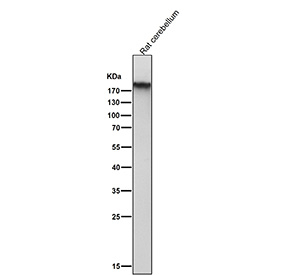
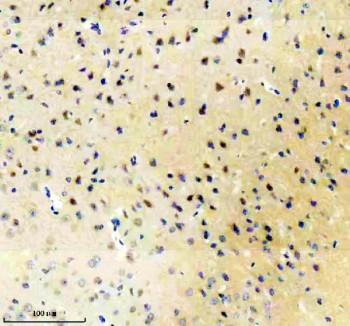
Rabbit IgG in phosphate buffered saline, pH 7.4, 150mM NaCl, 0.02% sodium azide and 50% glycerol, 0.4-0.5mg/ml BSA. GRM1 antibody targets Metabotropic glutamate receptor 1 (GRM1), a member of the metabotropic glutamate receptor family that mediates glutamate-dependent signaling in the nervous system. GRM1 is a class C G protein-coupled receptor characterized by a large extracellular ligand-binding domain and a seven-transmembrane signaling region. The receptor is primarily localized to the plasma membrane of neurons, where it functions as a modulatory glutamate sensor rather than a fast ion channel. Through this role, GRM1 contributes to fine control of synaptic transmission and neuronal responsiveness.Upon activation by glutamate, GRM1 couples mainly to Gq and G11 proteins, triggering intracellular signaling pathways that involve phospholipase C activation, inositol trisphosphate production, and intracellular calcium mobilization. These signaling events influence neuronal excitability, synaptic strength, and activity-dependent gene regulation. GRM1 signaling operates on slower time scales than ionotropic receptors, allowing it to shape long-term changes in synaptic function and neuronal network behavior. A GRM1 antibody supports research focused on receptor-mediated signaling mechanisms that underlie synaptic modulation and plasticity.GRM1 expression is highly enriched in the cerebellum, particularly within Purkinje neurons, where it plays a critical role in motor coordination and cerebellar development. Outside the cerebellum, GRM1 is also expressed in hippocampal and cortical regions, contributing to learning, memory, and sensory integration. Its localization is often perisynaptic, positioning the receptor to respond to glutamate spillover during high synaptic activity. Analysis of GRM1 distribution and expression patterns provides insight into region-specific regulation of glutamatergic signaling in the brain.From a disease and translational research perspective, GRM1 has been implicated in a range of neurological and neurodevelopmental conditions. Disruption of GRM1 signaling has been associated with movement disorders, ataxia, and cognitive dysfunction, reflecting its essential role in cerebellar and cortical circuits. GRM1 has also been studied in epilepsy and neuropsychiatric research, where altered glutamate signaling contributes to abnormal neuronal activity. In addition, aberrant GRM1 expression has been reported in certain cancers, highlighting broader roles for glutamate receptors outside the nervous system. Investigating GRM1 expression with a GRM1 antibody is therefore relevant to both neuroscience and disease-focused studies.At the molecular level, the GRM1 gene encodes a large glycoprotein with a predicted core molecular weight of approximately 132 kDa. Due to extensive glycosylation and receptor dimerization, GRM1 is frequently observed at higher apparent molecular weights on SDS-PAGE. The receptor's extracellular domain is responsible for ligand recognition, while intracellular regions interact with scaffolding and signaling proteins that regulate receptor trafficking and signal specificity. A GRM1 antibody enables detection and analysis of GRM1 expression in research applications focused on glutamatergic signaling, synaptic regulation, and neurological disease mechanisms, with NSJ Bioreagents providing reagents intended for research use.
| Keywords: | Anti-GRM1, Anti-Metabotropic glutamate receptor 1, GRM1 Antibody / Metabotropic glutamate receptor 1 / mGluR1 |
| Supplier: | NSJ Bioreagents |
| Supplier-Nr: | FY13425 |
Properties
| Application: | WB, IHC |
| Antibody Type: | Monoclonal |
| Clone: | IGI-7 |
| Conjugate: | No |
| Host: | Rabbit |
| Species reactivity: | human, mouse, rat |
| Immunogen: | Synthesized peptide derived from human Metabotropic glutamate receptor 1 protein |
| Format: | Affinity Purified |
Database Information
| KEGG ID : | K04603 | Matching products |
| UniProt ID : | Q13255 | Matching products |
| Gene ID : | GeneID 2911 | Matching products |
Handling & Safety
| Storage: | -20°C |
| Shipping: | -20°C (International: -20°C) |
Caution
Our products are for laboratory research use only: Not for administration to humans!
Our products are for laboratory research use only: Not for administration to humans!
Information about the product reference will follow.
more
You will get a certificate here
Viewed