
Cookie preferences
This website uses cookies, which are necessary for the technical operation of the website and are always set. Other cookies, which increase the comfort when using this website, are used for direct advertising or to facilitate interaction with other websites and social networks, are only set with your consent.
Configuration
Technically required
These cookies are necessary for the basic functions of the shop.
"Allow all cookies" cookie
"Decline all cookies" cookie
CSRF token
Cookie preferences
Currency change
Customer-specific caching
FACT-Finder tracking
Individual prices
Selected shop
Session
Comfort functions
These cookies are used to make the shopping experience even more appealing, for example for the recognition of the visitor.
Note
Show the facebook fanpage in the right blod sidebar
Statistics & Tracking
Affiliate program
Conversion and usertracking via Google Tag Manager
Track device being used
| Item number | Size | Datasheet | Manual | SDS | Delivery time | Quantity | Price |
|---|---|---|---|---|---|---|---|
| NSJ-F49601-0.08ML | 80 µl | - | - |
3 - 10 business days* |
361.00€
|
||
| NSJ-F49601-0.4ML | 400 µl | - | - |
3 - 10 business days* |
772.00€
|
If you have any questions, please use our Contact Form.
You can also order by e-mail: info@biomol.com
Larger quantity required? Request bulk
You can also order by e-mail: info@biomol.com
Larger quantity required? Request bulk

In 1X PBS, pH 7.4, with 0.09% sodium azide. GPC3 is a cell surface proteoglycan that bears... more
Product information "Anti-GPC3"
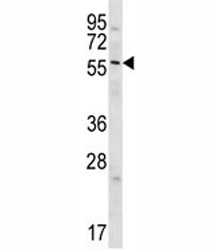
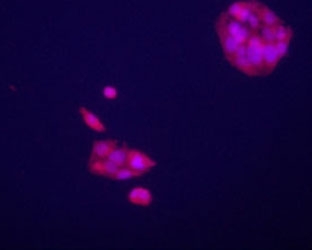
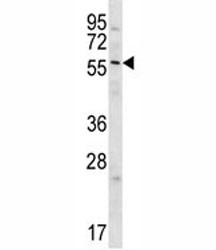
In 1X PBS, pH 7.4, with 0.09% sodium azide. GPC3 is a cell surface proteoglycan that bears heparan sulfate. This protein may be involved in the suppression/modulation of growth in the predominantly mesodermal tissues and organs, and may play a role in the modulation of IGF2 interactions with its receptor and thereby modulate its function. Members of the glypican-related integral membrane proteoglycan family contain a core protein anchored to the cytoplasmic membrane via a glycosyl phosphatidylinositol (GPI) linkage. These proteins may play a role in the control of cell division, growth regulation, and tumor predisposition. Deletion mutations in GPC3 are the cause of Simpson-Golabi-Behmel syndrome (SGBS), also known as Simpson dysmorphia syndrome (SDYS). SGBS is a condition characterized by pre- and postnatal overgrowth (gigantism) with visceral and skeletal anomalies. Protein function: Cell surface proteoglycan that bears heparan sulfate. Inhibits the dipeptidyl peptidase activity of DPP4. May be involved in the suppression/modulation of growth in the predominantly mesodermal tissues and organs. May play a role in the modulation of IGF2 interactions with its receptor and thereby modulate its function. May regulate growth and tumor predisposition. [The UniProt Consortium]
| Keywords: | Anti-GPC3, Anti-OCI5, GPC3 Antibody |
| Supplier: | NSJ Bioreagents |
| Supplier-Nr: | F49601 |
Properties
| Application: | WB, IF, ELISA |
| Antibody Type: | Polyclonal |
| Conjugate: | No |
| Host: | Rabbit |
| Species reactivity: | human, mouse |
| Immunogen: | A portion of amino acids 529-560 from the human protein was used as the immunogen for this GPC3 antibody. |
| Format: | Purified |
Database Information
| KEGG ID : | K08109 | Matching products |
| UniProt ID : | P51654 | Matching products |
| Gene ID : | GeneID 2719 | Matching products |
Handling & Safety
| Storage: | -20°C |
| Shipping: | +4°C (International: +4°C) |
Caution
Our products are for laboratory research use only: Not for administration to humans!
Information about the product reference will follow.
more
You will get a certificate here
Viewed