
Cookie preferences
This website uses cookies, which are necessary for the technical operation of the website and are always set. Other cookies, which increase the comfort when using this website, are used for direct advertising or to facilitate interaction with other websites and social networks, are only set with your consent.
Configuration
Technically required
These cookies are necessary for the basic functions of the shop.
"Allow all cookies" cookie
"Decline all cookies" cookie
CSRF token
Cookie preferences
Currency change
Customer-specific caching
FACT-Finder tracking
Individual prices
Selected shop
Session
Comfort functions
These cookies are used to make the shopping experience even more appealing, for example for the recognition of the visitor.
Note
Show the facebook fanpage in the right blod sidebar
Statistics & Tracking
Affiliate program
Conversion and usertracking via Google Tag Manager
Track device being used



| Item number | Size | Datasheet | Manual | SDS | Delivery time | Quantity | Price |
|---|---|---|---|---|---|---|---|
| NSJ-V5906SAF-100UG | 100 µg | - | - |
7 - 12 business days* |
810.00€
|
If you have any questions, please use our Contact Form.
You can also order by e-mail: info@biomol.com
Larger quantity required? Request bulk
You can also order by e-mail: info@biomol.com
Larger quantity required? Request bulk
1 mg/ml in 1X PBS, BSA free, sodium azide free. GPC3 antibody targets Glypican-3, a cell surface... more
Product information "Anti-Glypican 3 / GPC3, clone GPC3/12698"
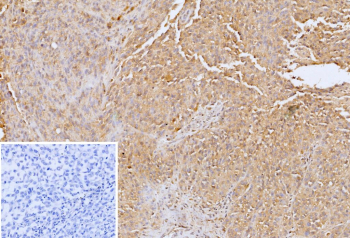
1 mg/ml in 1X PBS, BSA free, sodium azide free. GPC3 antibody targets Glypican-3, a cell surface heparan sulfate proteoglycan encoded by the GPC3 gene and anchored to the plasma membrane through a glycosylphosphatidylinositol linkage. Glypican-3 is a member of the glypican family, which consists of extracellular matrix-associated proteoglycans that regulate growth factor signaling at the cell surface. Under normal physiological conditions, Glypican-3 expression is developmentally regulated and prominent during embryogenesis, where it contributes to tissue patterning, cell proliferation, and organ growth.Glypican-3 plays a key modulatory role in several major signaling pathways, including Wnt, Hedgehog, fibroblast growth factor, and insulin-like growth factor signaling. By binding growth factors and morphogens through its heparan sulfate chains, Glypican-3 influences ligand availability and receptor activation at the cell membrane. This regulatory function positions Glypican-3 as an important determinant of cell fate decisions and proliferative capacity during development. A Glypican-3 antibody is therefore useful for studying cell surface signaling regulation and developmental biology mechanisms.In adult tissues, Glypican-3 expression is typically low or absent, but it becomes strongly re-expressed in specific disease contexts. Most notably, Glypican-3 is highly expressed in hepatocellular carcinoma, where it is considered a hallmark oncofetal protein. Elevated Glypican-3 levels are also reported in certain pediatric tumors and germ cell-derived malignancies. Because of this restricted expression pattern, GPC3 antibody reagents are widely used in cancer research to study tumor cell identity, differentiation state, and aberrant growth signaling.Glypican-3 is synthesized as a precursor protein that undergoes post-translational processing, including proteolytic cleavage and heparan sulfate chain modification. These processing steps generate multiple Glypican-3 species that may differ in apparent molecular size and biological activity. Use of a Glypican-3 antibody enables investigation of these processing events and their relationship to tumor-associated signaling changes. In tissue sections, Glypican-3 is typically detected at the cell surface and within the cytoplasm, reflecting biosynthetic trafficking and membrane localization dynamics.From a research and diagnostic perspective, Glypican-3 has become one of the most extensively studied biomarkers in liver cancer biology. GPC3 antibody staining is commonly used to distinguish hepatocellular carcinoma from benign hepatic lesions and metastatic tumors in experimental and translational studies. In addition, Glypican-3 has attracted interest as a therapeutic target, further increasing the importance of well-characterized antibodies for mechanistic and preclinical research.Clone GPC3/12698 is designed to recognize Glypican-3 and supports detection of this oncofetal proteoglycan in research applications. NSJ Bioreagents offers this GPC3 antibody to support investigations into liver cancer biology, developmental signaling pathways, and cell surface proteoglycan function.
| Keywords: | Anti-GPC3, Anti-MXR7, Anti-GTR2-2, Anti-Glypican-3, Anti-Intestinal protein OCI-5, Glypican 3 Antibody / GPC3 |
| Supplier: | NSJ Bioreagents |
| Supplier-Nr: | V5906SAF |
Properties
| Application: | IHC, WB |
| Antibody Type: | Monoclonal |
| Clone: | GPC3/12698 |
| Conjugate: | No |
| Host: | Mouse |
| Species reactivity: | human, mouse |
| Immunogen: | Recombinant fragment (around amino acids 32-170) of human GPC3 protein (exact sequence is proprietary) |
| Format: | Purified |
Database Information
| KEGG ID : | K08109 | Matching products |
| UniProt ID : | P51654 | Matching products |
| Gene ID : | GeneID 2719 | Matching products |
Handling & Safety
| Storage: | -20°C |
| Shipping: | -20°C (International: -20°C) |
Caution
Our products are for laboratory research use only: Not for administration to humans!
Our products are for laboratory research use only: Not for administration to humans!
Information about the product reference will follow.
more
You will get a certificate here
Viewed