
Cookie preferences
This website uses cookies, which are necessary for the technical operation of the website and are always set. Other cookies, which increase the comfort when using this website, are used for direct advertising or to facilitate interaction with other websites and social networks, are only set with your consent.
Configuration
Technically required
These cookies are necessary for the basic functions of the shop.
"Allow all cookies" cookie
"Decline all cookies" cookie
CSRF token
Cookie preferences
Currency change
Customer-specific caching
FACT-Finder tracking
Individual prices
Selected shop
Session
Comfort functions
These cookies are used to make the shopping experience even more appealing, for example for the recognition of the visitor.
Note
Show the facebook fanpage in the right blod sidebar
Statistics & Tracking
Affiliate program
Conversion and usertracking via Google Tag Manager
Track device being used



| Item number | Size | Datasheet | Manual | SDS | Delivery time | Quantity | Price |
|---|---|---|---|---|---|---|---|
| NSJ-FY12988 | 100 µg | - | - |
3 - 10 business days* |
790.00€
|
If you have any questions, please use our Contact Form.
You can also order by e-mail: info@biomol.com
Larger quantity required? Request bulk
You can also order by e-mail: info@biomol.com
Larger quantity required? Request bulk
Adding 0.2 ml of distilled water will yield a concentration of 500 ug/ml. GLUD1 antibody detects... more
Product information "Anti-GLUD1 / Glutamate dehydrogenase 1"
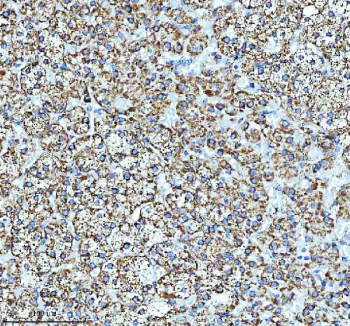
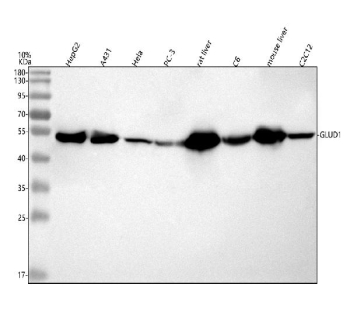
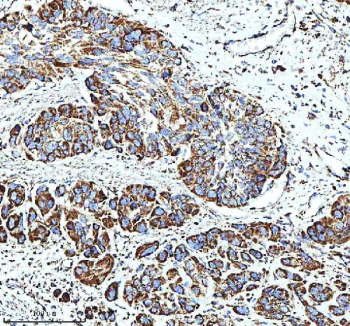
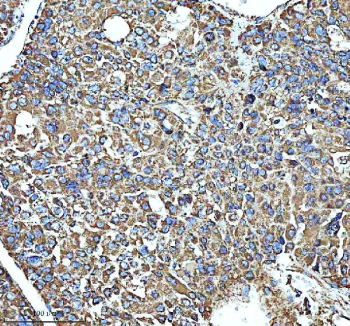
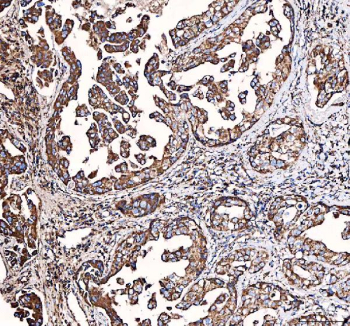
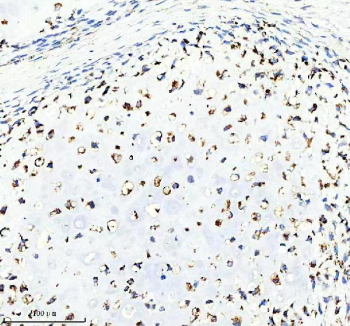
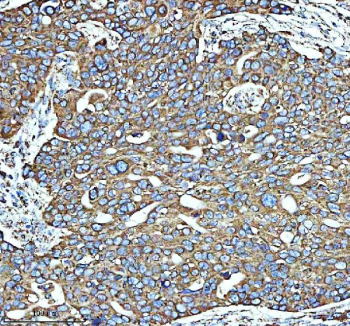
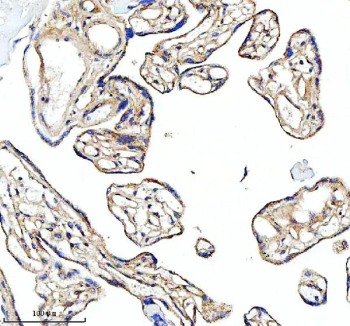
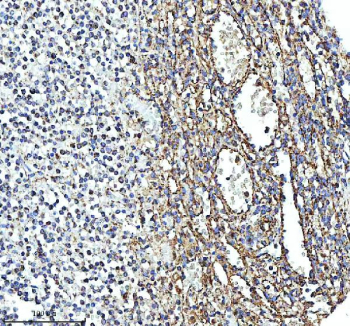
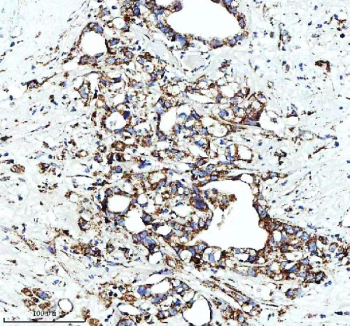
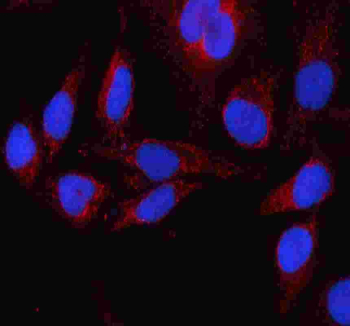
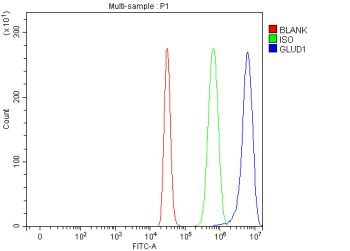
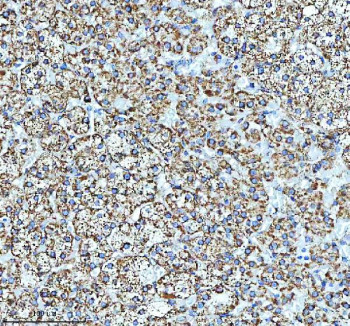
Adding 0.2 ml of distilled water will yield a concentration of 500 ug/ml. GLUD1 antibody detects Glutamate dehydrogenase 1, a mitochondrial enzyme that catalyzes the reversible oxidative deamination of glutamate to alpha-ketoglutarate and ammonia. The UniProt recommended name is Glutamate dehydrogenase 1, mitochondrial (GLUD1). This enzyme connects amino acid metabolism to the tricarboxylic acid (TCA) cycle, serving as a key regulator of nitrogen balance and cellular energy production.Functionally, GLUD1 antibody identifies a 558-amino-acid enzyme located in the mitochondrial matrix. GLUD1 catalyzes the interconversion of glutamate and alpha-ketoglutarate with the reduction or oxidation of NAD(P)+ cofactors. This reaction controls the flow of carbon and nitrogen through metabolic networks, linking amino acid catabolism, the TCA cycle, and oxidative phosphorylation. In the brain, GLUD1 contributes to the glutamate-glutamine cycle, influencing neurotransmitter turnover and synaptic function.The GLUD1 gene is located on chromosome 10q23.3 and encodes a hexameric enzyme regulated allosterically by ADP, GTP, leucine, and other metabolites. GLUD1 activity increases during energy demand, providing substrates for ATP synthesis, while its inhibition by GTP prevents excessive ammonia production. Mutations in GLUD1 cause hyperinsulinism-hyperammonemia (HI/HA) syndrome, characterized by dysregulated insulin secretion due to elevated oxidative deamination in pancreatic beta cells.In hepatic tissue, GLUD1 participates in ammonia detoxification and urea synthesis by controlling the balance between glutamate oxidation and synthesis. In pancreatic islets, its activity modulates insulin release in response to amino acids. In neurons, GLUD1 provides energy intermediates and regulates excitatory neurotransmission. Dysregulation of GLUD1 is implicated in neurodegenerative diseases, metabolic syndromes, and hyperinsulinemic disorders.GLUD1 antibody is widely used in research involving metabolism, neurobiology, and endocrinology. It is suitable for immunoblotting, immunofluorescence, and enzyme localization studies to assess mitochondrial distribution and activity. This antibody enables detection of GLUD1 in tissues such as liver, brain, and pancreas, where it plays distinct metabolic roles. In cancer research, GLUD1 expression correlates with metabolic reprogramming, supporting tumor cell growth through glutamine oxidation.Structurally, GLUD1 forms a hexameric complex with alternating catalytic and regulatory domains. The enzyme's activity is modulated by phosphorylation, redox state, and energy charge. NSJ Bioreagents provides GLUD1 antibody reagents validated for use in mitochondrial metabolism, neurochemistry, and metabolic disease research.
| Keywords: | Anti-GLUD1, Anti-Glutamate dehydrogenase 1, mitochondrial, GLUD1 Antibody / Glutamate dehydrogenase 1 |
| Supplier: | NSJ Bioreagents |
| Supplier-Nr: | FY12988 |
Properties
| Application: | ELISA, FC, IP, IF, IHC, ICC, WB |
| Antibody Type: | Polyclonal |
| Conjugate: | No |
| Host: | Rabbit |
| Species reactivity: | human, mouse, rat |
| Immunogen: | E.coli-derived human GLUD1 recombinant protein (Position: A210-T558) |
| Format: | Purified |
Database Information
| KEGG ID : | K00261 | Matching products |
| UniProt ID : | P00367 | Matching products |
| Gene ID : | GeneID 2746 | Matching products |
Handling & Safety
| Storage: | +4°C |
| Shipping: | +4°C (International: +4°C) |
Caution
Our products are for laboratory research use only: Not for administration to humans!
Our products are for laboratory research use only: Not for administration to humans!
Information about the product reference will follow.
more
You will get a certificate here
Viewed