
Cookie preferences
This website uses cookies, which are necessary for the technical operation of the website and are always set. Other cookies, which increase the comfort when using this website, are used for direct advertising or to facilitate interaction with other websites and social networks, are only set with your consent.
Configuration
Technically required
These cookies are necessary for the basic functions of the shop.
"Allow all cookies" cookie
"Decline all cookies" cookie
CSRF token
Cookie preferences
Currency change
Customer-specific caching
FACT-Finder tracking
Individual prices
Selected shop
Session
Comfort functions
These cookies are used to make the shopping experience even more appealing, for example for the recognition of the visitor.
Note
Show the facebook fanpage in the right blod sidebar
Statistics & Tracking
Affiliate program
Conversion and usertracking via Google Tag Manager
Track device being used



| Item number | Size | Datasheet | Manual | SDS | Delivery time | Quantity | Price |
|---|---|---|---|---|---|---|---|
| NSJ-FY13277 | 100 µg | - | - |
7 - 12 business days* |
790.00€
|
If you have any questions, please use our Contact Form.
You can also order by e-mail: info@biomol.com
Larger quantity required? Request bulk
You can also order by e-mail: info@biomol.com
Larger quantity required? Request bulk
Adding 0.2 ml of distilled water will yield a concentration of 500 ug/ml. GIPC1 antibody detects... more
Product information "Anti-GIPC1 / PDZ domain-containing protein GIPC1"
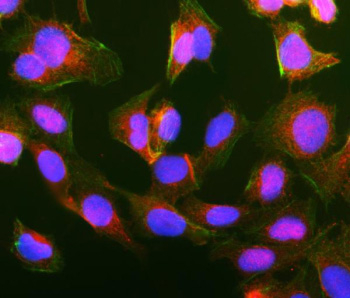
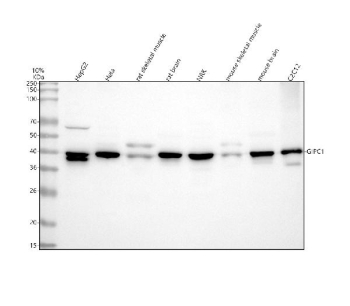
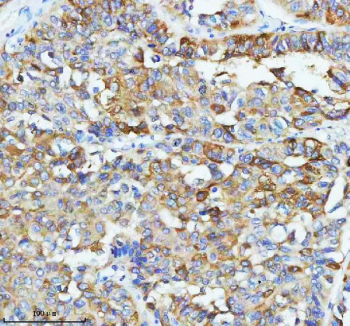
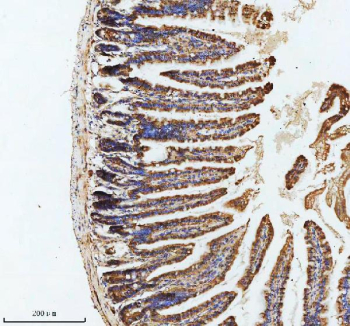
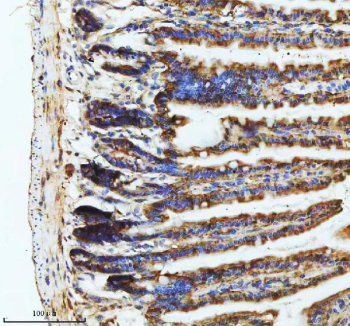
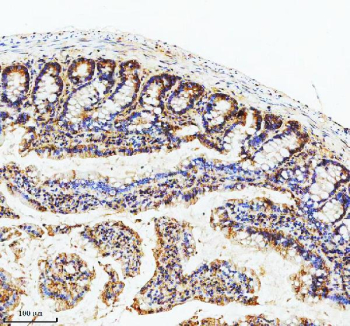
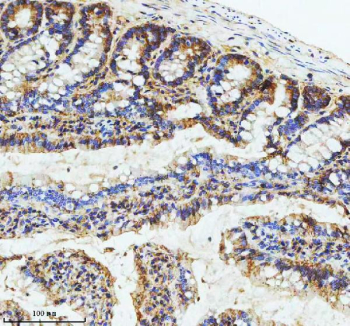
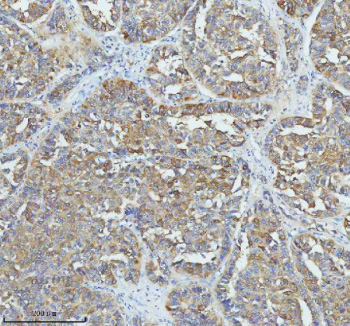
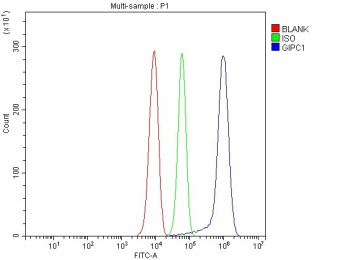
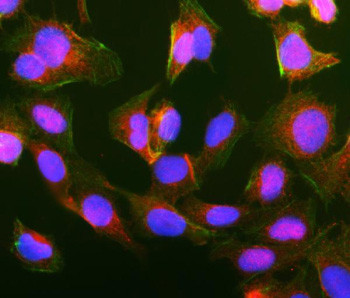
Adding 0.2 ml of distilled water will yield a concentration of 500 ug/ml. GIPC1 antibody detects PDZ domain-containing protein GIPC1, a cytoplasmic adaptor protein that regulates receptor trafficking, cell signaling, and cytoskeletal organization. The UniProt recommended name is PDZ domain-containing protein GIPC1 (GIPC1). This multifunctional scaffold protein interacts with a wide variety of transmembrane receptors, G-protein coupled receptors, and signaling adaptors through its conserved PDZ domain, influencing signal transduction and vesicular transport.Functionally, GIPC1 antibody identifies a 333-amino-acid protein that contains a central PDZ domain responsible for binding the C-terminal motifs of target proteins such as TGFbeta receptor III, GLUT1, and neuropilin-1. GIPC1 participates in endocytic recycling and intracellular trafficking of these receptors, thereby modulating cellular responses to growth factors, adhesion molecules, and hormones. Additionally, GIPC1 acts as a linker between membrane receptors and the actin cytoskeleton via interactions with myosin VI, regulating cell polarity and motility.The GIPC1 gene is located on chromosome 19p13.12 and is expressed ubiquitously, with high levels found in epithelial, neuronal, and endothelial tissues. Its expression is regulated during development and by extracellular stimuli such as growth factors and oxidative stress. GIPC1 is essential for maintaining proper vesicle transport and receptor localization in diverse cell types.Pathologically, altered GIPC1 expression has been implicated in cancer progression, angiogenesis, and neurological disorders. Overexpression in breast, pancreatic, and gastric cancers enhances tumor cell proliferation and migration by stabilizing growth factor receptor signaling. In neurons, dysregulated GIPC1 may disrupt synaptic vesicle trafficking and signaling. Research using GIPC1 antibody supports studies in receptor trafficking, cancer signaling, and cytoskeletal regulation.GIPC1 antibody is validated for western blotting, immunohistochemistry, and immunofluorescence to detect adaptor proteins involved in signal transduction. NSJ Bioreagents provides GIPC1 antibody reagents optimized for research in receptor recycling, endocytosis, and actin-coupled signaling pathways.Structurally, PDZ domain-containing protein GIPC1 includes an N-terminal GH1 domain for dimerization, a central PDZ domain for C-terminal binding to target proteins, and a C-terminal GH2 domain for myosin VI interaction. This modular structure enables GIPC1 to act as a versatile scaffold that coordinates endocytic transport and receptor-mediated signaling. This antibody enables exploration of GIPC1's role in intracellular trafficking, cancer progression, and signal compartmentalization.
| Keywords: | Anti-GIPC1, Anti-Synectin, Anti-Tax interaction protein 2, Anti-RGS19-interacting protein 1, Anti-RGS-GAIP-interacting protein, Anti-GAIP C-terminus-interacting protein, Anti-PDZ domain-containing protein GIPC1, GIPC1 Antibody / PDZ domain-containing prot |
| Supplier: | NSJ Bioreagents |
| Supplier-Nr: | FY13277 |
Properties
| Application: | WB, IHC, ICC, IF, FC, ELISA, IP |
| Antibody Type: | Polyclonal |
| Conjugate: | No |
| Host: | Rabbit |
| Species reactivity: | human, mouse, rat |
| Immunogen: | E.coli-derived human GIPC1 recombinant protein (Position: H66-Y333) |
| Format: | Purified |
Database Information
| KEGG ID : | K20056 | Matching products |
| UniProt ID : | O14908 | Matching products |
| Gene ID : | GeneID 10755 | Matching products |
Handling & Safety
| Storage: | +4°C |
| Shipping: | +4°C (International: +4°C) |
Caution
Our products are for laboratory research use only: Not for administration to humans!
Our products are for laboratory research use only: Not for administration to humans!
Information about the product reference will follow.
more
You will get a certificate here
Viewed