
Cookie preferences
This website uses cookies, which are necessary for the technical operation of the website and are always set. Other cookies, which increase the comfort when using this website, are used for direct advertising or to facilitate interaction with other websites and social networks, are only set with your consent.
Configuration
Technically required
These cookies are necessary for the basic functions of the shop.
"Allow all cookies" cookie
"Decline all cookies" cookie
CSRF token
Cookie preferences
Currency change
Customer-specific caching
FACT-Finder tracking
Individual prices
Selected shop
Session
Comfort functions
These cookies are used to make the shopping experience even more appealing, for example for the recognition of the visitor.
Note
Show the facebook fanpage in the right blod sidebar
Statistics & Tracking
Affiliate program
Conversion and usertracking via Google Tag Manager
Track device being used

| Item number | Size | Datasheet | Manual | SDS | Delivery time | Quantity | Price |
|---|---|---|---|---|---|---|---|
| NSJ-R31137 | 100 µg | - | - |
3 - 10 business days* |
790.00€
|
If you have any questions, please use our Contact Form.
You can also order by e-mail: info@biomol.com
Larger quantity required? Request bulk
You can also order by e-mail: info@biomol.com
Larger quantity required? Request bulk
0.5mg/ml if reconstituted with 0.2ml sterile DI water. Eukaryotic Translation Initiation Factor... more
Product information "Anti-GCN2"
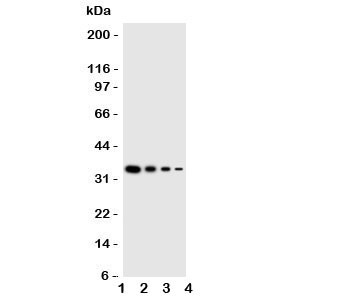
0.5mg/ml if reconstituted with 0.2ml sterile DI water. Eukaryotic Translation Initiation Factor 2-Alpha Kinase 4, also called GCN2 (General control nonderepressible 2), is an enzyme that in humans is encoded by the EIF2AK4 gene. It belongs to a family of kinases that phosphorylate the alpha subunit of eukaryotic translation initiation factor-2 to downregulate protein synthesis in response to varied cellular stresses. Hartz(2005) mapped the gene to chromosome 15q15.1 based on an alignment of the protein sequence with the genomic sequence. Berlanga et al.(1999) demonstrated that GCN2 immunopurified from mouse liver extracts could phosphorylate rabbit Eif2 in vitro. Serum starvation increased the level of phosphorylated EIF2-alpha more than 2-fold in human embryonic kidney cells transfected with mouse Eif2ak4. Costa-Mattioli et al.(2005) reported a unique feature of hippocampal slices from GCN2-null mice: in CA1, a single 100-Hz train induced a strong and sustained long-term potentiation(late LTP or L-LTP), which was dependent on transcription and translation. Protein function: Metabolic-stress sensing protein kinase that phosphorylates the alpha subunit of eukaryotic translation initiation factor 2 (eIF-2-alpha/EIF2S1) on 'Ser-52' in response to low amino acid availability (PubMed:10504407, PubMed:10655230, PubMed:12176355, PubMed:12215525, PubMed:15213227, PubMed:16054071, PubMed:16176978, PubMed:16121183, PubMed:15774759, PubMed:16601681, PubMed:26102367). Plays a role as an activator of the integrated stress response (ISR) required for adapatation to amino acid starvation. Converts phosphorylated eIF-2-alpha/EIF2S1 either to a competitive inhibitor of the translation initiation factor eIF-2B, leading to a global protein synthesis repression, and thus to a reduced overall utilization of amino acids, or to a translational initiation activation of specific mRNAs, such as the transcriptional activator ATF4, and hence allowing ATF4-mediated reprogramming of amino acid biosynthetic gene expression to alleviate nutrient depletion (PubMed:10655230, PubMed:11106749, PubMed:12176355, PubMed:15213227, PubMed:16176978, PubMed:26102367). Binds uncharged tRNAs. Involved in cell cycle arrest by promoting cyclin D1 mRNA translation repression after the unfolded protein response pathway (UPR) activation or cell cycle inhibitor CDKN1A/p21 mRNA translation activation in response to amino acid deprivation (PubMed:16176978, PubMed:26102367). Plays a role in the consolidation of synaptic plasticity, learning as well as formation of long-term memory (PubMed:16121183). Plays a role in neurite outgrowth inhibition (PubMed:23447528). Plays a role in feeding behavior to maintain amino acid homeostasis, contributes to the innate aversion toward diets of imbalanced amino acid composition (PubMed:16054071, PubMed:15774759). Plays a proapoptotic role in response to glucose deprivation (PubMed:20660158). Promotes global cellular protein synthesis repression in response to UV irradiation independently of the stress-activated protein kinase/c-Jun N-terminal kinase (SAPK/JNK) and p38 MAPK signaling pathways (PubMed:12176355). [The UniProt Consortium]
| Keywords: | Anti-Gcn2, Anti-mGCN2, Anti-GCN2-like protein, Anti-eIF-2-alpha kinase GCN2, Anti-Eukaryotic translation initiation factor 2-alpha kinase 4, GCN2 Antibody |
| Supplier: | NSJ Bioreagents |
| Supplier-Nr: | R31137 |
Properties
| Application: | WB |
| Antibody Type: | Polyclonal |
| Conjugate: | No |
| Host: | Rabbit |
| Species reactivity: | mouse, rat |
| Immunogen: | An amino acid sequence from the middle region of mouse GCN2 (ATDHLAFTAEGKQDDQAGD) was used as the immunogen for this GCN2 antibody. |
| Format: | Purified |
Database Information
| KEGG ID : | K16196 | Matching products |
| UniProt ID : | Q9QZ05 | Matching products |
| Gene ID : | GeneID 27103 | Matching products |
Handling & Safety
| Storage: | +4°C |
| Shipping: | +4°C (International: +4°C) |
Caution
Our products are for laboratory research use only: Not for administration to humans!
Our products are for laboratory research use only: Not for administration to humans!
Information about the product reference will follow.
more
You will get a certificate here

Viewed