
Cookie preferences
This website uses cookies, which are necessary for the technical operation of the website and are always set. Other cookies, which increase the comfort when using this website, are used for direct advertising or to facilitate interaction with other websites and social networks, are only set with your consent.
Configuration
Technically required
These cookies are necessary for the basic functions of the shop.
"Allow all cookies" cookie
"Decline all cookies" cookie
CSRF token
Cookie preferences
Currency change
Customer-specific caching
FACT-Finder tracking
Individual prices
Selected shop
Session
Comfort functions
These cookies are used to make the shopping experience even more appealing, for example for the recognition of the visitor.
Note
Show the facebook fanpage in the right blod sidebar
Statistics & Tracking
Affiliate program
Conversion and usertracking via Google Tag Manager
Track device being used



| Item number | Size | Datasheet | Manual | SDS | Delivery time | Quantity | Price |
|---|---|---|---|---|---|---|---|
| NSJ-FY12963 | 100 µg | - | - |
3 - 10 business days* |
790.00€
|
If you have any questions, please use our Contact Form.
You can also order by e-mail: info@biomol.com
Larger quantity required? Request bulk
You can also order by e-mail: info@biomol.com
Larger quantity required? Request bulk
Adding 0.2 ml of distilled water will yield a concentration of 500 ug/ml. GATM antibody detects... more
Product information "Anti-GATM / Glycine amidinotransferase mitochondrial"
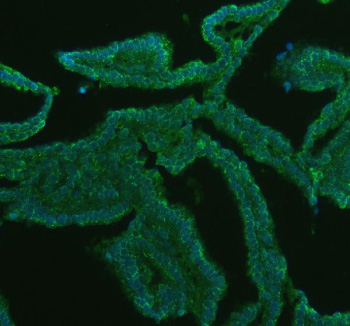
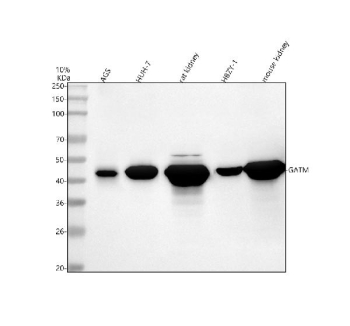
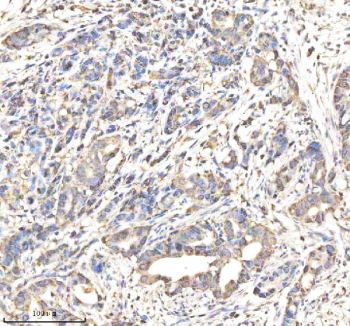
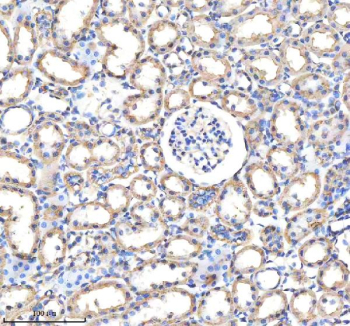
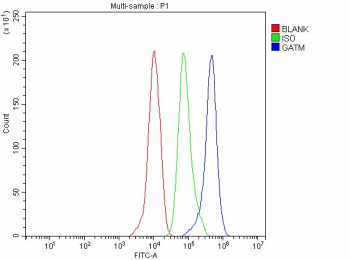
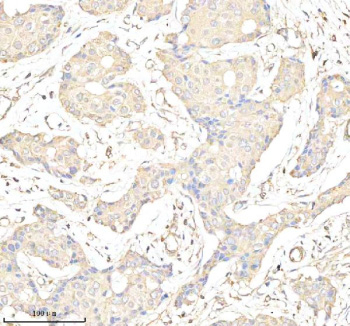
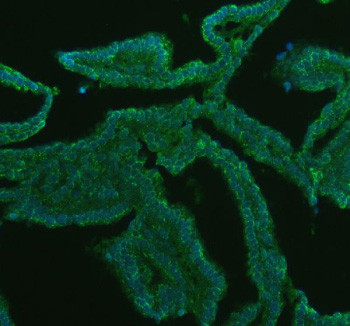
Adding 0.2 ml of distilled water will yield a concentration of 500 ug/ml. GATM antibody detects Glycine amidinotransferase, mitochondrial, an enzyme that catalyzes the first committed step in creatine biosynthesis. The UniProt recommended name is Glycine amidinotransferase, mitochondrial (GATM), also known as L-arginine:glycine amidinotransferase or AGAT. GATM transfers an amidino group from arginine to glycine, producing guanidinoacetate, which is subsequently methylated to creatine by GAMT. Creatine and phosphocreatine serve as rapid energy buffers in tissues with fluctuating ATP demand, including muscle and brain.Functionally, GATM antibody identifies a 423-amino-acid mitochondrial matrix enzyme that catalyzes a reversible transamidination reaction dependent on pyridoxal phosphate (PLP) as a cofactor. This reaction provides the foundation for creatine synthesis, linking amino acid metabolism with cellular energy storage. The enzyme's activity supports energy homeostasis by ensuring adequate creatine production for high-energy phosphate transfer through the phosphocreatine system.The GATM gene is located on chromosome 15q21.1 and encodes a homotetrameric enzyme targeted to mitochondria via an N-terminal transit peptide. GATM is primarily expressed in kidney, pancreas, and liver, where it supplies guanidinoacetate for systemic creatine synthesis. In muscle and neural tissues, creatine generated downstream of GATM activity is phosphorylated by creatine kinase to form phosphocreatine, maintaining ATP levels during high metabolic activity. Deficiency or mutation of GATM causes creatine deficiency syndrome, characterized by neurological impairment and muscle weakness.GATM antibody is widely used in studies of amino acid metabolism, energy homeostasis, and mitochondrial function. It is a valuable marker for assessing creatine biosynthesis and mitochondrial enzyme integrity. Reduced GATM activity is linked to metabolic and neurological disorders, while upregulation has been observed under energy stress and oxidative conditions. The enzyme's function connects arginine metabolism, urea cycle intermediates, and ATP regeneration.Structurally, GATM consists of an active-site lysine residue forming a Schiff base with PLP, enabling catalysis of amidino transfer. The enzyme forms stable homotetramers that ensure efficient substrate channeling and regulation. GATM activity is modulated by substrate availability and feedback inhibition from creatine levels. It interacts with mitochondrial transport proteins to coordinate substrate exchange across the inner membrane. A GATM antibody supports research applications including western blotting, immunohistochemistry, and metabolic flux analysis, providing insights into energy metabolism and mitochondrial health.NSJ Bioreagents provides GATM antibody reagents validated for use in energy metabolism, mitochondrial biology, and enzymology research.
| Keywords: | Anti-GATM, Anti-Transamidinase, Anti-L-arginine:glycine amidinotransferase, Anti-Glycine amidinotransferase, mitochondrial, GATM Antibody / Glycine amidinotransferase mitochondrial |
| Supplier: | NSJ Bioreagents |
| Supplier-Nr: | FY12963 |
Properties
| Application: | WB, IHC, IF, FC, ELISA |
| Antibody Type: | Polyclonal |
| Conjugate: | No |
| Host: | Rabbit |
| Species reactivity: | human, mouse, rat |
| Immunogen: | E.coli-derived human GATM recombinant protein (Position: M1-E279) |
| Format: | Purified |
Database Information
| KEGG ID : | K00613 | Matching products |
| UniProt ID : | P50440 | Matching products |
| Gene ID : | GeneID 2628 | Matching products |
Handling & Safety
| Storage: | +4°C |
| Shipping: | +4°C (International: +4°C) |
Caution
Our products are for laboratory research use only: Not for administration to humans!
Our products are for laboratory research use only: Not for administration to humans!
Information about the product reference will follow.
more
You will get a certificate here
Viewed