
Cookie preferences
This website uses cookies, which are necessary for the technical operation of the website and are always set. Other cookies, which increase the comfort when using this website, are used for direct advertising or to facilitate interaction with other websites and social networks, are only set with your consent.
Configuration
Technically required
These cookies are necessary for the basic functions of the shop.
"Allow all cookies" cookie
"Decline all cookies" cookie
CSRF token
Cookie preferences
Currency change
Customer-specific caching
FACT-Finder tracking
Individual prices
Selected shop
Session
Comfort functions
These cookies are used to make the shopping experience even more appealing, for example for the recognition of the visitor.
Note
Show the facebook fanpage in the right blod sidebar
Statistics & Tracking
Affiliate program
Conversion and usertracking via Google Tag Manager
Track device being used



| Item number | Size | Datasheet | Manual | SDS | Delivery time | Quantity | Price |
|---|---|---|---|---|---|---|---|
| NSJ-FY12139 | 100 µg | - | - |
3 - 10 business days* |
790.00€
|
If you have any questions, please use our Contact Form.
You can also order by e-mail: info@biomol.com
Larger quantity required? Request bulk
You can also order by e-mail: info@biomol.com
Larger quantity required? Request bulk
Adding 0.2 ml of distilled water will yield a concentration of 500 ug/ml. FUBP1 antibody detects... more
Product information "Anti-FUBP1 / Far upstream element binding protein 1"
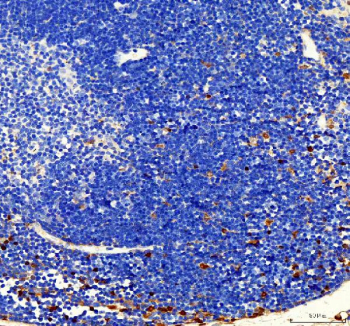
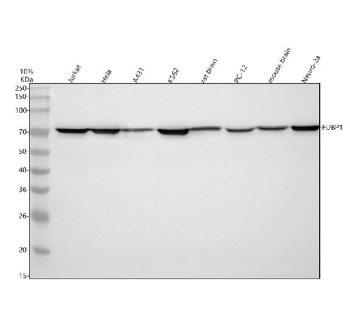
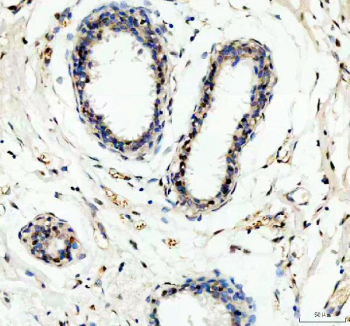
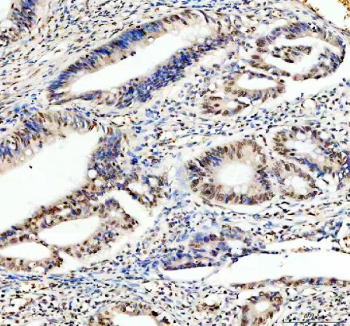
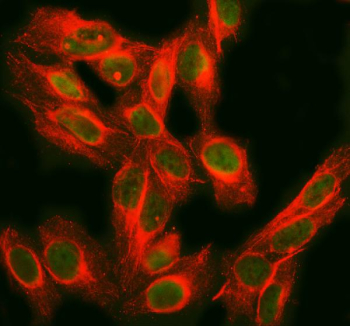
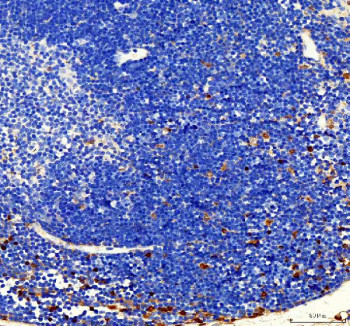
Adding 0.2 ml of distilled water will yield a concentration of 500 ug/ml. FUBP1 antibody detects Far upstream element binding protein 1, encoded by the FUBP1 gene on chromosome 1p31.1. FUBP1 antibody is widely used to investigate this single-stranded DNA- and RNA-binding protein that regulates transcription, mRNA stability, and translation. FUBP1 belongs to the FUBP family, which also includes FUBP2 and FUBP3, and was first identified as a regulator of c-Myc by binding the far upstream element (FUSE) located upstream of the MYC promoter. By acting as a transcriptional activator or repressor depending on cellular context, FUBP1 plays a central role in controlling cell proliferation, apoptosis, and differentiation.Structurally, FUBP1 contains multiple KH (hnRNP K homology) domains that mediate binding to single-stranded nucleic acids. These domains allow recognition of pyrimidine-rich elements in DNA and RNA, enabling FUBP1 to regulate gene transcription and mRNA metabolism. Its nuclear localization sequences direct it to the nucleus, where it interacts with transcriptional machinery, while cytoplasmic pools of FUBP1 influence mRNA turnover and translation. This versatility positions FUBP1 as a bridge between transcriptional and post-transcriptional control.Functionally, FUBP1 is a key regulator of c-Myc, one of the most important proto-oncogenes. It stimulates transcription by binding the FUSE region and recruiting cofactors that promote RNA polymerase II elongation. FUBP1 also regulates genes involved in apoptosis, metabolism, and cell cycle progression. In addition, FUBP1 modulates mRNA stability by interacting with AU-rich elements and influences translation of transcripts involved in development and stress responses. Researchers use FUBP1 antibody to probe these diverse functions in molecular and cancer biology.Clinically, FUBP1 mutations and altered expression are linked to multiple cancers. Deletions of FUBP1 are common in oligodendrogliomas, where they contribute to tumor development alongside IDH1 mutations and 1p/19q codeletion. In contrast, overexpression of FUBP1 supports tumor progression in hepatocellular carcinoma, leukemia, and other malignancies by sustaining c-Myc activity. Beyond cancer, FUBP1 has been implicated in hematopoiesis, neuronal development, and metabolic regulation. Dysregulated expression is associated with developmental delay and intellectual disability syndromes. These findings underscore the importance of FUBP1 as both a biomarker and potential therapeutic target.Experimentally, FUBP1 antibody is used in western blotting to detect the ~68 kDa protein, in immunohistochemistry to evaluate tumor samples, and in immunofluorescence to visualize its nuclear distribution. Co-immunoprecipitation with FUBP1 antibody has identified interactions with transcriptional regulators including TFIIH and p300. Studies also demonstrate interactions with splicing factors and RNA-binding proteins, linking transcriptional and post-transcriptional networks. NSJ Bioreagents supplies FUBP1 antibody to support research in oncology, gene regulation, and RNA biology.
| Keywords: | Anti-FUBP1, Anti-DNA helicase V, Anti-Far upstream element-binding protein 1, FUBP1 Antibody / Far upstream element binding protein 1 |
| Supplier: | NSJ Bioreagents |
| Supplier-Nr: | FY12139 |
Properties
| Application: | WB, IHC, ICC/IF |
| Antibody Type: | Polyclonal |
| Conjugate: | No |
| Host: | Rabbit |
| Species reactivity: | human, mouse, rat |
| Immunogen: | A synthetic peptide corresponding to a sequence at the N-terminus of human FUBP1 |
| Format: | Purified |
Database Information
| KEGG ID : | K13210 | Matching products |
| UniProt ID : | Q96AE4 | Matching products |
| Gene ID : | GeneID 8880 | Matching products |
Handling & Safety
| Storage: | +4°C |
| Shipping: | +4°C (International: +4°C) |
Caution
Our products are for laboratory research use only: Not for administration to humans!
Our products are for laboratory research use only: Not for administration to humans!
Information about the product reference will follow.
more
You will get a certificate here
Viewed