
Anti-FGFR1/CD331 Monoclonal Antibody

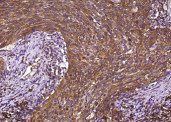
| Item number | Size | Datasheet | Manual | SDS | Delivery time | Quantity | Price |
|---|---|---|---|---|---|---|---|
| E-AN200107P.100 | 100 µl | - |
7 - 16 business days* |
389.00€
|
If you have any questions, please use our Contact Form.
You can also order by e-mail: info@biomol.com
Larger quantity required? Request bulk
You can also order by e-mail: info@biomol.com
Larger quantity required? Request bulk
FGFR1, also known as CD331, belongs to the fibroblast growth factor receptor subfamily where... more
Product information "Anti-FGFR1/CD331 Monoclonal Antibody"
FGFR1, also known as CD331, belongs to the fibroblast growth factor receptor subfamily where amino acid sequence is highly conserved between members and throughout evolution. FGFR family members differ from one another in their ligand affinities and tissue distribution. Fibroblast growth factors (FGFs) (FGF1 - 10 and 16 - 23) are mitogenic signaling molecules that have roles in angiogenesis, wound healing, cell migration, neural outgrowth and embryonic development. FGFs bind heparan sulfate glycosaminoglycans, which facilitates dimerization (activation) of FGF receptors. FGFR1 is a full-length representative protein consists of an extracellular region, composed of three immunoglobulin-like domains, a single hydrophobic membrane-spanning segment and a cytoplasmic tyrosine kinase domain. The extracellular portion of FGFR1 interacts with fibroblast growth factors, setting in motion a cascade of downstream signals, ultimately influencing mitogenesis and differentiation. This particular family member binds both acidic and basic fibroblast growth factors and is involved in limb induction. CD331 can be detected in astrocytoma, neuroblastoma and adrenal cortex cell lines. Some isoforms are detected in foreskin fibroblast cell lines, however isoform 17, isoform 18 and isoform 19 are not detected in these cells. Defects in FGFR1 are a cause of Pfeiffer syndrome,idiopathic hypogonadotropic hypogonadism, Kallmann syndrome type 2, osteoglophonic dysplasia and trigonocephaly non-syndromic. Protein function: Tyrosine-protein kinase that acts as a cell-surface receptor for fibroblast growth factors and plays an essential role in the regulation of embryonic development, cell proliferation, differentiation and migration. Required for normal mesoderm patterning and correct axial organization during embryonic development, normal skeletogenesis and normal development of the gonadotropin-releasing hormone (GnRH) neuronal system. Phosphorylates PLCG1, FRS2, GAB1 and SHB. Ligand binding leads to the activation of several signaling cascades. Activation of PLCG1 leads to the production of the cellular signaling molecules diacylglycerol and inositol 1,4,5-trisphosphate. Phosphorylation of FRS2 triggers recruitment of GRB2, GAB1, PIK3R1 and SOS1, and mediates activation of RAS, MAPK1/ERK2, MAPK3/ERK1 and the MAP kinase signaling pathway, as well as of the AKT1 signaling pathway. Promotes phosphorylation of SHC1, STAT1 and PTPN11/SHP2. In the nucleus, enhances RPS6KA1 and CREB1 activity and contributes to the regulation of transcription. FGFR1 signaling is down-regulated by IL17RD/SEF, and by FGFR1 ubiquitination, internalization and degradation. [The UniProt Consortium]
| Keywords: | FLT-2, N-sam, CD331, BFGFR, FGFR1, FGFR-1, bFGF-R-1, Proto-oncogene c-Fgr, Fms-like tyrosine kinase 2, Fibroblast growth factor receptor 1, Basic fibroblast growth factor receptor 1, FGFR1/CD331 Monoclonal Antibody |
| Supplier: | Elabscience |
| Supplier-Nr: | E-AN200107P |
Properties
| Application: | IHC (paraffin) |
| Antibody Type: | Monoclonal |
| Clone: | 7C13 |
| Conjugate: | No |
| Host: | Mouse |
| Species reactivity: | human |
| Immunogen: | Recombinant Human FGFR1 / CD331 protein |
| Format: | Purified |
Database Information
| KEGG ID : | K04362 | Matching products |
| UniProt ID : | P11362 | Matching products |
| Gene ID : | GeneID 2260 | Matching products |
Handling & Safety
| Storage: | +4°C (avoid repeat freezing and thawing cycles) |
| Shipping: | +4°C (International: +4°C) |
| Signal Word: | Warning |
| GHS Hazard Pictograms: |

|
| H Phrases: | H317 |
| P Phrases: | P261, P272, P280, P302+352, P333+313 |
Caution
Our products are for laboratory research use only: Not for administration to humans!
Our products are for laboratory research use only: Not for administration to humans!
Information about the product reference will follow.
more
You will get a certificate here
Viewed