
Cookie preferences
This website uses cookies, which are necessary for the technical operation of the website and are always set. Other cookies, which increase the comfort when using this website, are used for direct advertising or to facilitate interaction with other websites and social networks, are only set with your consent.
Configuration
Technically required
These cookies are necessary for the basic functions of the shop.
"Allow all cookies" cookie
"Decline all cookies" cookie
CSRF token
Cookie preferences
Currency change
Customer-specific caching
FACT-Finder tracking
Individual prices
Selected shop
Session
Comfort functions
These cookies are used to make the shopping experience even more appealing, for example for the recognition of the visitor.
Note
Show the facebook fanpage in the right blod sidebar
Statistics & Tracking
Affiliate program
Conversion and usertracking via Google Tag Manager
Track device being used

| Item number | Size | Datasheet | Manual | SDS | Delivery time | Quantity | Price |
|---|---|---|---|---|---|---|---|
| NSJ-FY12821 | 100 µl | - | - |
3 - 10 business days* |
790.00€
|
If you have any questions, please use our Contact Form.
You can also order by e-mail: info@biomol.com
Larger quantity required? Request bulk
You can also order by e-mail: info@biomol.com
Larger quantity required? Request bulk
Rabbit IgG in phosphate buffered saline, pH 7.4, 150mM NaCl, 0.02% sodium azide and 50% glycerol,... more
Product information "Anti-FETUB / Fetuin B, clone 31F67"
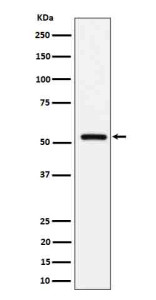
Rabbit IgG in phosphate buffered saline, pH 7.4, 150mM NaCl, 0.02% sodium azide and 50% glycerol, 0.4-0.5mg/ml BSA. FETUB antibody detects FETUIN B, encoded by the FETUB gene. Alternate names include FETUB protein, Fetuin 2, and Fetuin like glycoprotein. FETUIN B is a secreted plasma glycoprotein belonging to the cystatin superfamily of cysteine protease inhibitors. Although structurally related to FETUIN A, FETUIN B has distinct biological functions. It is primarily expressed in the liver and secreted into the bloodstream, where it regulates protease activity, fertilization, and metabolic signaling. FETUB contains cystatin like domains that inhibit specific proteases, contributing to extracellular proteolysis control.FETUB antibody is widely applied in metabolism, reproduction, and protease biology. A key role of FETUIN B is in fertilization, where it inhibits the protease ovastacin, preventing premature hardening of the zona pellucida and ensuring successful sperm penetration. Loss of FETUB function results in female infertility due to zona pellucida hardening defects. By detecting FETUB, researchers can explore how this protein supports reproductive biology and fertility.Beyond reproduction, FETUIN B regulates extracellular proteases involved in tissue remodeling, inflammation, and fibrosis. Studies in liver biology reveal that altered FETUB expression contributes to chronic liver disease and cancer. Because it is secreted into blood, FETUB is measurable in plasma, making it a potential biomarker for disease diagnosis and prognosis.Applications of FETUB antibody include western blotting, immunohistochemistry, immunofluorescence, and ELISA. Western blotting detects FETUB in serum and liver extracts, immunohistochemistry maps expression in hepatocytes and ovarian tissues, and immunofluorescence highlights its localization in secretory pathways. ELISA enables quantification of circulating FETUB, linking research findings to clinical diagnostics. These methods provide powerful approaches for studying this multifunctional glycoprotein.Altered FETUB expression has been implicated in metabolic disease, including obesity, insulin resistance, and type 2 diabetes. Elevated circulating levels may reflect metabolic stress and inflammation. In oncology, FETUB has been reported as a prognostic biomarker in hepatocellular carcinoma and other cancers. By applying FETUB antibody, scientists can study its dual roles in fertility and systemic disease.FETUB is also a subject of evolutionary biology research. While related to FETUIN A, its divergence highlights specialized reproductive functions. This specialization underscores the importance of studying FETUB independently of FETUIN A. Antibody based detection allows researchers to dissect these evolutionary adaptations. NSJ Bioreagents provides FETUB antibody with validated specificity and sensitivity, supporting reliable detection across molecular and clinical research.
| Keywords: | Anti-16G2, Anti-Gugu, Anti-FETUB, Anti-Fetuin-B, Anti-Fetuin-like protein IRL685, FETUB Antibody / Fetuin B |
| Supplier: | NSJ Bioreagents |
| Supplier-Nr: | FY12821 |
Properties
| Application: | WB, IHC |
| Antibody Type: | Monoclonal |
| Clone: | 31F67 |
| Conjugate: | No |
| Host: | Rabbit |
| Species reactivity: | human, rat |
| Immunogen: | A synthesized peptide derived from human Fetuin B |
| Format: | Purified |
Database Information
| KEGG ID : | K23411 | Matching products |
| UniProt ID : | Q9UGM5 | Matching products |
| Gene ID : | GeneID 26998 | Matching products |
Handling & Safety
| Storage: | -20°C |
| Shipping: | -20°C (International: -20°C) |
Caution
Our products are for laboratory research use only: Not for administration to humans!
Our products are for laboratory research use only: Not for administration to humans!
Information about the product reference will follow.
more
You will get a certificate here
Viewed