
Cookie preferences
This website uses cookies, which are necessary for the technical operation of the website and are always set. Other cookies, which increase the comfort when using this website, are used for direct advertising or to facilitate interaction with other websites and social networks, are only set with your consent.
Configuration
Technically required
These cookies are necessary for the basic functions of the shop.
"Allow all cookies" cookie
"Decline all cookies" cookie
CSRF token
Cookie preferences
Currency change
Customer-specific caching
FACT-Finder tracking
Individual prices
Selected shop
Session
Comfort functions
These cookies are used to make the shopping experience even more appealing, for example for the recognition of the visitor.
Note
Show the facebook fanpage in the right blod sidebar
Statistics & Tracking
Affiliate program
Conversion and usertracking via Google Tag Manager
Track device being used



| Item number | Size | Datasheet | Manual | SDS | Delivery time | Quantity | Price |
|---|---|---|---|---|---|---|---|
| NSJ-V5886-20UG | 20 µg | - | - |
7 - 12 business days* |
375.00€
|
||
| NSJ-V5886-100UG | 100 µg | - | - |
7 - 12 business days* |
810.00€
|
If you have any questions, please use our Contact Form.
You can also order by e-mail: info@biomol.com
Larger quantity required? Request bulk
You can also order by e-mail: info@biomol.com
Larger quantity required? Request bulk
0.2 mg/ml in 1X PBS with 0.05% BSA, 0.05% sodium azide. Intestinal fatty acid-binding protein... more
Product information "Anti-FABP2 / Fatty acid binding protein 2, clone FABP2/6344"
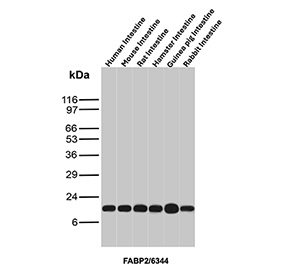
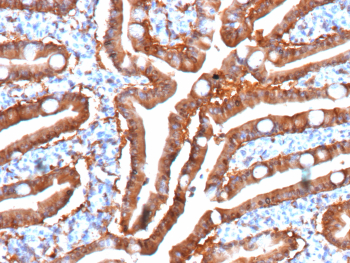
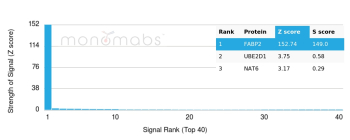
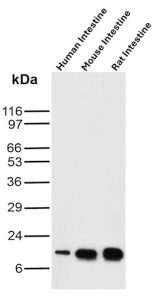
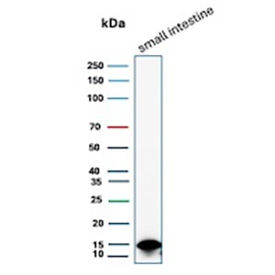
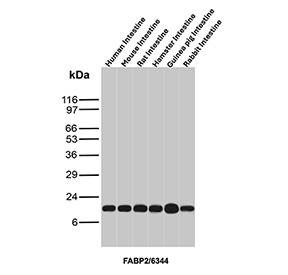
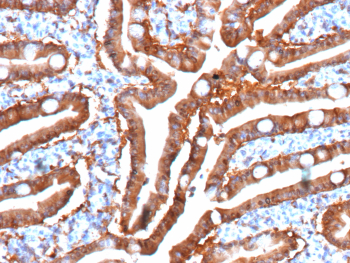
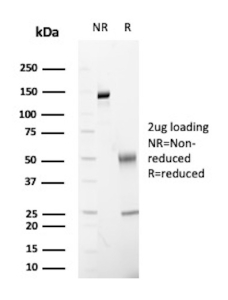
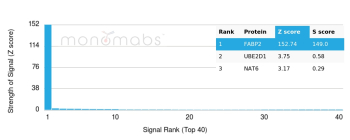
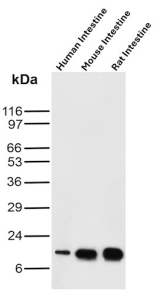
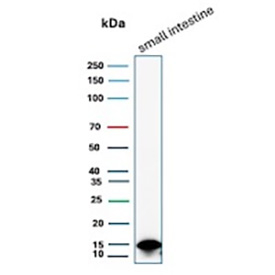
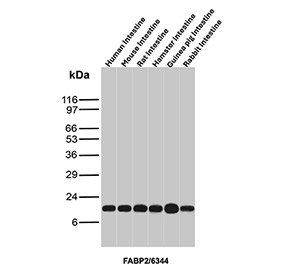
0.2 mg/ml in 1X PBS with 0.05% BSA, 0.05% sodium azide. Intestinal fatty acid-binding protein (FABP2) is a small cytoplasmic lipid-binding protein encoded by the FABP2 gene and predominantly expressed in absorptive epithelial cells of the small intestine. FABP2 Antibody / Intestinal Lipid Transport Marker is useful for studying enterocyte biology, dietary lipid absorption, epithelial differentiation, and intestinal metabolic regulation. FABP2 belongs to the fatty acid-binding protein family, a group of structurally related intracellular proteins that bind long-chain fatty acids and facilitate their intracellular trafficking and metabolic utilization.FABP2 antibody, also referred to as Intestinal fatty acid-binding protein antibody or I-FABP antibody in the literature, recognizes a protein that plays a major role in intestinal lipid handling and nutrient absorption. FABP2 is localized primarily within the cytoplasm of mature enterocytes lining the small intestinal villi, where it participates in fatty acid uptake, intracellular transport, and delivery of lipids to pathways involved in triglyceride synthesis and energy metabolism. Due to its highly restricted intestinal expression pattern, FABP2 is widely used as a marker of differentiated intestinal epithelium and enterocyte maturation.FABP2 contributes to intestinal metabolic homeostasis by binding dietary fatty acids and promoting their efficient intracellular movement following luminal absorption. The protein participates in pathways associated with lipid digestion, chylomicron assembly, cellular energy regulation, and epithelial barrier maintenance. FABP2 has also been investigated in obesity, insulin resistance, inflammatory bowel disease, intestinal injury, and metabolic syndrome, reflecting the importance of intestinal lipid metabolism in systemic metabolic health.In histologic applications, FABP2 expression is commonly observed as strong cytoplasmic staining in absorptive epithelial cells of the small intestine, particularly within villous enterocytes. This characteristic localization pattern makes FABP2 a useful marker for intestinal epithelial differentiation and gastrointestinal tissue characterization. Changes in FABP2 expression have additionally been reported in gastrointestinal malignancies and inflammatory disorders affecting intestinal epithelial integrity and absorptive function.FABP2 is encoded on human chromosome 4q28-q31 and produces a highly conserved beta-barrel fatty acid-binding protein typical of the FABP family. The compact ligand-binding structure enables rapid intracellular fatty acid exchange and transport within enterocytes exposed to fluctuating dietary lipid levels. FABP2 functions closely with other intestinal transport and metabolic proteins involved in nutrient sensing, fatty acid uptake, and epithelial metabolic adaptation.Clone FABP2/6344 has been evaluated using western blotting, immunohistochemistry, and HuProt microarray specificity validation methods to support selective detection of FABP2 in research applications. Western blot analysis commonly demonstrates FABP2 near its predicted molecular weight in intestinal tissue lysates, while immunohistochemistry reveals strong enterocyte-associated cytoplasmic staining patterns consistent with the known biology of this intestinal lipid transport protein. Protein microarray validation further supports specificity for FABP2 among thousands of human proteins represented on the array.Explore our broader Metabolism Antibodies page for additional antibodies targeting lipid transport, nutrient absorption, energy regulation, and metabolic signaling pathways across hepatic, intestinal, adipocyte, and endocrine tissues.
| Keywords: | Anti-FABP2, Anti-Fatty acid-binding protein 2, Anti-Fatty acid-binding protein, intestinal, Anti-Intestinal-type fatty acid-binding protein, FABP2 Antibody / Fatty acid binding protein 2 |
| Supplier: | NSJ Bioreagents |
| Supplier-Nr: | V5886 |
Properties
| Application: | IHC, WB |
| Antibody Type: | Monoclonal |
| Clone: | FABP2/6344 |
| Conjugate: | No |
| Host: | Mouse |
| Species reactivity: | guinea swine, hamster, human, mouse, rabbit, rat |
| Immunogen: | Recombinant fragment (around amino acids 1-132) of human FABP2 protein (exact sequence is proprietary) |
| Format: | Purified |
Database Information
| KEGG ID : | K08751 | Matching products |
| UniProt ID : | P12104 | Matching products |
| Gene ID : | GeneID 2169 | Matching products |
Handling & Safety
| Storage: | -20°C |
| Shipping: | -20°C (International: -20°C) |
Caution
Our products are for laboratory research use only: Not for administration to humans!
Our products are for laboratory research use only: Not for administration to humans!
Information about the product reference will follow.
more
You will get a certificate here
Viewed