
Cookie preferences
This website uses cookies, which are necessary for the technical operation of the website and are always set. Other cookies, which increase the comfort when using this website, are used for direct advertising or to facilitate interaction with other websites and social networks, are only set with your consent.
Configuration
Technically required
These cookies are necessary for the basic functions of the shop.
"Allow all cookies" cookie
"Decline all cookies" cookie
CSRF token
Cookie preferences
Currency change
Customer-specific caching
FACT-Finder tracking
Individual prices
Selected shop
Session
Comfort functions
These cookies are used to make the shopping experience even more appealing, for example for the recognition of the visitor.
Note
Show the facebook fanpage in the right blod sidebar
Statistics & Tracking
Affiliate program
Conversion and usertracking via Google Tag Manager
Track device being used

| Item number | Size | Datasheet | Manual | SDS | Delivery time | Quantity | Price |
|---|---|---|---|---|---|---|---|
| NSJ-FY13080 | 100 µl | - | - |
7 - 12 business days* |
790.00€
|
If you have any questions, please use our Contact Form.
You can also order by e-mail: info@biomol.com
Larger quantity required? Request bulk
You can also order by e-mail: info@biomol.com
Larger quantity required? Request bulk
Rabbit IgG in phosphate buffered saline, pH 7.4, 150mM NaCl, 0.02% sodium azide and 50% glycerol,... more
Product information "Anti-ERP27 / Endoplasmic reticulum resident protein 27 / TXNDC13, clone 32E24"
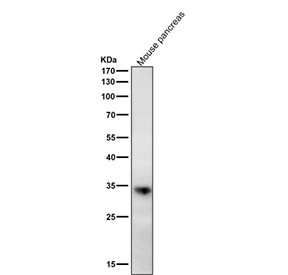
Rabbit IgG in phosphate buffered saline, pH 7.4, 150mM NaCl, 0.02% sodium azide and 50% glycerol, 0.4-0.5mg/ml BSA. ERP27 antibody detects Endoplasmic reticulum resident protein 27, also called TXNDC13, encoded by the ERP27 gene. This protein belongs to the protein disulfide isomerase (PDI) family but is unique because it lacks catalytic cysteine residues required for disulfide bond formation. Instead, ERP27 functions as a non catalytic PDI family member that likely regulates protein folding through binding to unfolded substrates. ERP27 antibody provides a useful tool for studying protein folding, endoplasmic reticulum stress responses, and secretory pathway homeostasis.Endoplasmic reticulum resident protein 27 is localized to the lumen of the endoplasmic reticulum, where it interacts with nascent polypeptides and folding intermediates. Although it lacks enzymatic activity, ERP27 binds to unfolded proteins, potentially presenting them to catalytic PDIs for isomerization. Research using ERP27 antibody has demonstrated that it contributes to quality control of protein folding, ensuring only properly folded proteins proceed through the secretory pathway. By acting as a chaperone like molecule, ERP27 complements enzymatic PDIs in maintaining proteostasis.ERP27 is upregulated during conditions of endoplasmic reticulum stress, such as accumulation of unfolded proteins or perturbations in calcium homeostasis. Studies with ERP27 antibody have shown that its expression is regulated by the unfolded protein response, linking it to pathways that restore folding capacity and reduce stress. Dysregulation of ERP27 may contribute to diseases characterized by endoplasmic reticulum stress, including diabetes, neurodegeneration, and cancer. Understanding ERP27 expression and function helps clarify how cells cope with misfolded proteins and maintain secretory pathway fidelity.In cancer, altered expression of endoplasmic reticulum chaperones influences tumor survival and progression. Research with ERP27 antibody has indicated that increased expression may provide tumor cells with resilience against proteotoxic stress, while reduced levels may impair secretory function. Its role in regulating folding efficiency positions ERP27 as an emerging factor in tumor biology and therapeutic resistance. Beyond cancer, ERP27 contributes to cellular stress adaptation across a wide range of tissues, including secretory cells of the pancreas and liver.ERP27 antibody is widely applied in western blotting, immunohistochemistry, and immunofluorescence. Western blotting demonstrates induction under stress conditions, immunohistochemistry shows distribution in secretory tissues, and immunofluorescence confirms localization to the endoplasmic reticulum. These applications make ERP27 antibody valuable for research into protein folding, stress responses, and secretory pathway regulation.By providing validated ERP27 antibody reagents, NSJ Bioreagents supports studies into protein folding, quality control, and disease. Detection of Endoplasmic reticulum resident protein 27 allows researchers to investigate how chaperone like proteins regulate proteostasis and contribute to pathology.
| Keywords: | Anti-ERP27, Anti-Inactive protein disulfide-isomerase 27, Anti-Endoplasmic reticulum resident protein 27, ERP27 Antibody / Endoplasmic reticulum resident protein 27 / TXNDC13 |
| Supplier: | NSJ Bioreagents |
| Supplier-Nr: | FY13080 |
Properties
| Application: | WB, IHC, ICC, IF |
| Antibody Type: | Monoclonal |
| Clone: | 32E24 |
| Conjugate: | No |
| Host: | Rabbit |
| Species reactivity: | human, mouse, rat |
| Immunogen: | A synthesized peptide derived from human ERP27 |
| Format: | Affinity Purified |
Database Information
| KEGG ID : | K20355 | Matching products |
| UniProt ID : | Q96DN0 | Matching products |
| Gene ID : | GeneID 121506 | Matching products |
Handling & Safety
| Storage: | -20°C |
| Shipping: | -20°C (International: -20°C) |
Caution
Our products are for laboratory research use only: Not for administration to humans!
Our products are for laboratory research use only: Not for administration to humans!
Information about the product reference will follow.
more
You will get a certificate here
Viewed