
Cookie preferences
This website uses cookies, which are necessary for the technical operation of the website and are always set. Other cookies, which increase the comfort when using this website, are used for direct advertising or to facilitate interaction with other websites and social networks, are only set with your consent.
Configuration
Technically required
These cookies are necessary for the basic functions of the shop.
"Allow all cookies" cookie
"Decline all cookies" cookie
CSRF token
Cookie preferences
Currency change
Customer-specific caching
FACT-Finder tracking
Individual prices
Selected shop
Session
Comfort functions
These cookies are used to make the shopping experience even more appealing, for example for the recognition of the visitor.
Note
Show the facebook fanpage in the right blod sidebar
Statistics & Tracking
Affiliate program
Conversion and usertracking via Google Tag Manager
Track device being used



| Item number | Size | Datasheet | Manual | SDS | Delivery time | Quantity | Price |
|---|---|---|---|---|---|---|---|
| NSJ-FY12328 | 100 µg | - | - |
3 - 10 business days* |
790.00€
|
If you have any questions, please use our Contact Form.
You can also order by e-mail: info@biomol.com
Larger quantity required? Request bulk
You can also order by e-mail: info@biomol.com
Larger quantity required? Request bulk
Adding 0.2 ml of distilled water will yield a concentration of 500 ug/ml. EIF3H Antibody is used... more
Product information "Anti-EIF3H / Eukaryotic translation initiation factor 3 subunit H"
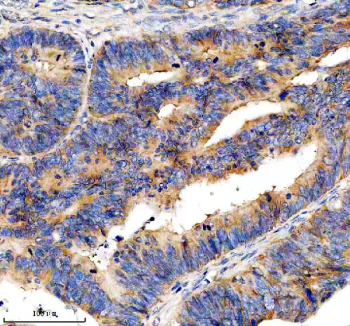
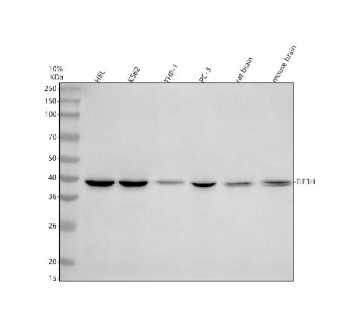
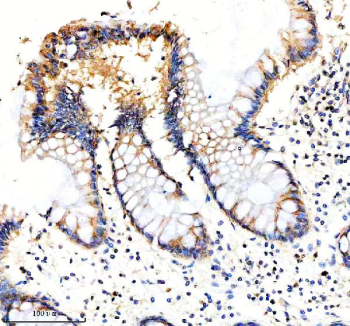
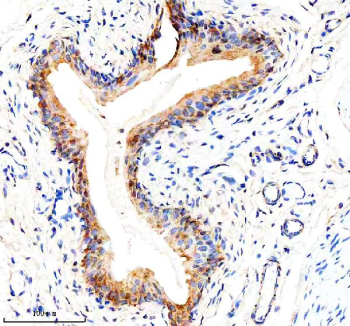
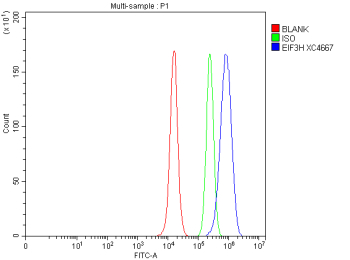
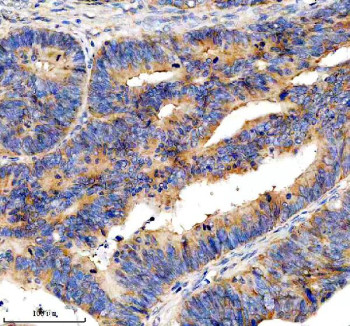
Adding 0.2 ml of distilled water will yield a concentration of 500 ug/ml. EIF3H Antibody is used to study Eukaryotic translation initiation factor 3 subunit H, a core component of the eIF3 complex that orchestrates early steps of protein synthesis. As part of the multi-subunit eIF3 scaffold, Eukaryotic translation initiation factor 3 subunit H helps recruit the 40S ribosomal subunit, stabilizes the ternary complex, and promotes mRNA attachment and scanning to locate the start codon. By coordinating factor exchange and ribosome positioning, Eukaryotic translation initiation factor 3 subunit H contributes to the efficiency and selectivity of translation initiation, a checkpoint that powerfully shapes proteome output and cellular phenotype.Functionally, Eukaryotic translation initiation factor 3 subunit H supports assembly of the 43S pre-initiation complex and helps maintain interactions with eIF4F-bound mRNAs. Perturbations in subunit stoichiometry can shift translation of specific mRNA cohorts, including transcripts with structured 5' UTRs or upstream open reading frames. In cancer models, amplification or overexpression of Eukaryotic translation initiation factor 3 subunit H correlates with elevated global translation and selective enhancement of growth-promoting messages. These properties make EIF3H Antibody valuable for charting how initiation control intersects with oncogenic signaling and stress adaptation.In the laboratory, EIF3H Antibody enables detection of the native subunit in immunoblotting, monitors changes during serum starvation or mTOR pathway modulation, and supports co-immunoprecipitation to define interactions within the eIF3 complex. In immunofluorescence, the antibody reveals cytoplasmic distribution patterns that can be aligned with ribosomal markers or stress granule components. Researchers coupling EIF3H Antibody with polysome profiling, ribosome footprinting, or cap-binding assays can connect subunit abundance to translational throughput and transcript selectivity. Because initiation control influences cell growth, differentiation, and stress resilience, accurate measurement of this subunit helps interpret the translational state of diverse cell types.The EIF3H Antibody from NSJ Bioreagents is optimized for robust detection across common cell lines and tissues, integrating cleanly into workflows that probe translation factor dynamics, response to kinase inhibitors, or adaptive reprogramming under hypoxia and nutrient limitation. In biomarker studies, it can help assess whether elevated Eukaryotic translation initiation factor 3 subunit H accompanies genomic gains at the EIF3H locus and whether this associates with proliferative phenotypes. In mechanistic projects, the antibody supports mapping of subunit-subunit interactions and evaluation of how initiation factor balance governs selective translation under stress or therapy.As translation control emerges as a central driver of cell behavior, EIF3H Antibody provides a dependable means to quantify and localize a key eIF3 subunit, enabling researchers to connect molecular initiation events to system-level outcomes in development, cancer, and stress biology.
| Keywords: | Anti-EIF3H, Anti-eIF-3-gamma, Anti-eIF3 p40 subunit, Anti-Eukaryotic translation initiation factor 3 subunit 3, Anti-Eukaryotic translation initiation factor 3 subunit H, EIF3H Antibody / Eukaryotic translation initiation factor 3 subunit H |
| Supplier: | NSJ Bioreagents |
| Supplier-Nr: | FY12328 |
Properties
| Application: | WB, IHC, FC, ELISA |
| Antibody Type: | Polyclonal |
| Conjugate: | No |
| Host: | Rabbit |
| Species reactivity: | human, mouse, rat |
| Immunogen: | E.coli-derived human EIF3H recombinant protein (Position: K37-N352) |
| Format: | Purified |
Database Information
| KEGG ID : | K03247 | Matching products |
| UniProt ID : | O15372 | Matching products |
| Gene ID : | GeneID 8667 | Matching products |
Handling & Safety
| Storage: | +4°C |
| Shipping: | +4°C (International: +4°C) |
Caution
Our products are for laboratory research use only: Not for administration to humans!
Our products are for laboratory research use only: Not for administration to humans!
Information about the product reference will follow.
more
You will get a certificate here
Viewed