
Cookie preferences
This website uses cookies, which are necessary for the technical operation of the website and are always set. Other cookies, which increase the comfort when using this website, are used for direct advertising or to facilitate interaction with other websites and social networks, are only set with your consent.
Configuration
Technically required
These cookies are necessary for the basic functions of the shop.
"Allow all cookies" cookie
"Decline all cookies" cookie
CSRF token
Cookie preferences
Currency change
Customer-specific caching
FACT-Finder tracking
Individual prices
Selected shop
Session
Comfort functions
These cookies are used to make the shopping experience even more appealing, for example for the recognition of the visitor.
Note
Show the facebook fanpage in the right blod sidebar
Statistics & Tracking
Affiliate program
Conversion and usertracking via Google Tag Manager
Track device being used

| Item number | Size | Datasheet | Manual | SDS | Delivery time | Quantity | Price |
|---|---|---|---|---|---|---|---|
| NSJ-FY13061 | 100 µl | - | - |
3 - 10 business days* |
790.00€
|
If you have any questions, please use our Contact Form.
You can also order by e-mail: info@biomol.com
Larger quantity required? Request bulk
You can also order by e-mail: info@biomol.com
Larger quantity required? Request bulk
Rabbit IgG in phosphate buffered saline, pH 7.4, 150mM NaCl, 0.02% sodium azide and 50% glycerol,... more
Product information "Anti-EIF1AX / eIF1A X isoform, clone 29E67"
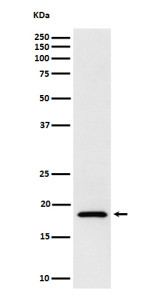
Rabbit IgG in phosphate buffered saline, pH 7.4, 150mM NaCl, 0.02% sodium azide and 50% glycerol, 0.4-0.5mg/ml BSA. EIF1AX antibody detects Eukaryotic translation initiation factor 1A X linked, encoded by the EIF1AX gene. This protein is a translation initiation factor that plays an essential role in assembling the 43S preinitiation complex, stabilizing Met tRNAi binding to the 40S ribosomal subunit, and scanning mRNAs for start codons. EIF1AX antibody provides researchers with a precise reagent for exploring how initiation factors regulate protein synthesis and contribute to disease.Eukaryotic translation initiation factor 1A X linked is a member of the EIF1A family, which includes autosomal EIF1A and the X chromosome encoded isoform. Although both proteins share significant homology and overlapping function, EIF1AX has unique tissue expression and regulatory features. Research using EIF1AX antibody has demonstrated that depletion of this factor disrupts translation initiation, leading to defective ribosome loading and reduced protein synthesis. This highlights its central role in the earliest step of gene expression control.Mutations in EIF1AX have been identified in several cancers, including uveal melanoma, thyroid carcinoma, and ovarian cancer. These mutations cluster in the N terminal tail of the protein and are thought to alter ribosomal scanning or initiation fidelity. Studies with EIF1AX antibody have shown that mutated EIF1AX expression alters global translation profiles, potentially driving oncogenesis by enhancing the synthesis of pro survival or proliferative proteins. This makes EIF1AX both a cancer biomarker and a potential therapeutic target.Beyond cancer, EIF1AX is essential for development and cellular homeostasis. Research using EIF1AX antibody has revealed that knockdown in model organisms causes embryonic lethality due to failure of translation initiation. Its expression is enriched in proliferative tissues, consistent with high protein synthesis demands. Because translation initiation is tightly linked to growth signals such as mTOR and MAPK pathways, EIF1AX occupies a central position in connecting signaling to protein production.EIF1AX antibody is used in western blotting, immunohistochemistry, and immunofluorescence. Western blotting confirms protein expression across proliferative cell lines, immunohistochemistry localizes EIF1AX in tissue sections, and immunofluorescence highlights its presence in the cytoplasm and nucleus. These techniques allow researchers to assess expression changes, localization, and associations with ribosomal components. Functional studies with EIF1AX antibody include co immunoprecipitation, revealing its interactions with initiation complex proteins and ribosomal subunits.By supplying validated EIF1AX antibody reagents, NSJ Bioreagents supports research into translation initiation, cancer, and gene expression regulation. Detection of Eukaryotic translation initiation factor 1A X linked provides insight into how protein synthesis is controlled and how its disruption contributes to pathology.
| Keywords: | Anti-EIF1AX, Anti-Eukaryotic translation initiation factor 4C, Anti-Eukaryotic translation initiation factor 1A, X-chromosomal, EIF1AX Antibody / eIF1A X isoform |
| Supplier: | NSJ Bioreagents |
| Supplier-Nr: | FY13061 |
Properties
| Application: | WB, IHC, ICC, IF, IP |
| Antibody Type: | Monoclonal |
| Clone: | 29E67 |
| Conjugate: | No |
| Host: | Rabbit |
| Species reactivity: | human |
| Immunogen: | A synthesized peptide derived from human eIF1A |
| Format: | Purified |
Database Information
| KEGG ID : | K03236 | Matching products |
| UniProt ID : | P47813 | Matching products |
| Gene ID : | GeneID 1964 | Matching products |
Handling & Safety
| Storage: | -20°C |
| Shipping: | -20°C (International: -20°C) |
Caution
Our products are for laboratory research use only: Not for administration to humans!
Our products are for laboratory research use only: Not for administration to humans!
Information about the product reference will follow.
more
You will get a certificate here
Viewed