
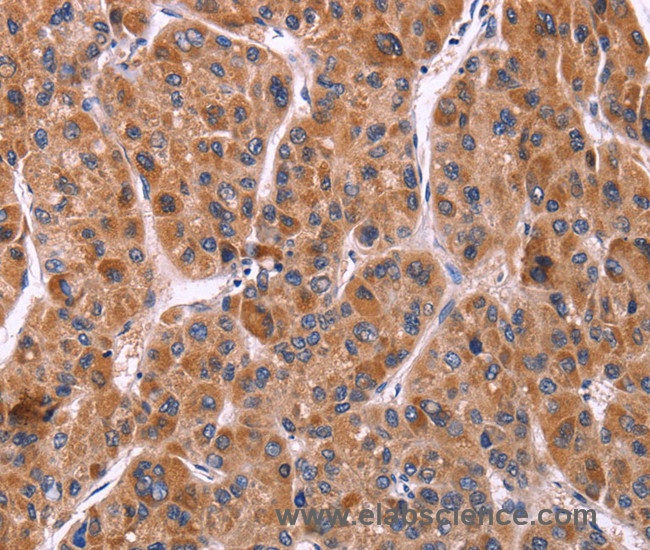
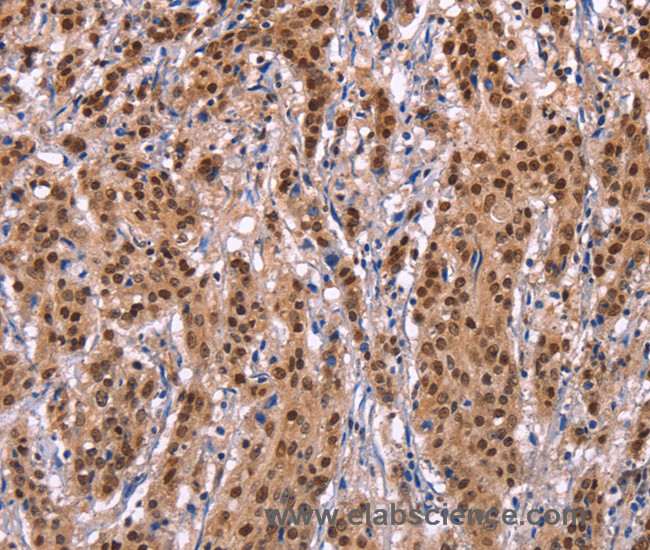
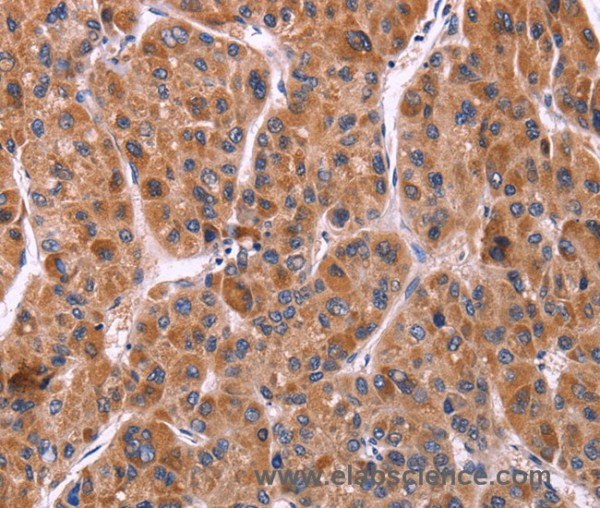
Anti-EFNA5

Item number Size Datasheet Manual SDS Delivery time Quantity Price
E-AB-13215.20 20 µl -

7 - 16 business days*

89.00€
E-AB-13215.60 60 µl -

7 - 16 business days*

174.00€
E-AB-13215.120 120 µl -

7 - 16 business days*

292.00€
E-AB-13215.200 200 µl -

7 - 16 business days*

485.00€
 
Ephrin-A5, a member of the ephrin gene family, prevents axon bundling in cocultures of cortical... more
Product information "Anti-EFNA5"
Ephrin-A5, a member of the ephrin gene family, prevents axon bundling in cocultures of cortical neurons with astrocytes, a model of late stage nervous system development and differentiation. The EPH and EPH-related receptors comprise the largest subfamily of receptor protein-tyrosine kinases and have been implicated in mediating developmental events, particularly in the nervous system. EPH receptors typically have a single kinase domain and an extracellular region containing a Cys-rich domain and 2 fibronectin type III repeats. The ephrin ligands and receptors have been named by the Eph Nomenclature Committee (1997). Protein function: Cell surface GPI-bound ligand for Eph receptors, a family of receptor tyrosine kinases which are crucial for migration, repulsion and adhesion during neuronal, vascular and epithelial development. Binds promiscuously Eph receptors residing on adjacent cells, leading to contact-dependent bidirectional signaling into neighboring cells. The signaling pathway downstream of the receptor is referred to as forward signaling while the signaling pathway downstream of the ephrin ligand is referred to as reverse signaling. Induces compartmentalized signaling within a caveolae-like membrane microdomain when bound to the extracellular domain of its cognate receptor. This signaling event requires the activity of the Fyn tyrosine kinase. Activates the EPHA3 receptor to regulate cell-cell adhesion and cytoskeletal organization. With the receptor EPHA2 may regulate lens fiber cells shape and interactions and be important for lens transparency maintenance. May function actively to stimulate axon fasciculation. The interaction of EFNA5 with EPHA5 also mediates communication between pancreatic islet cells to regulate glucose-stimulated insulin secretion. Cognate/functional ligand for EPHA7, their interaction regulates brain development modulating cell-cell adhesion and repulsion. [The UniProt Consortium]
Keywords: Anti-AL-1, Anti-EFNA5, Anti-EPLG7, Anti-LERK-7, Anti-Ephrin-A5, Anti-EPH-related receptor tyrosine kinase ligand 7, EFNA5 Polyclonal Antibody
Supplier: Elabscience
Supplier-Nr: E-AB-13215

Properties

Application: IHC, ELISA
Antibody Type: Polyclonal
Conjugate: No
Host: Rabbit
Species reactivity: human, mouse, rat
Immunogen: Synthetic peptide of human EFNA5
Format: Purified

Handling & Safety

Storage: -20°C
Shipping: 4°C (International: -20°C)
Caution
Our products are for laboratory research use only: Not for administration to humans!
You will get a certificate here
or to request a certificate of analysis.
Read, write and discuss reviews... more
Customer review for "Anti-EFNA5"
Write a review
or to review a product.
Viewed