
Cookie preferences
This website uses cookies, which are necessary for the technical operation of the website and are always set. Other cookies, which increase the comfort when using this website, are used for direct advertising or to facilitate interaction with other websites and social networks, are only set with your consent.
Configuration
Technically required
These cookies are necessary for the basic functions of the shop.
"Allow all cookies" cookie
"Decline all cookies" cookie
CSRF token
Cookie preferences
Currency change
Customer-specific caching
FACT-Finder tracking
Individual prices
Selected shop
Session
Comfort functions
These cookies are used to make the shopping experience even more appealing, for example for the recognition of the visitor.
Note
Show the facebook fanpage in the right blod sidebar
Statistics & Tracking
Affiliate program
Conversion and usertracking via Google Tag Manager
Track device being used



| Item number | Size | Datasheet | Manual | SDS | Delivery time | Quantity | Price |
|---|---|---|---|---|---|---|---|
| NSJ-FY13413 | 100 µl | - | - |
7 - 12 business days* |
790.00€
|
If you have any questions, please use our Contact Form.
You can also order by e-mail: info@biomol.com
Larger quantity required? Request bulk
You can also order by e-mail: info@biomol.com
Larger quantity required? Request bulk
Rabbit IgG in phosphate buffered saline, pH 7.4, 150mM NaCl, 0.02% sodium azide and 50% glycerol,... more
Product information "Anti-EEA1 / Early endosome antigen 1, clone ECH-5"
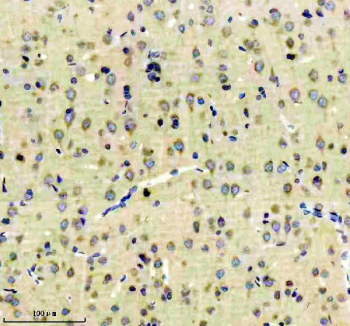
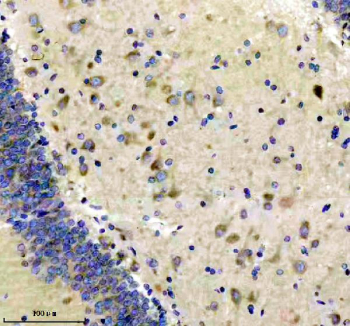
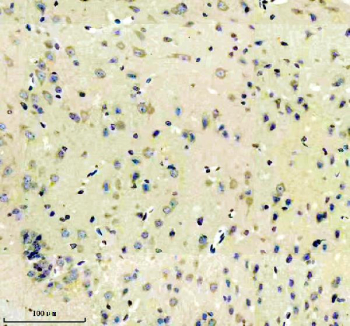
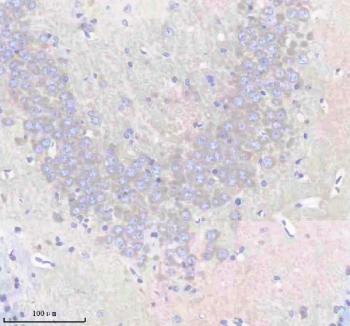
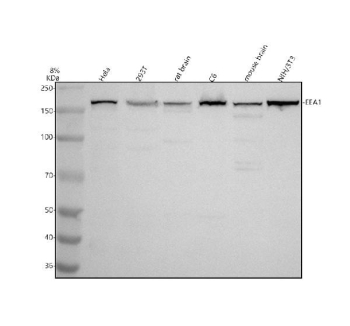
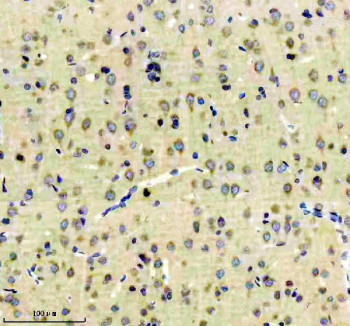
Rabbit IgG in phosphate buffered saline, pH 7.4, 150mM NaCl, 0.02% sodium azide and 50% glycerol, 0.4-0.5mg/ml BSA. EEA1 antibody targets Early endosome antigen 1 (EEA1), a cytoplasmic protein that serves as a key marker and functional regulator of early endosomes within the endocytic pathway. EEA1 localizes predominantly to early endosomal membranes, where it participates in vesicle tethering and fusion events that govern intracellular trafficking. The protein contains characteristic domains, including a FYVE zinc finger domain that binds phosphatidylinositol 3-phosphate, enabling selective association with early endosome membranes enriched in this lipid. Through this localization, EEA1 helps define early endosomal identity and organization.Functionally, EEA1 plays a central role in coordinating endocytic vesicle docking and homotypic fusion of early endosomes. By interacting with Rab5 and phosphoinositide lipids, EEA1 acts as a molecular tether that brings vesicles into proximity prior to membrane fusion. This process is essential for efficient sorting of internalized receptors, ligands, and membrane components. Proper EEA1 function ensures that cargo entering the cell through endocytosis is accurately directed toward recycling pathways or downstream trafficking compartments. An EEA1 antibody supports studies examining membrane trafficking and endosomal dynamics.EEA1 expression is broadly observed across many cell types, reflecting the universal requirement for endocytosis in cellular homeostasis. The punctate cytoplasmic staining pattern associated with EEA1 corresponds to early endosomal structures and is frequently used as a reference marker in imaging studies. Analysis of EEA1 distribution and abundance provides insight into changes in endosomal organization that occur during receptor activation, signaling events, or cellular stress. Because early endosomes function as important signaling hubs, EEA1 is also relevant in studies linking trafficking to signal transduction.From a biological and disease-relevance perspective, alterations in endocytic trafficking have been implicated in cancer, neurodegenerative disorders, and infectious disease processes. Dysregulation of early endosome function can impact receptor signaling duration, nutrient uptake, and pathogen entry. EEA1 is therefore commonly examined in studies investigating defects in intracellular transport, endosomal maturation, and membrane organization under pathological conditions. Monitoring EEA1 helps clarify how disruptions in early endosome biology contribute to disease-associated cellular phenotypes.At the molecular level, EEA1 is encoded by the EEA1 gene and produces a large coiled-coil protein of approximately 180 kDa. The protein architecture supports long-range tethering interactions between membranes and recruitment of additional trafficking factors. EEA1 activity is regulated by lipid composition, small GTPase interactions, and cellular signaling state. An EEA1 antibody supports research applications focused on endocytosis, vesicle trafficking, and intracellular membrane dynamics, with NSJ Bioreagents providing reagents intended for research use.
| Keywords: | Anti-EEA1, Anti-Early endosome antigen 1, Anti-Endosome-associated protein p162, Anti-Zinc finger FYVE domain-containing protein 2, EEA1 Antibody / Early endosome antigen 1 |
| Supplier: | NSJ Bioreagents |
| Supplier-Nr: | FY13413 |
Properties
| Application: | WB, IHC |
| Antibody Type: | Monoclonal |
| Clone: | ECH-5 |
| Conjugate: | No |
| Host: | Rabbit |
| Species reactivity: | human, mouse, rat |
| Immunogen: | Synthesized peptide derived from human Early endosome antigen 1 protein |
| Format: | Affinity Purified |
Database Information
| KEGG ID : | K12478 | Matching products |
| UniProt ID : | Q15075 | Matching products |
| Gene ID : | GeneID 8411 | Matching products |
Handling & Safety
| Storage: | -20°C |
| Shipping: | -20°C (International: -20°C) |
Caution
Our products are for laboratory research use only: Not for administration to humans!
Our products are for laboratory research use only: Not for administration to humans!
Information about the product reference will follow.
more
You will get a certificate here
Viewed