
Cookie preferences
This website uses cookies, which are necessary for the technical operation of the website and are always set. Other cookies, which increase the comfort when using this website, are used for direct advertising or to facilitate interaction with other websites and social networks, are only set with your consent.
Configuration
Technically required
These cookies are necessary for the basic functions of the shop.
"Allow all cookies" cookie
"Decline all cookies" cookie
CSRF token
Cookie preferences
Currency change
Customer-specific caching
FACT-Finder tracking
Individual prices
Selected shop
Session
Comfort functions
These cookies are used to make the shopping experience even more appealing, for example for the recognition of the visitor.
Note
Show the facebook fanpage in the right blod sidebar
Statistics & Tracking
Affiliate program
Conversion and usertracking via Google Tag Manager
Track device being used

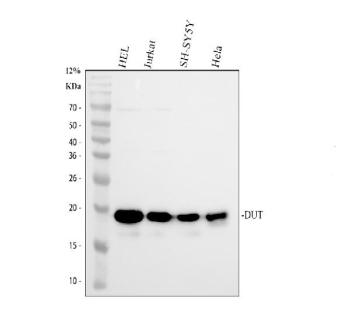
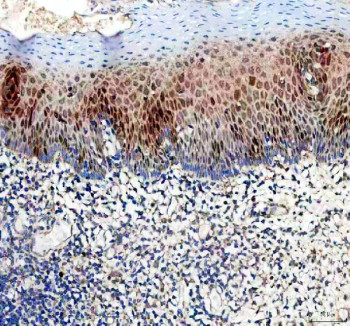


| Item number | Size | Datasheet | Manual | SDS | Delivery time | Quantity | Price |
|---|---|---|---|---|---|---|---|
| NSJ-FY13460 | 100 µg | - | - |
7 - 12 business days* |
790.00€
|
If you have any questions, please use our Contact Form.
You can also order by e-mail: info@biomol.com
Larger quantity required? Request bulk
You can also order by e-mail: info@biomol.com
Larger quantity required? Request bulk
Adding 0.2 ml of distilled water will yield a concentration of 500 ug/ml. DUT Antibody targets... more
Product information "Anti-DUT / Deoxyuridine triphosphatase"
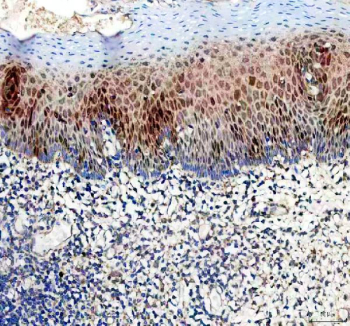
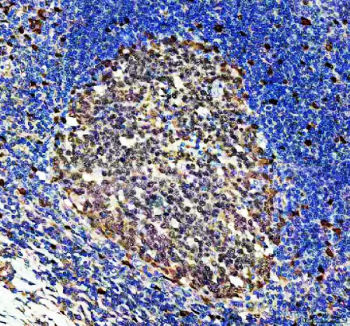
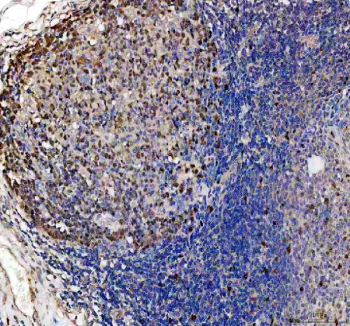
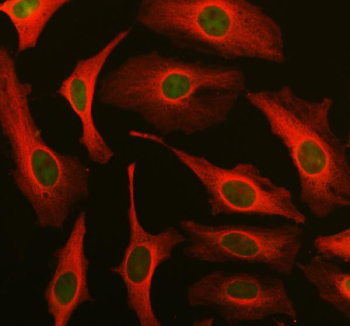
Adding 0.2 ml of distilled water will yield a concentration of 500 ug/ml. DUT Antibody targets Deoxyuridine triphosphatase, encoded by the DUT gene. Deoxyuridine triphosphatase is a highly conserved nucleotide metabolism enzyme that plays a critical role in maintaining genomic integrity by regulating intracellular dUTP levels. The enzyme catalyzes the hydrolysis of dUTP to dUMP and inorganic pyrophosphate, thereby preventing misincorporation of uracil into DNA during replication and repair. This protective function places Deoxyuridine triphosphatase at the center of DNA synthesis fidelity and genome stability control.Functionally, Deoxyuridine triphosphatase acts as a gatekeeper within the thymidylate biosynthesis and DNA replication pathways. By converting dUTP to dUMP, the enzyme simultaneously reduces the pool of potentially mutagenic dUTP and supplies substrate for thymidylate synthase, supporting balanced dTTP production. Loss or inhibition of DUT activity leads to elevated uracil incorporation into DNA, triggering base excision repair pathways and increasing the risk of DNA strand breaks and replication stress. A DUT Antibody is therefore valuable for studies examining DNA replication, nucleotide pool homeostasis, and mechanisms that safeguard genome integrity.Deoxyuridine triphosphatase exists in both nuclear and mitochondrial isoforms generated through alternative targeting sequences, allowing the enzyme to protect genomic DNA as well as mitochondrial DNA from uracil misincorporation. Subcellular localization can vary depending on isoform expression and cellular context, with nuclear localization supporting chromosomal DNA replication and mitochondrial localization contributing to maintenance of mitochondrial genome stability. Expression of DUT is broadly observed in proliferative tissues and dividing cells, reflecting increased demand for nucleotide regulation during DNA synthesis.From a disease relevance perspective, altered regulation of Deoxyuridine triphosphatase has been linked to cancer biology and therapeutic response. Rapidly dividing tumor cells often rely on tight control of nucleotide pools, and DUT expression has been examined in the context of chemotherapeutic sensitivity, particularly for agents that disrupt thymidylate metabolism. Inhibition or dysregulation of DUT can exacerbate DNA damage in cancer cells, while elevated expression may confer resistance to antimetabolite therapies. Beyond oncology, DUT activity is also relevant to viral replication, as several viruses encode or interact with dUTPase enzymes to protect their genomes during replication in host cells.At the molecular level, Deoxyuridine triphosphatase forms a homotrimeric structure that creates a highly specific catalytic pocket for dUTP binding and hydrolysis. The enzyme belongs to the dUTPase family, characterized by conserved motifs required for substrate recognition and catalysis. These structural features are frequently explored in biochemical and structural studies aimed at understanding enzyme regulation and inhibitor design. Antibody-based detection of Deoxyuridine triphosphatase supports research into DNA metabolism, replication stress responses, cancer cell biology, and antiviral mechanisms. NSJ Bioreagents provides reagents intended for research use to support investigations involving DUT expression and function.
| Keywords: | Anti-DUT, Anti-dUTP pyrophosphatase, Anti-Deoxyuridine 5'-triphosphate nucleotidohydrolase, mitochondrial, DUT Antibody / Deoxyuridine triphosphatase |
| Supplier: | NSJ Bioreagents |
| Supplier-Nr: | FY13460 |
Properties
| Application: | WB, IHC, IF |
| Antibody Type: | Polyclonal |
| Conjugate: | No |
| Host: | Rabbit |
| Species reactivity: | human |
| Immunogen: | Synthetic peptide corresponding to a sequence at the C-terminus of human Deoxyuridine triphosphatase |
| Format: | Purified |
Database Information
| KEGG ID : | K01520 | Matching products |
| UniProt ID : | P33316 | Matching products |
| Gene ID : | GeneID 1854 | Matching products |
Handling & Safety
| Storage: | +4°C |
| Shipping: | +4°C (International: +4°C) |
Caution
Our products are for laboratory research use only: Not for administration to humans!
Our products are for laboratory research use only: Not for administration to humans!
Information about the product reference will follow.
more
You will get a certificate here
Viewed