
Cookie preferences
This website uses cookies, which are necessary for the technical operation of the website and are always set. Other cookies, which increase the comfort when using this website, are used for direct advertising or to facilitate interaction with other websites and social networks, are only set with your consent.
Configuration
Technically required
These cookies are necessary for the basic functions of the shop.
"Allow all cookies" cookie
"Decline all cookies" cookie
CSRF token
Cookie preferences
Currency change
Customer-specific caching
FACT-Finder tracking
Individual prices
Selected shop
Session
Comfort functions
These cookies are used to make the shopping experience even more appealing, for example for the recognition of the visitor.
Note
Show the facebook fanpage in the right blod sidebar
Statistics & Tracking
Affiliate program
Conversion and usertracking via Google Tag Manager
Track device being used



| Item number | Size | Datasheet | Manual | SDS | Delivery time | Quantity | Price |
|---|---|---|---|---|---|---|---|
| NSJ-FY12685 | 100 µl | - | - |
7 - 12 business days* |
790.00€
|
If you have any questions, please use our Contact Form.
You can also order by e-mail: info@biomol.com
Larger quantity required? Request bulk
You can also order by e-mail: info@biomol.com
Larger quantity required? Request bulk
Rabbit IgG in phosphate buffered saline, pH 7.4, 150mM NaCl, 0.02% sodium azide and 50% glycerol,... more
Product information "Anti-DUT / Deoxyuridine triphosphatase, clone 31D50"
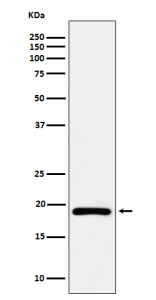
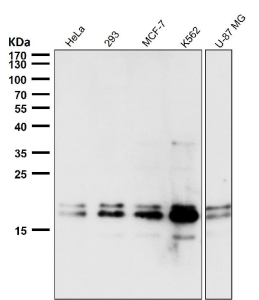
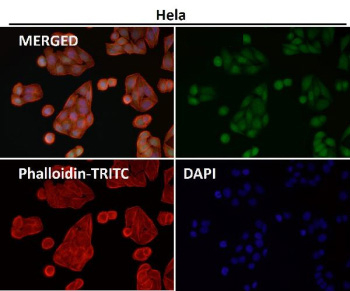
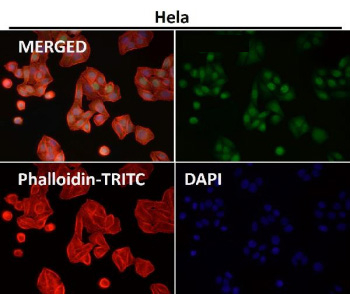
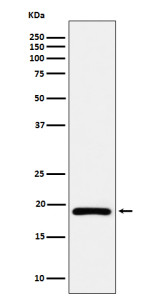
Rabbit IgG in phosphate buffered saline, pH 7.4, 150mM NaCl, 0.02% sodium azide and 50% glycerol, 0.4-0.5mg/ml BSA. DUT antibody detects deoxyuridine triphosphatase, an enzyme encoded by the DUT gene. This enzyme catalyzes the hydrolysis of dUTP to dUMP and pyrophosphate, thereby preventing the incorporation of uracil into DNA. This reaction maintains the balance of nucleotide pools and supports DNA replication fidelity. DUT is expressed in both nuclear and mitochondrial isoforms, generated through alternative splicing, enabling the enzyme to function across different subcellular compartments where nucleotide metabolism is critical.DUT antibody is widely applied in DNA metabolism research, cancer biology, and virology. In DNA replication, DUT regulates the concentration of dUTP to minimize misincorporation of uracil into DNA. Failure to control dUTP levels leads to DNA repair cycles, strand breaks, and genomic instability. By detecting DUT, researchers can examine the mechanisms that safeguard DNA integrity and how these processes become dysregulated in disease. Western blotting with DUT antibody detects the nuclear and mitochondrial isoforms of the protein in proliferative tissues. Immunohistochemistry maps DUT expression in tissues with high replication rates such as bone marrow and intestinal crypts. Immunofluorescence highlights the nuclear and mitochondrial distribution of DUT within single cells. ELISA allows quantification of enzyme expression in experimental and clinical samples. These approaches make DUT antibody a versatile reagent for investigating DNA metabolism and genomic stability.DUT is especially important in rapidly dividing cells and is upregulated during S phase of the cell cycle. This makes DUT an attractive target in oncology, since cancer cells often rely on high levels of DUT to manage imbalanced nucleotide pools. Inhibition of DUT activity has been explored as a strategy to increase DNA damage selectively in tumor cells. By applying DUT antibody, scientists can explore how altered nucleotide metabolism contributes to tumorigenesis and identify therapeutic opportunities.Beyond cancer, DUT plays roles in virology. Several viruses, including HIV, exploit host nucleotide metabolism, and DUT expression influences viral replication. DUT activity may affect the effectiveness of nucleoside analog drugs by altering nucleotide balance. These insights make DUT antibody a useful tool for studying virus-host interactions and antiviral drug responses.DUT also contributes to developmental biology. The enzyme supports DNA synthesis during embryogenesis and tissue regeneration. Genetic mutations or dysregulation of DUT are linked to cellular stress responses and mitochondrial dysfunction. Studying DUT with antibody based approaches provides insights into both normal development and pathological processes.DUT antibody from NSJ Bioreagents provides strong specificity for deoxyuridine triphosphatase detection. Its proven performance across research techniques ensures accurate evaluation of DNA metabolism in health and disease.
| Keywords: | Anti-DUT, Anti-dUTP pyrophosphatase, Anti-Deoxyuridine 5'-triphosphate nucleotidohydrolase, mitochondrial, DUT Antibody / Deoxyuridine triphosphatase |
| Supplier: | NSJ Bioreagents |
| Supplier-Nr: | FY12685 |
Properties
| Application: | WB, ICC, IF, FC |
| Antibody Type: | Monoclonal |
| Clone: | 31D50 |
| Conjugate: | No |
| Host: | Rabbit |
| Species reactivity: | human |
| Immunogen: | A synthesized peptide derived from human DUT |
| Format: | Purified |
Database Information
| KEGG ID : | K01520 | Matching products |
| UniProt ID : | P33316 | Matching products |
| Gene ID : | GeneID 1854 | Matching products |
Handling & Safety
| Storage: | -20°C |
| Shipping: | -20°C (International: -20°C) |
Caution
Our products are for laboratory research use only: Not for administration to humans!
Our products are for laboratory research use only: Not for administration to humans!
Information about the product reference will follow.
more
You will get a certificate here
Viewed