
Cookie preferences
This website uses cookies, which are necessary for the technical operation of the website and are always set. Other cookies, which increase the comfort when using this website, are used for direct advertising or to facilitate interaction with other websites and social networks, are only set with your consent.
Configuration
Technically required
These cookies are necessary for the basic functions of the shop.
"Allow all cookies" cookie
"Decline all cookies" cookie
CSRF token
Cookie preferences
Currency change
Customer-specific caching
FACT-Finder tracking
Individual prices
Selected shop
Session
Comfort functions
These cookies are used to make the shopping experience even more appealing, for example for the recognition of the visitor.
Note
Show the facebook fanpage in the right blod sidebar
Statistics & Tracking
Affiliate program
Conversion and usertracking via Google Tag Manager
Track device being used

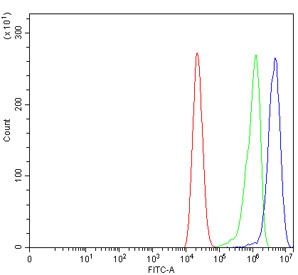
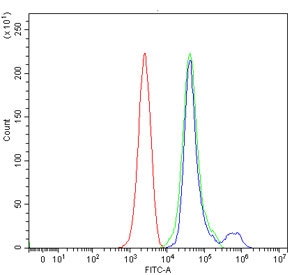
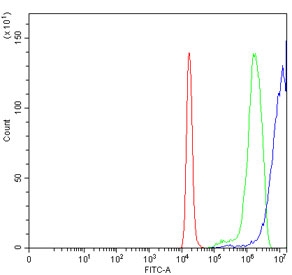
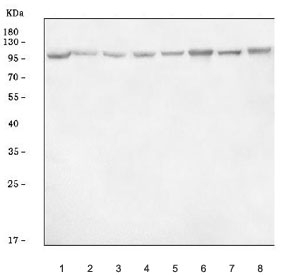


| Item number | Size | Datasheet | Manual | SDS | Delivery time | Quantity | Price |
|---|---|---|---|---|---|---|---|
| NSJ-RQ7164 | 100 µg | - | - |
7 - 12 business days* |
790.00€
|
If you have any questions, please use our Contact Form.
You can also order by e-mail: info@biomol.com
Larger quantity required? Request bulk
You can also order by e-mail: info@biomol.com
Larger quantity required? Request bulk
0.5mg/ml if reconstituted with 0.2ml sterile DI water. DNA (cytosine-5-)-methyltransferase 3... more
Product information "Anti-DNMT3B"
0.5mg/ml if reconstituted with 0.2ml sterile DI water. DNA (cytosine-5-)-methyltransferase 3 beta, is an enzyme that in humans in encoded by the DNMT3B gene. CpG methylation is an epigenetic modification that is important for embryonic development, imprinting, and X-chromosome inactivation. Studies in mice have demonstrated that DNA methylation is required for mammalian development. This gene encodes a DNA methyltransferase which is thought to function in de novo methylation, rather than maintenance methylation. The protein localizes primarily to the nucleus and its expression is developmentally regulated. Mutations in this gene cause the immunodeficiency-centromeric instability-facial anomalies (ICF) syndrome. Eight alternatively spliced transcript variants have been described. The full length sequences of variants 4 and 5 have not been determined. Protein function: Catalyzes the hydrolysis of GTP and utilizes this energy to mediate vesicle scission at plasma membrane during endocytosis and filament remodeling at many actin structures during organization of the actin cytoskeleton (PubMed:33713620, PubMed:15731758, PubMed:19623537, PubMed:34744632, PubMed:19605363). Plays an important role in vesicular trafficking processes, namely clathrin-mediated endocytosis (CME), exocytic and clathrin-coated vesicle from the trans-Golgi network, and PDGF stimulated macropinocytosis (PubMed:33713620, PubMed:15731758, PubMed:19623537). During vesicular trafficking process, associates to the membrane, through lipid binding, and self-assembles into ring-like structure through oligomerization to form a helical polymer around the vesicle membrane and leading to vesicle scission (PubMed:17636067, PubMed:34744632, PubMed:36445308). Plays a role in organization of the actin cytoskeleton by mediating arrangement of stress fibers and actin bundles in podocytes. During organization of the actin cytoskeleton, self-assembles into ring-like structure that directly bundles actin filaments to form typical membrane tubules decorated with dynamin spiral polymers. Self-assembly increases GTPase activity and the GTP hydrolysis causes the rapid depolymerization of dynamin spiral polymers, and results in dispersion of actin bundles. Remodels, through its interaction with CTTN, bundled actin filaments in a GTPase-dependent manner and plays a role in orchestrating the global actomyosin cytoskeleton (PubMed:19605363). The interaction with CTTN stabilizes the interaction of DNM2 and actin filaments and stimulates the intrinsic GTPase activity that results in actin filament-barbed ends and increases the sensitivity of filaments in bundles to the actin depolymerizing factor, CFL1. Plays a role in the autophagy process, by participating in the formation of ATG9A vesicles destined for the autophagosomes through its interaction with SNX18 (PubMed:29437695), by mediating recycling endosome scission leading to autophagosome release through MAP1LC3B interaction (PubMed:32315611, PubMed:29437695). Also regulates maturation of apoptotic cell corpse-containing phagosomes by recruiting PIK3C3 to the phagosome membrane. Also plays a role in cytokinesis. May participate in centrosome cohesion through its interaction with TUBG1. Plays a role in the regulation of neuron morphology, axon growth and formation of neuronal growth cones. Involved in membrane tubulation (PubMed:24135484). [The UniProt Consortium]
| Keywords: | Anti-DYN2, Anti-Dynamin-2, Anti-Dynamin 2, Anti-Dynamin II, DNMT3B Antibody |
| Supplier: | NSJ Bioreagents |
| Supplier-Nr: | RQ7164 |
Properties
| Application: | WB, FC, Direct ELISA |
| Antibody Type: | Polyclonal |
| Conjugate: | No |
| Host: | Rabbit |
| Species reactivity: | human, mouse, rat, monkey |
| Immunogen: | Recombinant human DNMT3B protein (amino acids E271-E853) |
| Format: | Adhesion & Structure |
Database Information
| KEGG ID : | K23484 | Matching products |
| UniProt ID : | P50570 | Matching products |
| Gene ID : | GeneID 1785 | Matching products |
Handling & Safety
| Storage: | +4°C |
| Shipping: | +4°C (International: +4°C) |
Caution
Our products are for laboratory research use only: Not for administration to humans!
Our products are for laboratory research use only: Not for administration to humans!
Information about the product reference will follow.
more
You will get a certificate here
Viewed