This website uses cookies, which are necessary for the technical operation of the website and are always set. Other cookies, which increase the comfort when using this website, are used for direct advertising or to facilitate interaction with other websites and social networks, are only set with your consent.
Configuration
Technically required
These cookies are necessary for the basic functions of the shop.
"Allow all cookies" cookie
"Decline all cookies" cookie
CSRF token
Cookie preferences
Currency change
Customer-specific caching
FACT-Finder tracking
Individual prices
Selected shop
Session
Comfort functions
These cookies are used to make the shopping experience even more appealing, for example for the recognition of the visitor.
Note
Show the facebook fanpage in the right blod sidebar
Statistics & Tracking
Affiliate program
Conversion and usertracking via Google Tag Manager
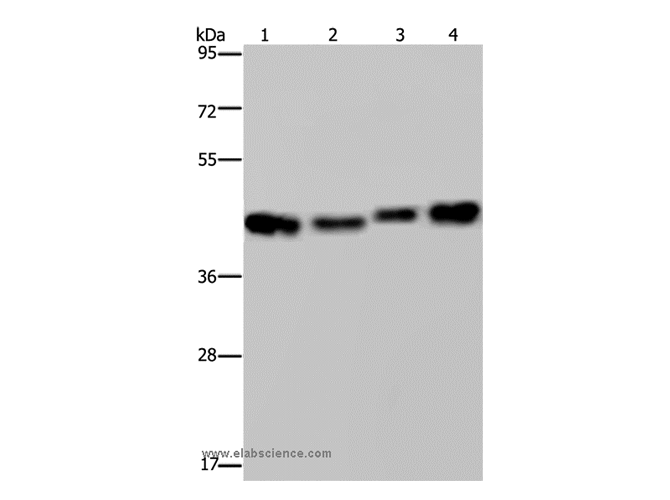
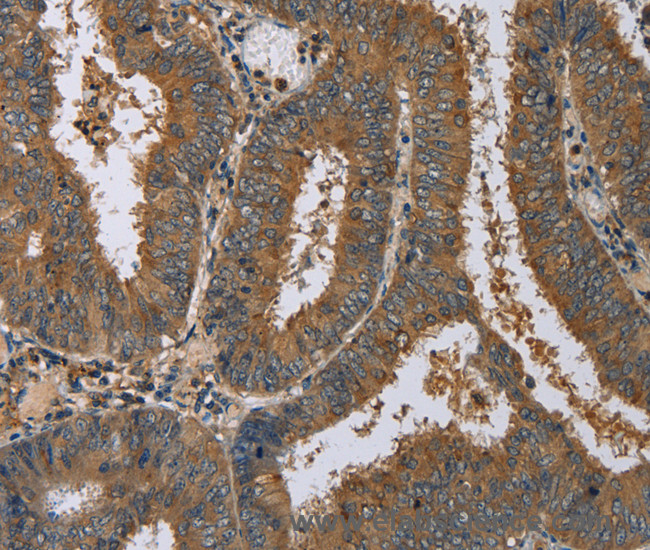
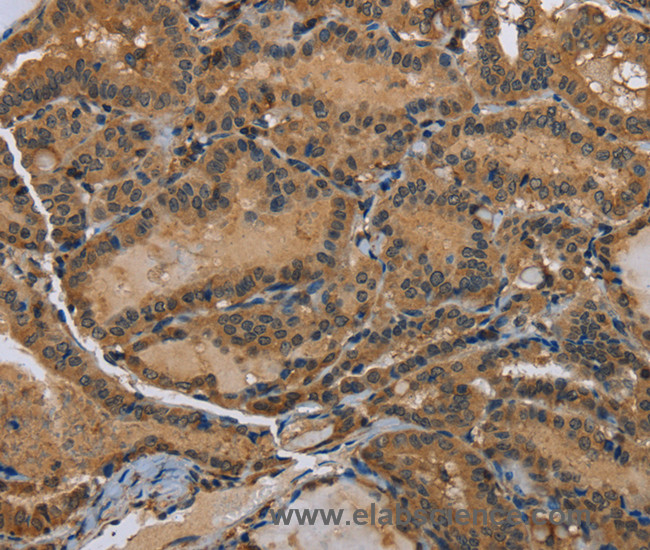
DnaJ-like proteins interact with HSP 70 molecular chaperones and function to facilitate protein folding and mitochondrial protein import. HSP 40-4, also known as HDJ2, is the human DnaJ homolog that functions as a co-chaperone with a cysteine-rich zinc finger domain. The cellular redox enzyme thioredoxin interacts with HSP 40-4, and oxidation and reduction reversibly regulate HSP 40-4 function in response to the changing redox states of the cell. The zinc finger domain of HSP 40-4 may act as a redox sensor of chaperone-mediated protein-folding machinery, since HSP 40-4 inactivation leads to the oxidation of cysteine thiols and a simultaneous release of coordinated zinc. Loss of the HSP 40-4 protein may be linked to severe defects in spermatogenesis that involve aberrant androgen signaling. Protein function: Co-chaperone for HSPA8/Hsc70 (PubMed:10816573). Stimulates ATP hydrolysis, but not the folding of unfolded proteins mediated by HSPA1A (in vitro) (PubMed:24318877). Plays a role in protein transport into mitochondria via its role as co- chaperone. Functions as co-chaperone for HSPA1B and negatively regulates the translocation of BAX from the cytosol to mitochondria in response to cellular stress, thereby protecting cells against apoptosis (PubMed:14752510). Promotes apoptosis in response to cellular stress mediated by exposure to anisomycin or UV (PubMed:24512202). [The UniProt Consortium]
Keywords:
Anti-HSDJ, Anti-HSJ-2, Anti-DNAJ2, Anti-hDj-2, Anti-DNAJA1, Anti-Human DnaJ protein 2, Anti-Heat shock protein J2, Anti-DnaJ protein homolog 2, Anti-Heat shock 40 kDa protein 4, Anti-DnaJ homolog subfamily A member 1, DNAJA1 Polyclonal Antibody
This website uses cookies, which are necessary for the technical operation of the website and are always set. Other cookies, which increase the usability of this website, serve for direct advertising or simplify interaction with other websites and social networks, will only be used with your consent.
More information