
Cookie preferences
This website uses cookies, which are necessary for the technical operation of the website and are always set. Other cookies, which increase the comfort when using this website, are used for direct advertising or to facilitate interaction with other websites and social networks, are only set with your consent.
Configuration
Technically required
These cookies are necessary for the basic functions of the shop.
"Allow all cookies" cookie
"Decline all cookies" cookie
CSRF token
Cookie preferences
Currency change
Customer-specific caching
FACT-Finder tracking
Individual prices
Selected shop
Session
Comfort functions
These cookies are used to make the shopping experience even more appealing, for example for the recognition of the visitor.
Note
Show the facebook fanpage in the right blod sidebar
Statistics & Tracking
Affiliate program
Conversion and usertracking via Google Tag Manager
Track device being used



| Item number | Size | Datasheet | Manual | SDS | Delivery time | Quantity | Price |
|---|---|---|---|---|---|---|---|
| NSJ-RQ6700 | 100 µg | - | - |
3 - 10 business days* |
790.00€
|
If you have any questions, please use our Contact Form.
You can also order by e-mail: info@biomol.com
Larger quantity required? Request bulk
You can also order by e-mail: info@biomol.com
Larger quantity required? Request bulk
0.5mg/ml if reconstituted with 0.2ml sterile DI water. Protein diaphanous homolog 1 is a protein... more
Product information "Anti-DIAPH1 / Diaphanous Homolog 1"
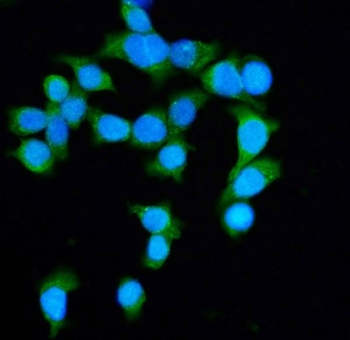
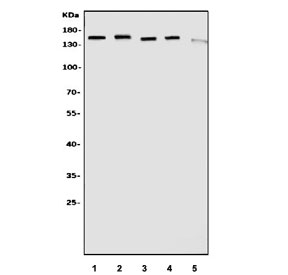
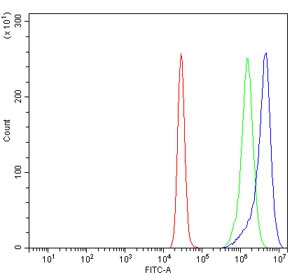
0.5mg/ml if reconstituted with 0.2ml sterile DI water. Protein diaphanous homolog 1 is a protein that in humans is encoded by the DIAPH1 gene. This gene is a homolog of the Drosophila diaphanous gene, and has been linked to autosomal dominant, fully penetrant, nonsyndromic sensorineural progressive low-frequency hearing loss. Actin polymerization involves proteins known to interact with diaphanous protein in Drosophila and mouse. It has therefore been speculated that this gene may have a role in the regulation of actin polymerization in hair cells of the inner ear. Alternatively spliced transcript variants encoding distinct isoforms have been found for this gene. Protein function: Actin nucleation and elongation factor required for the assembly of F-actin structures, such as actin cables and stress fibers. Binds to the barbed end of the actin filament and slows down actin polymerization and depolymerization. Required for cytokinesis, and transcriptional activation of the serum response factor. DFR proteins couple Rho and Src tyrosine kinase during signaling and the regulation of actin dynamics. Functions as a scaffold protein for MAPRE1 and APC to stabilize microtubules and promote cell migration. Has neurite outgrowth promoting activity. Acts in a Rho-dependent manner to recruit PFY1 to the membrane. In hear cells, it may play a role in the regulation of actin polymerization in hair cells (PubMed:20937854, PubMed:21834987, PubMed:26912466). The MEMO1-RHOA- DIAPH1 signaling pathway plays an important role in ERBB2-dependent stabilization of microtubules at the cell cortex (PubMed:20937854, PubMed:21834987). It controls the localization of APC and CLASP2 to the cell membrane, via the regulation of GSK3B activity (PubMed:20937854, PubMed:21834987). In turn, membrane-bound APC allows the localization of the MACF1 to the cell membrane, which is required for microtubule capture and stabilization (PubMed:20937854, PubMed:21834987). Plays a role in the regulation of cell morphology and cytoskeletal organization. Required in the control of cell shape (PubMed:20937854, PubMed:21834987). Plays a role in brain development (PubMed:24781755). Also acts as an actin nucleation and elongation factor in the nucleus by promoting nuclear actin polymerization inside the nucleus to drive serum-dependent SRF-MRTFA activity. [The UniProt Consortium]
| Keywords: | Anti-DRF1, Anti-DIAP1, Anti-DIAPH1, Anti-Diaphanous-related formin-1, Anti-Protein diaphanous homolog 1, DIAPH1 Antibody / Diaphanous Homolog 1 |
| Supplier: | NSJ Bioreagents |
| Supplier-Nr: | RQ6700 |
Properties
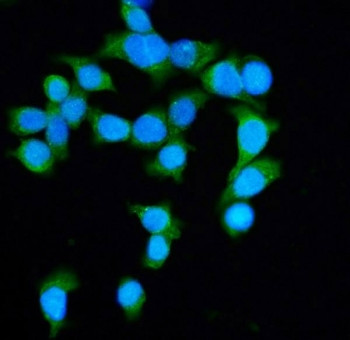
| Application: | WB, IF, FC, Direct ELISA |
| Antibody Type: | Polyclonal |
| Conjugate: | No |
| Host: | Rabbit |
| Species reactivity: | human, monkey |
| Immunogen: | Recombinant human protein (amino acids D1039-Q1153) |
| Format: | Adhesion & Structure |
Database Information
| KEGG ID : | K05740 | Matching products |
| UniProt ID : | O60610 | Matching products |
| Gene ID : | GeneID 1729 | Matching products |
Handling & Safety
| Storage: | +4°C |
| Shipping: | +4°C (International: +4°C) |
Caution
Our products are for laboratory research use only: Not for administration to humans!
Our products are for laboratory research use only: Not for administration to humans!
Information about the product reference will follow.
more
You will get a certificate here
Viewed